
By Abdulkarim Abdulmalik
For more than a month, a striking narrative has circulated across social media and political commentary: a portrait of Iran as a nation under sustained confrontation with global powers, yet standing firm: economically self-reliant, socially cohesive, and spiritually driven. The story paints a picture of a country that, despite decades of sanctions and geopolitical isolation, has cultivated an internal system capable of absorbing pressure while projecting resilience.
But how much of this narrative reflects reality, and what deeper truths does it reveal about the Iranian state and society?

A Nation Under Global Pressure
Since the Iranian Revolution, Iran has lived under varying degrees of international sanctions, particularly from the United States and its allies. These sanctions have targeted everything from oil exports to banking systems, aiming to curb Tehran’s regional influence and nuclear ambitions.
The result has been a unique national experience: a country forced, by necessity, to develop internal resilience. Over decades, Iran has built local industries, strengthened domestic agriculture, and cultivated a culture of “resistance economy”; a concept often emphasized by its leadership, including Ali Khamenei.
The viral claims go further, describing a wartime scenario in which Iran has not sought external aid, has avoided food or medicine shortages, and has even subsidized essential goods like bread and fuel. While such assertions are difficult to independently verify in full, they echo a broader truth: Iran has long prioritized self-sufficiency as a strategic necessity.
The Power of Social Solidarity
One of the most compelling aspects of the narrative is the emphasis on collective responsibility. Business owners allegedly offering goods on deferred payment, citizens refusing to flee conflict zones, and expatriates returning home all point to a deeply embedded sense of national duty.
Historically, Iran has demonstrated such cohesion during crises. During the Iran–Iraq War, millions of ordinary citizens mobilized to support the war effort, creating a lasting culture of sacrifice and patriotism.
Today, that legacy appears to endure. Public demonstrations – often blending political defiance with religious symbolism – remain a hallmark of Iranian civic life. The image of government ministers standing shoulder to shoulder with ordinary citizens in protest reflects a political culture that seeks legitimacy not only through institutions but also through visible participation.
Governance and Austerity
Another striking claim is the personal austerity of Iran’s leadership. Reports that top officials avoid foreign bank accounts, own no overseas property, and restrict their families’ access to foreign education reinforce an image of ideological commitment and discipline.
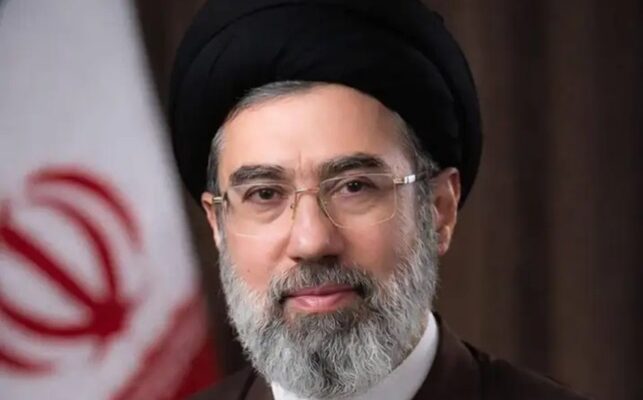
Figures like Ebrahim Raisi, and the enduring influence of clerical authority, are often cited as examples of a leadership model rooted in revolutionary ideals rather than elite privilege.
However, analysts caution against viewing this picture as universally representative. Iran, like any nation, faces internal contradictions: economic inequality, political dissent, and generational divides. Yet, the state’s emphasis on modesty and accountability remains a central pillar of its self-image.
Welfare and Public Policy
The narrative also highlights extensive social welfare measures: free education, significant healthcare subsidies, and support for families. Iran does, in fact, operate a broad public welfare system, shaped by both Islamic principles and socialist-leaning policies.
Education has been a particular focus. Over the past four decades, Iran has dramatically increased literacy rates and university enrollment, producing a large pool of engineers, scientists, and professionals. This investment in human capital has been crucial in sustaining the country’s domestic industries under sanctions.
Healthcare, too, has seen notable development, with a mix of public and private provision. While challenges remain – especially in accessing advanced medical technologies under sanctions – the system has shown resilience in delivering basic services to a wide population.
Culture, Religion, and Social Order
At the heart of Iran’s societal model lies religion. The Islamic Republic is built on the concept of Wilayat al-Faqih (Guardianship of the Jurist), which places clerical authority at the apex of political power. Friday prayer leaders, for instance, often wield significant influence, sometimes surpassing that of local political officials.
The narrative’s emphasis on moral discipline – discouraging immorality, promoting prayer, and fostering family cohesion – reflects the state’s broader effort to shape a value-driven society. For many Iranians, faith is not merely a private matter but a public framework guiding social behavior.
Yet, this approach is not without tension. Younger generations, exposed to global culture through digital media, often negotiate their identities between tradition and modernity. This dynamic creates an evolving social landscape that cannot be reduced to a single narrative.
Myth, Reality, and Perception
It is important to approach such sweeping claims with a critical lens. Statements like “no theft,” “no beggars,” or “empty prisons” are likely exaggerated. Independent reports suggest that Iran, like any society, grapples with crime, poverty, and social challenges.
However, the persistence of these claims speaks to something deeper: the power of perception. In a world where many nations struggle with governance failures, corruption, and social fragmentation, the idea of a disciplined, self-reliant state holds strong appeal.
For audiences in countries facing economic hardship or political instability, Iran’s model – whether denigrated or idealized – could appear as an alternative path, one rooted in sovereignty, moral order, and collective sacrifice.
Lessons for the Wider World
Iran’s experience offers several lessons worth reflecting on.
First, necessity can drive innovation. Decades of sanctions forced Iran to develop local capacities that might otherwise have remained underdeveloped.
Second, social cohesion matters. In times of crisis, a shared sense of purpose can significantly enhance a nation’s resilience.
Third, leadership narratives shape public behavior. Whether through genuine austerity or carefully cultivated image, the perception of leaders sharing in national sacrifice can strengthen trust.
A Story Still Unfolding
As tensions between Iran and global powers continue, the country remains a focal point of geopolitical debate. Its story is one of contradictions: resilience and hardship, unity and dissent, ideology and pragmatism.
The viral narrative of a nation standing unbowed may simplify a complex reality, but it captures an essential truth: Iran has, over decades, built a system designed to endure pressure.
Whether that system represents a model to emulate or a cautionary tale depends largely on perspective. What is clear, however, is that Iran’s journey – shaped by history, faith, and geopolitics – continues to challenge conventional assumptions about power, survival, and national identity.
In a world increasingly defined by uncertainty, such stories – real or embellished – resonate far beyond their borders.
– Abdulkarim Abdulmalik is an Abuja-based journalist and Chairman Governing Board of Guild of Interfaith Media Practitioners Nigeria (GIMP-Nigeria).
Email: nowmalik@gmail.com