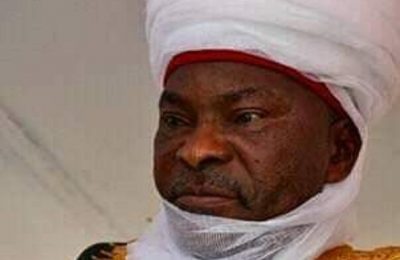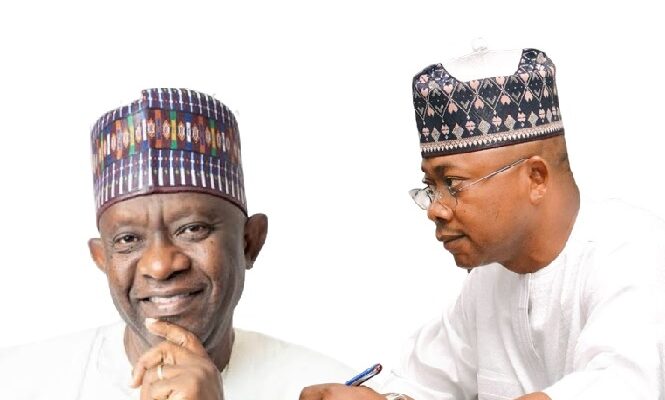

Beneath the surface calm of the All Progressives Congress (APC) in Kogi State, a storm is gathering and it carries the unmistakable fingerprints of a governor uneasy with the rising profile of a sitting senator. Governor Ahmed Usman Ododo’s body language toward Senator Sunday Steve Karimi’s re-election ambition has moved from subtle discomfort to something far more deliberate: a pattern of conduct that party faithful across Kogi West are now openly describing as sponsored anti-party activity.
A Primary That Should Have Settled the Matter
On paper, the Kogi West senatorial contest was resolved months ago. Senator Karimi was declared winner of the APC primary held on May 18, 2026, after polling 51,665 votes, a result announced by returning officer Isah Haruna. Reports from the period indicate that Hon. Samuel Bamidele Aro and other aspirants had stepped down before voting began, clearing the way for Karimi’s emergence as consensus candidate — a process widely reported to have carried the backing of Governor Ododo and party stakeholders at the time.
Yet the peace was short-lived. In July, Aro dragged the APC, INEC, and Karimi to the Federal High Court in Lokoja, insisting the May primary had actually produced him as winner and that the party’s submission of Karimi’s name to INEC on July 11 was unlawful. The suit persists even after the APC’s National Working Committee reaffirmed Karimi as the duly elected candidate, having reviewed similar petitions from hundreds of aspirants nationwide.
The Governor’s Curious Silence and His Lieutenant’s Loud Activism
What has alarmed many within the party is not the courtroom battle itself — intra-party disputes are hardly novel in Nigerian politics — but the conduct of officials close to the governor. A gathering styled the “Kogi West APC Leaders Forum,” attended largely by government appointees, and a few others moved in July to challenge the outcome of a primary the party’s own machinery had already certified. The Kogi West Elders Assembly publicly rebuked the meeting as unrepresentative, pointedly recalling that Governor Ododo himself had convened a peace meeting ahead of the primaries urging “political gladiators” to sheathe their swords.
The question party faithful are now asking is simple: if the governor’s own peace initiative produced a result his aides are working to overturn, whose script are those aides really following? It is this quiet, calculated undermining — empowering a lieutenant to keep the anti-Karimi embers alive while the governor maintains public deniability — that has fueled talk of a shadow campaign against the senator’s return.

The Contradiction and Hypocrisy at the Heart of It
There is an irony too glaring to ignore. Governor Ododo has positioned himself as a loyal disciple of President Bola Ahmed Tinubu, yet reports from the time of the dispute suggested the Presidential Villa itself had settled for Senator Karimi. To profess loyalty to Mr. President while working — through proxies — against an outcome the Villa is said to favour is, at best, a contradiction; at worst, it is a miscalculated gamble dressed up as party discipline.
Meanwhile, party sources point to a pattern of selective sanction: ward and local government executives who have attended Karimi’s constituency events or rallies have faced suspension, even as those organising rival “consensus” meetings against Senator Karimi hobnobbing with opposition candidate in Kogi West as well as holding APC certified primary result face no comparable discipline. Whatever one calls this, “even-handed party administration” is not it.
A Word of Caution to His Excellency
It would be prudent for Governor Ododo to recognise that the road to 2027 is not one his political camp can travel alone. A ruling party that spends its energy suppressing an already-certified senatorial candidate, while ignoring genuine anti-party conduct in its own leadership orbit, does little to inspire the unity it needs heading into a tightly contested general election. Kogi’s political history offers a caution of its own: incumbency has not always translated into a second term for the state’s governors —Late Audu Abubakar and Idris Wada’s failed re-election bids in 2003 and 2015 respectively is a reminder that Kogi’s electorate and its political establishment can be unforgiving of miscalculation.
The Line in the Sand
For now, loyalty to President Tinubu remains the one unifying thread party stakeholders say they will not touch. But beyond that, there is a growing resolve among aggrieved party faithful that no candidate benefitting from what they see as engineered anti-party activity should “glory” in 2027 — a warning that, if acted upon, could turn Kogi APC’s internal contradictions into a full-blown electoral liability.
The governor still has time to recalibrate. Whether he chooses reconciliation over quiet confrontation may well determine not just Karimi’s fate, but his own political legacy in Kogi State.
In all, Tinubu shall win and Karimi will return, but the governor has alot to worry about as the subtle legalisation of anti party within in APC might come to haunt him.
Chief Elijah Ola Olorunsuwa Executive Director, Okun Renaissance Initiative