
By Musa Bakare
As 2027 approaches, Nigerians must look beyond propaganda, insults, emotional politics and empty promises.
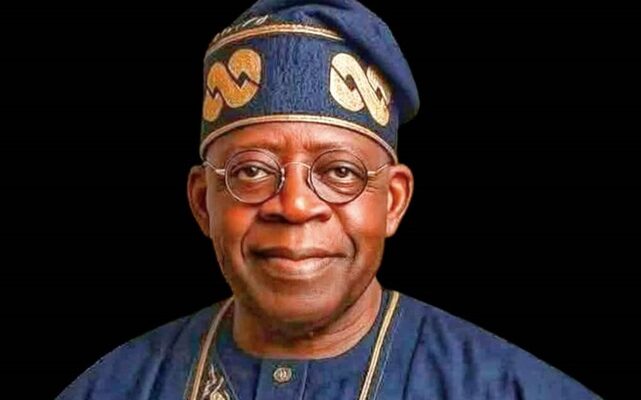
The question is simple: Who has demonstrated the courage to confront Nigeria’s deepest problems and the capacity to finish the job? President Bola Ahmed Tinubu.

This is not a call for blind loyalty. It is a call to examine the record.
When President Tinubu assumed office in 2023, Nigeria faced a dangerous combination of economic distortions, dwindling revenues, fuel subsidy burdens, foreign exchange instability, infrastructure deficits and widespread insecurity.
The removal of petrol subsidy ended a system that consumed enormous public resources. His administration also reformed the foreign exchange market, confronting distortions that encouraged arbitrage and weakened economic confidence.
These decisions came with pain. But, as President Tinubu himself has said:
“Leadership is the ability to do what is necessary at the time it ought to be done.”That philosophy captures the character of his reform agenda.
In 2025, four major tax laws were enacted to modernise tax administration, improve efficiency and strengthen Nigeria’s revenue system.
No nation can sustainably build roads, schools, hospitals, security infrastructure and industries on an unreliable revenue base. For President Tinubu, Nigeria must build an economy capable of producing wealth and financing its own development.
The Nigerian Education Loan Fund has also opened a new door of opportunity for millions of young Nigerians.
By 2026, more than 1.5 million students had accessed higher education financing, with more than ₦282 billion disbursed.
The minimum wage was equally raised from ₦30,000 to ₦70,000.
These interventions do not mean every problem has been solved. They demonstrate, however, that the administration is responding to national realities and creating mechanisms that can be strengthened over time.
The administration’s CNG initiative, domestic refining drive, power sector reforms and infrastructure investments are part of an effort to move Nigeria away from excessive dependence on imported energy and toward greater domestic production.
Nigeria possesses enormous natural and human resources. The challenge is no longer simply what Nigeria has. It is what Nigeria can produce from what she has.
That is the economic transformation Nigerians should demand and that is the transformation President Tinubu’s reforms are seeking to midwife.
President Tinubu has strongly supported the push for local government financial autonomy following the Supreme Court’s landmark 2024 judgment.
President Tinubu believes genuine financial autonomy for local governments can potentially transform rural roads, primary healthcare, markets, sanitation, water supply and grassroots development.
His administration has also moved the controversial question of state police into the constitutional reform process.
Moving the state police debate from political rhetoric toward constitutional consideration represents a significant shift in Nigeria’s security conversation.
Nigeria’s economic story cannot honestly be reduced to just hardship alone. The National Bureau of Statistics reported 3.89% GDP growth in Q1 2026, compared with 3.13% in Q1 2025.
The non oil sector remains the dominant contributor to economic output.
Progress requires courage, correction, patience and continuity.
The strongest argument for President Tinubu’s second term is not that he has solved every Nigerian problem.
The argument is that, through his innovative political reengineering, Nigerian has entered a period of structural reform that requires continuity, consolidation and improvement, not another political reset.
Four more years would mean: Finish the reforms.
Strengthen security.
Expand power supply.
Create jobs.
Grow manufacturing.
Improve agriculture.
Deepen education.
Complete critical infrastructure and turn economic reform into greater prosperity.
President Tinubu brings decades of political and executive experience and has demonstrated a willingness to take difficult decisions when circumstances demand them.
Nigerians have decided not to abandon the road but complete the journey.
Nigeria cannot restart every time the journey becomes difficult. Se must rebuild and not abandon reform. We must improve it. We must not surrender to hardship.
We must transform hardship into prosperity.
That is why the 2027 election must be about more than personalities. It must be about continuity, competence, courage and the future of Nigeria.
President Bola Ahmed Tinubu deserves four more years to consolidate the foundation already laid, correct what needs correction, accelerate what is working and take Nigeria closer to the prosperity Nigerians deserve.
The journey has begun.
The reforms must continue.
The destination is a stronger, more prosperous Nigeria.
– Musa Asiru Bakare, a Political Analyst, writes from Lokoja, Kogi State