
…FCT Senator says she neither reviewed nor signed the report used to suspend Senator Natasha Akpoti-Uduaghan, lending weight to Senator Oshiomhole’s claims and igniting fresh controversy over the legitimacy of the suspension, as well as the possible criminal implications of any forged or unauthorized signatures on Senate documents.
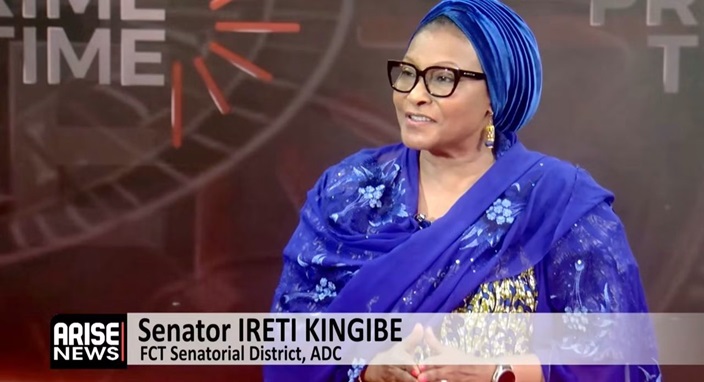
The controversy surrounding the six-month suspension of Senator Natasha Akpoti-Uduaghan has taken a dramatic turn following remarks made by Senator Ireti Kingibe during an interview on Arise News on June 18, 2026.
In the interview, Senator Kingibe reportedly stated: “I never saw the report that led to Senator Natasha’s suspension. I was at a retreat with Senator Adams Oshiomhole when I heard about the report. I had earlier stated that I was there with three or four other senators who are members of the committee. We attended the Committee on Petitions and Public Complaints, signed the attendance register, and I later left for the tax reform retreat, which I considered more important at the time.”

The disclosure has generated widespread interest because it appears to corroborate concerns earlier raised by Senator Adams Oshiomhole regarding the procedure that culminated in the suspension of the Kogi Central lawmaker.
Even more significant is Senator Kingibe’s reported claim that she informed Senator Enyinnaya Abaribe that she neither saw the report nor signed any document relating to Senator Natasha’s suspension. If this account is accurate, it raises fundamental questions about the process through which the committee report was prepared, approved, and ultimately adopted by the Senate.
The implications are far-reaching. A six-month suspension of an elected senator is a serious disciplinary measure with direct consequences for democratic representation. Such a decision must therefore be founded on a process that is transparent, credible, lawful, and capable of withstanding the highest level of public scrutiny.
If a committee member whose name was associated with the process neither reviewed nor endorsed the report, Nigerians are entitled to ask how the document received approval and whether all procedural requirements were properly observed. The Senate owes the public clear answers regarding the participation of committee members and the authenticity of every endorsement attached to the report.
More importantly, Senator Kingibe’s disclosure has given rise to a critical question: If the report relied upon to suspend Senator Natasha was not reviewed, approved, or signed by all the committee members whose names were associated with it, can the six-month suspension be considered legally and procedurally valid?
While it would be premature to declare the suspension illegal without the findings of a competent court or independent investigation, the emerging revelations undoubtedly raise legitimate questions about whether due process was fully observed. If material procedural requirements were breached, or if official documents were relied upon without proper authorization from committee members, the legality and enforceability of the suspension could come under serious challenge.
The questions become even more pressing when viewed alongside allegations that some signatures connected to the report may not have been personally authorized by the senators whose names appeared on the document. If any endorsement, signature, or authorization was inserted without the knowledge or consent of the senator concerned, such an act could amount to forgery—a serious criminal offence with profound legal and constitutional consequences.
While only a competent investigation can determine the facts, the gravity of the allegations makes an independent and transparent inquiry unavoidable. Public confidence in democratic institutions depends on the certainty that official documents accurately reflect the actions and decisions of those entrusted with public responsibility.
The Senate occupies a central position in Nigeria’s constitutional democracy. Consequently, any suggestion of irregularity in a disciplinary process involving an elected senator must be addressed openly and comprehensively. Silence or ambiguity would only deepen public suspicion and further erode trust in legislative institutions.
At stake is not merely the fate of one senator but the integrity of parliamentary procedure itself. The people of Kogi Central elected Senator Natasha Akpoti-Uduaghan to represent them in the National Assembly. Any action that deprives them of that representation must be demonstrably fair, lawful, and transparent.
Senator Kingibe’s remarks have therefore opened a new chapter in the ongoing debate surrounding Natasha’s suspension. Whether her disclosure ultimately validates concerns about procedural irregularities remains a matter for investigation. What is beyond dispute, however, is that the questions raised are serious, legitimate, and deserving of immediate answers.
In a democracy governed by the rule of law, accountability is not optional. The Senate must provide clarity, the relevant authorities must establish the facts and Nigerians deserve nothing less than the full truth. Until those questions are answered, public debate over the legitimacy of Senator Natasha Akpoti-Uduaghan’s six-month suspension is unlikely to subside.