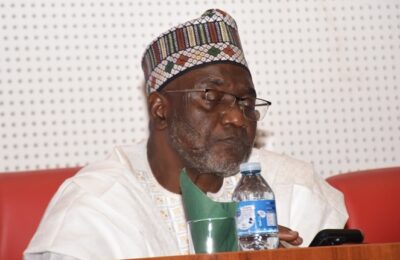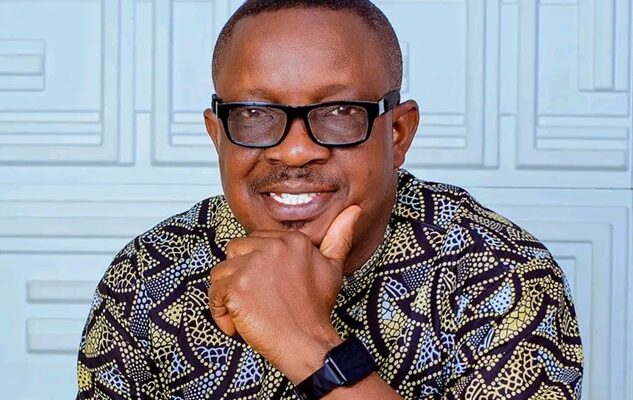

A former media executive, pastor and public affairs analyst, Pastor Stanley Omoniyi Ajileye, has rejected calls for a Kogi Power Rotation Summit ahead of the 2027 governorship election, insisting that political power must first rotate to Kogi West before any fresh discussion on subsequent power-sharing arrangements.
Ajileye, who has for years advocated power rotation in Kogi State, said a summit coming at this stage could be used to reopen an issue which, in his view, should already have been settled before the 2027 election.
His position comes ahead of the Kogi Power Rotation Summit 2026, being organised by the Kogi Unity Accord for September 30 and October 1 at the K Galaxy Event Centre in Lokoja.

The organisers have described the summit as a non-partisan platform aimed at discussing equity, inclusion, peaceful power sharing and a sustainable framework for political rotation among the three senatorial districts. The summit is expected to be chaired by Vice Admiral Joseph Ajayi (Rtd.), former Chief of Defence Intelligence.
But Ajileye argued that the timing of the summit was questionable.
He recalled that since 2015, during the administration of former Governor Yahaya Bello, he had advocated the convocation of a power rotation conference and had formally written to both the Kogi State House of Assembly and the former governor on the matter.
According to him, the opportunity to address the issue existed during Bello’s administration but was not utilised.
He also recalled the political developments surrounding the 2019 governorship election, saying an understanding was reached by some elders from Kogi West that supporting Bello for a second term would pave the way for power to subsequently rotate to Kogi West.
Ajileye said he had expressed reservations at the time about whether the arrangement would eventually be honoured.
He further argued that the events leading to the 2023 governorship election left many people in Kogi West disappointed, alleging that the political understanding they relied upon was not respected.
Against this background, he questioned why a power rotation summit was becoming urgent in 2026, when Kogi West was approaching what he considers its turn in 2027.
“Why now?” he asked, arguing that the issue should not be reopened in a manner that could delay the aspiration of Kogi West.
Ajileye stressed that he was not opposed to dialogue or consultation, but insisted that such dialogue should not be used to negotiate away what he described as the legitimate aspiration of Kogi West.
According to him, power should shift to Kogi West in 2027, after which the incoming governor should convene a broader summit involving Kogi East, Kogi Central and Kogi West.
He said such a summit would be better positioned to discuss the political succession pattern for subsequent administrations, including how future rotations could be structured in a fair and predictable manner.
“Let Kogi West produce the next governor. Let the new governor become the statesperson who brings everyone to the negotiating table,” Ajileye said in his position on the matter.
He proposed that the post-2027 summit should involve traditional rulers, political leaders, professionals, religious leaders, women, youths and other stakeholders across the three senatorial districts.
According to him, such a gathering would be able to deliberate without the immediate pressure of an impending governorship election and establish a framework that could guide future political transitions.
Ajileye also appealed to traditional rulers and elders to exercise caution and avoid allowing their institutions to be used in what he described as a political contest.
He maintained that the traditional institution should instead help facilitate a fair and enduring arrangement that would protect the interests of all parts of the state.
His position contrasts with the stated objective of the Kogi Unity Accord, which says its September 30 to October 1 summit is intended to develop a durable, consensus-driven framework for power sharing, promote unity and reduce political tensions surrounding future elections.
The debate over the 2027 succession has already generated competing positions across the state. In January, a Kogi East political summit endorsed Governor Usman Ododo for a second term and advocated a return of power to Kogi East in 2031, while acknowledging the aspiration of Kogi West to produce the next governor.
Ajileye, however, maintained that whatever discussions are necessary about 2031 and subsequent years should come after 2027, rather than being used to determine whether Kogi West should have its turn in the next governorship election.
“2027 is Kogi West’s turn,” he declared.
“After 2027, we can discuss 2031, 2035 and beyond. We can negotiate the future and build a system that protects the interests of every senatorial district.”
He therefore urged stakeholders from Kogi West to examine the proposed summit carefully and ensure that any discussion on power rotation does not result in another postponement of the district’s political aspiration.
For Ajileye, the appropriate sequence is clear: Kogi West should produce the governor in 2027, and the new governor should thereafter convene a genuine, inclusive summit to determine the pattern of subsequent power rotation in Kogi State.