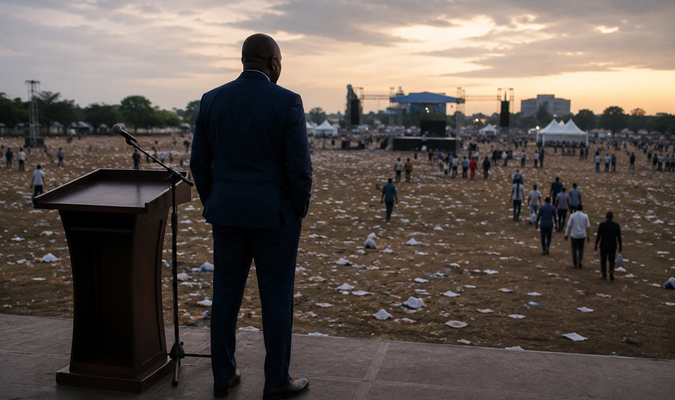

The crowd is easy to impress; history is not. Political charisma can transform an unknown figure into a household name, fill streets with supporters and create the intoxicating impression that a new political era has arrived. But when the rallies end and the microphones fall silent, a harder question emerges: what remains? The enduring test of leadership is not how loudly people cheer during a political season, but whether the leader can convert enthusiasm into institutions, ideas and results that survive the excitement.
Charisma has its political utility. It can mobilise citizens, communicate a compelling vision and challenge an established order. The danger begins when personality becomes a substitute for organisation and popularity becomes a substitute for performance. A leader may command enormous attention without building the structures required to sustain influence. Once public emotion shifts, yesterday’s political phenomenon can discover that visibility was mistaken for permanence.
This is where many emerging political movements encounter their greatest difficulty. They are built around personalities rather than principles, networks rather than institutions, and immediate mobilisation rather than long term strategy. Such movements can rise with extraordinary speed, yet their durability remains uncertain because they depend too heavily on the individual at the centre. Enduring political influence requires more than followers. It requires capable successors, coherent ideas, institutional discipline and the capacity to remain relevant when circumstances change.

For regions seeking genuine transformation, the lesson is consequential. Citizens should not measure leadership solely by crowds, social media visibility, eloquence or the ability to dominate political conversations. They should ask harder questions. What institutions has this leadership strengthened? What opportunities has it created? What young people has it prepared? What measurable change has it produced, and would that progress continue if the leader disappeared from the political stage tomorrow?
The ultimate measure of leadership is therefore not the size of the crowd but the depth of the legacy. Charisma may open the door, but competence keeps it open; popularity may create momentum, but institution building gives that momentum direction and permanence. When the crowd finally goes home, when the banners disappear and the political noise subsides, history leaves leaders with one unforgiving question: what did you build that could survive without you?
– Inah Boniface Ocholi writes from Ayah – Igalamela/Odolu LGA, Kogi state.
08152094428 (SMS Only)