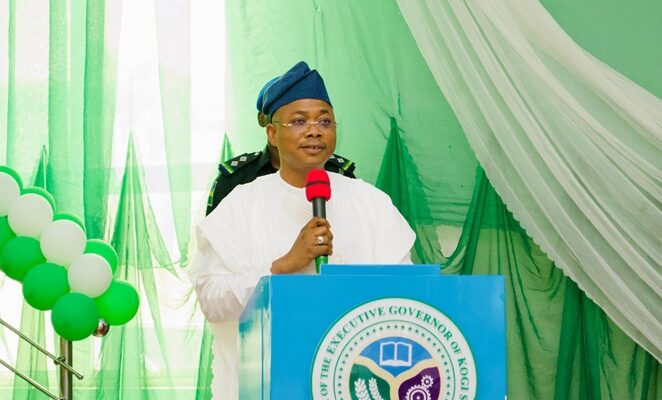

Kogi State Governor, Alhaji Ahmed Usman Ododo, on Monday urged Auditors-General for Local Governments across the country to adopt Artificial Intelligence and other emerging technologies as tools for strengthening accountability, curbing financial leakages and ensuring that public resources deliver real development to citizens.
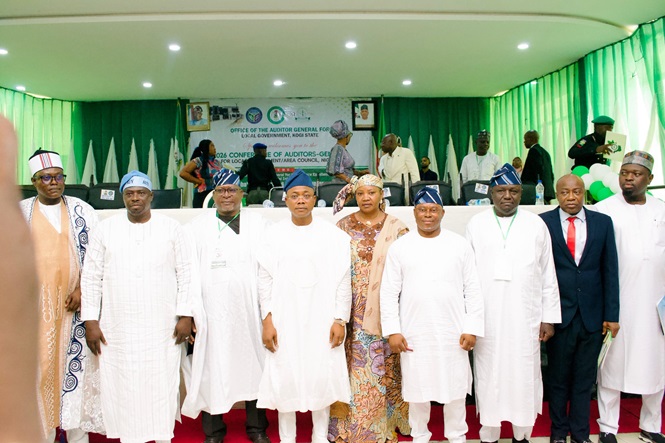
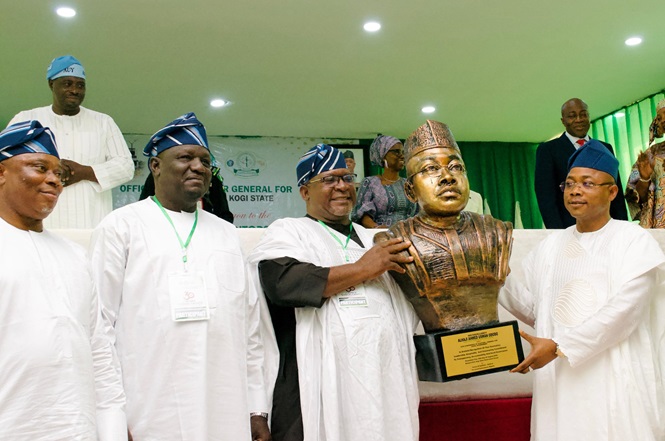
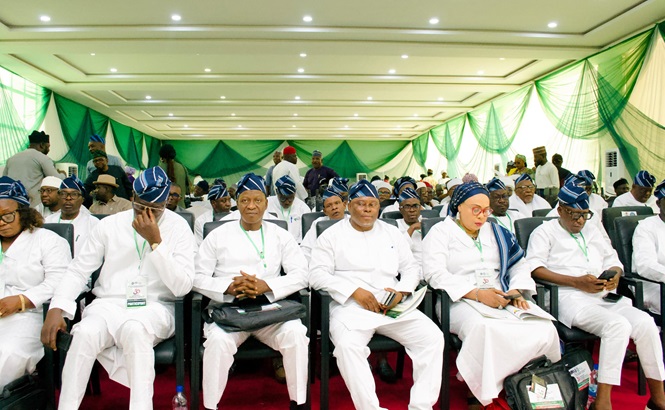
The Governor spoke while declaring open the 30th Annual Conference of Auditors-General for Local Governments in Nigeria, held at the Government House in Lokoja. The five-day conference, running from August 10 to 14, 2026, is themed: “Repositioning Auditors-General for Governance Excellence in the Age of Artificial Intelligence: Towards Global Best Practices in Local Government Audit.”
Drawing on his own background as a former Auditor-General for Local Governments in Kogi State, Governor Ododo said the duty of auditors extends far beyond verifying figures and compiling reports. He noted that every naira entrusted to government carries a moral obligation to the people it is meant to serve, observing that behind every budget line lies a genuine human need — whether a road, a school, a hospital, or an opportunity that could change a young person’s life.

“Compliance is fundamental, but value for money must remain at the heart of public financial management,” the Governor said.
He linked the growing importance of rigorous auditing to the recent Supreme Court ruling affirming the financial autonomy of Local Governments, arguing that greater autonomy must be matched with greater accountability at the grassroots. He called on auditors to leverage data analytics, machine learning, predictive modelling and geospatial intelligence to detect irregular transactions and flag risks before they escalate.
Even so, the Governor cautioned that technology cannot substitute for human integrity and professional judgment. He explained that while AI can identify patterns, it takes a trained auditor to interpret what those patterns actually mean and to determine whether a flagged transaction reflects an honest error, deliberate misconduct, or a legitimate dealing.
Governor Ododo also highlighted ongoing efforts to strengthen audit institutions in Kogi State, including the recent commissioning of the Kogi State Audit House. He said the facility is being equipped with modern audit technology, while contract audit staff engaged during his own tenure as Auditor-General are being converted to permanent appointments ahead of a planned statewide recruitment drive to boost manpower.
He further disclosed that Kogi State has signed a four-year Memorandum of Understanding with the Office of the Auditor-General for the Federation, aimed at capacity development for the state’s audit offices.
The Governor urged participants to leave the conference not merely with resolutions, but with a renewed commitment to professional courage, independence, technological innovation and public service.
In his remarks, the Auditor-General for Local Governments in Kogi State, Hon. Yakubu Siaka Adabenege, thanked Governor Ododo for approving funding and hosting for the conference, describing the gesture as evidence of the administration’s commitment to transparency and good governance. He said the conference offered a timely opportunity to chart new pathways for effective public-sector auditing.
Adabenege also commended the leadership of the Conference of Auditors-General and colleagues from across the country for their participation, pledging to carry out his duties with diligence and integrity. He stressed that auditing must go beyond detecting errors to actively strengthening institutional systems, safeguarding public funds, and building citizens’ trust in government.
Also speaking at the event, the Auditor-General for the Federation, Dr. Shaakaa Kanyitor Chira, commended the organisers for sustaining the annual conference over three decades and described this year’s theme as both timely and visionary.
Dr. Chira noted that the rising digitalisation of public financial management requires auditors to acquire new skills and methodologies capable of addressing risks tied to digital transactions, electronic procurement, cybersecurity and automated systems. He cautioned auditors against assuming that the use of AI tools absolves them of responsibility for wrongdoing, insisting that professional judgment and ethical accountability remain non-negotiable.
He added that stronger financial autonomy for Local Governments must translate into visible improvements in roads, primary healthcare, basic education, water, sanitation and agricultural support — services that directly affect the everyday lives of citizens.
Dr. Chira called for sustained investment in human capital, urging auditors nationwide to build competencies in data analytics, digital auditing, cybersecurity and forensic techniques to keep pace with emerging technologies.