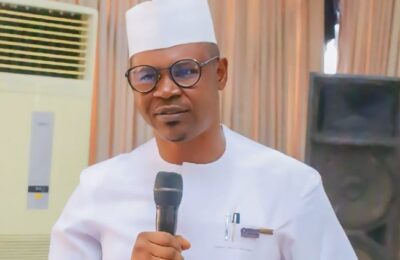
By Musa Bakare
The decision of the Federal Government of Nigeria to remove fuel subsidy was painful, but the subsidy itself was never free.
For decades, Nigeria committed enormous public resources to keeping petrol artificially cheap while critical sectors such as infrastructure, education, healthcare, security and productive industries suffered from inadequate funding.

There are moments in the history of nations when leadership demands courage rather than popularity. Nigeria reached such a moment in 2023 when President Bola Ahmed Tinubu took the bold decision to remove fuel subsidy.
The fundamental question is simple: Should Nigeria continue subsidising consumption, or should it invest its scarce resources in building a productive and sustainable economy?
President Tinubu chose reform.
Fuel subsidy removal creates greater fiscal space for government, reduces waste and provides an opportunity to redirect resources toward infrastructure, human capital, security, transportation and economic development. International financial institutions have also recognised Nigeria’s reform programme as important to strengthening fiscal and economic resilience.
The reform also creates stronger incentives for investment in domestic refining.
Nigeria cannot remain permanently dependent on imported petroleum products while possessing enormous crude oil resources. The emergence and expansion of large scale domestic refining capacity demonstrate the possibility of moving progressively toward greater energy security and independence.
Subsidy removal also reduces the distortions and opportunities for arbitrage and smuggling associated with artificially cheap petroleum.
Rather than endlessly spending public money to suppress fuel prices, Nigeria is invest in production, transportation, refining, electricity, alternative energy and other sectors capable of expanding national productivity.
Those suggesting a return to fuel subsidy must answer fundamental questions:
Where will the money come from? What infrastructure projects will be sacrificed? How much additional borrowing will become necessary? Will Nigeria return to excessive dependence on imported refined petroleum products? Will the incentives for smuggling and arbitrage return?
A return to subsidy risks recreating the fiscal pressures that made reform necessary. It could weaken public finances, discourage investment and restore distortions in the petroleum market.
Most importantly, constant policy reversal can damage investor confidence. Nations cannot build strong and sustainable economies by repeatedly retreating in the face of difficult reforms.
Defending subsidy removal does not mean ignoring the hardship being experienced by Nigerians.
The government is ensuring that the gains from reform translate into tangible improvements in the lives of ordinary citizens through better public transportation, infrastructure, healthcare, education, agriculture, employment opportunities and targeted support for vulnerable households.
Government is removing waste while protecting the poor; reform the economy without abandoning the people.
Nigeria cannot continue transferring today’s problems to tomorrow’s generation.
The deeper choice before us is not simply between cheap petrol and expensive petrol. It is between an unsustainable, subsidy dependent system and a productive economy capable of creating prosperity without perpetual government intervention.
Nations, like individuals, must sometimes endure difficult seasons before entering better ones. We must pray for wisdom for our leaders and strength for our people, faith must be accompanied by courage, discipline, accountability and hard work.
Nigeria must not reverse the subsidy reform simply because the transition is difficult. The reform should be strengthened, perfected and made more beneficial to the people.
Government is protecting the savings from the reform, preventing leakages, investing transparently and ensuring that Nigerians experience tangible benefits from the sacrifices being made.
The ultimate justification for subsidy removal will not be found merely in political speeches or economic statistics. It will be found when businesses become more productive, domestic refining expands, transportation improves, jobs increase and families begin to experience genuine economic relief.
The reform may be painful, but abandoning it without a credible and sustainable alternative would only postpone the problem and transfer an even heavier burden to future generations.
The way forward is not subsidy reversal. It is in the President Tinubu’s government’s reforms, in its compassionate governance, visible transparency, accountability and disciplined investment in Nigeria’s future.
The future belongs to a nation courageous enough to reform today rather than remain trapped by the mistakes of yesterday.
– Musa Asiru Bakare, a Political Analyst, writes from Lokoja, Kogi State.