
By Muhammed Sherifdeen Omeiza
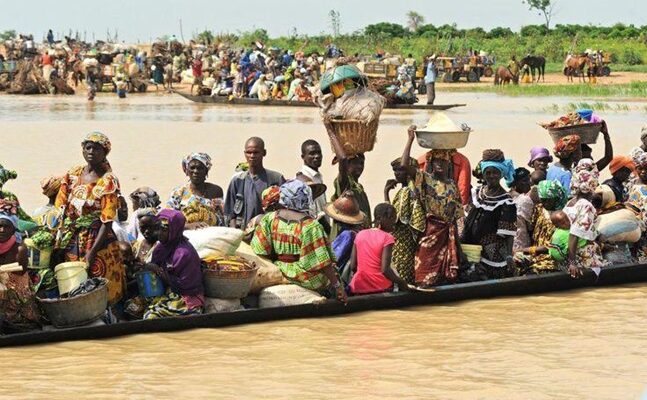
Lake Chad is often described as a shrinking lake, but that description does not fully explain what is happening around it. For millions of people in Nigeria, Niger, Chad and Cameroon, the lake is not simply a body of water. It is a source of fish, farmland, livestock, income and transportation. When the environment changes, the consequences are felt directly by communities whose lives depend on it.
Lake Chad has lost a very large part of its surface area since the 1960s. However, recent research shows that the relationship between the lake’s changing environment and conflict is more complicated than simply saying that the lake is disappearing. Seasonal changes in water availability, climate variability, population pressure and human activity have all affected livelihoods around the basin.

For a fisherman, a reduction in accessible water means fewer places to fish. For a farmer, it can mean less reliable access to water for cultivation. For pastoralists, it can mean longer journeys in search of pasture and water for their animals.
This is where the problem becomes more serious.
The same resources that support different communities are increasingly being used under pressure. Farmers need land for cultivation. Pastoralists need grazing areas. Fishermen need access to water. When these resources become less predictable, competition can increase.
But environmental pressure does not automatically create conflict.
The bigger problem is what happens when environmental pressure meets insecurity and weak institutions.
The Lake Chad Basin has experienced years of violence involving Boko Haram and Islamic State West Africa Province. Conflict has damaged markets, restricted movement and made it more difficult for people to farm, fish or move livestock safely. Research on the region describes climate and conflict as a cycle in which insecurity reduces people’s ability to cope with environmental shocks, while environmental and livelihood pressures can make communities more vulnerable to armed groups.
This means that the environmental crisis and the security crisis cannot always be treated separately.
When people lose their livelihoods, they become more vulnerable. When insecurity prevents them from accessing farmland or fishing grounds, their vulnerability becomes even worse. When young people have fewer economic opportunities, armed groups can find easier conditions for recruitment.
This is why simply sending more soldiers to the region cannot solve the whole problem.
Security is important, but communities also need functioning markets, access to water, agricultural support, veterinary services and opportunities to earn an income.
Governments in the Lake Chad Basin therefore need to treat environmental management as part of security and peacebuilding.
The Lake Chad Basin Commission has an important role to play in coordinating the countries that share the basin. But regional cooperation should go beyond meetings and declarations. Countries need stronger systems for sharing information about water resources, managing fisheries, protecting grazing routes and resolving disputes before they become violent.
Local communities should also be part of these decisions. People who depend on the lake understand changes in the environment in ways that may not always appear in government reports.
There is also a need to invest in restoration and resilience rather than focusing only on crisis response.
Restoring degraded land, improving water management and supporting sustainable fishing and farming can help communities recover their livelihoods. These are not simply environmental projects. They can also reduce some of the economic pressures that contribute to instability.
The Lake Chad crisis therefore offers a wider lesson for Africa.
Environmental change does not automatically cause conflict. But when environmental pressure meets poverty, insecurity, weak governance and competition over resources, the risk becomes much greater.
The solution is therefore not only to save the lake.
It is to protect the people whose lives depend on it.
If countries around Lake Chad can combine environmental management, livelihood support, security and local peacebuilding, the lake can become more than a symbol of environmental decline. It can become part of the region’s recovery.
– Muhammed Sherifdeen Omeiza is a Nigerian researcher and writer whose work explores the intersection of humanitarian action, human rights, gender equality and global governance. With a keen interest in public policy, democracy, and political economy, he examines how local experiences and global decisions shape humanitarian outcomes in times of crisis. His writings draw from African and international contexts, reflecting a commitment to justice, accountability, and people-centered governance in global affairs.
Email:sherifdeenmuhammed001@gmail.com