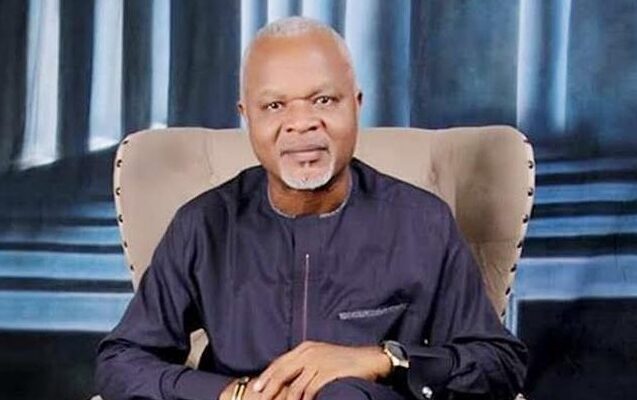

By Yahaya Idris
A former Head of Media for the 2015 Audu/Faleke governorship campaign, Dr. Tom Ohikere, has declared his return to Kogi State’s political space after 11 years, saying his renewed involvement is driven by a desire to serve the people rather than align with any political faction.
In a statement titled, “Kogi 2027: I Am Back for the People,” Ohikere said his absence from the state’s political scene followed his decision to stand by what he described as the sanctity of the people’s mandate during the 2015 governorship election.

According to him, his principled position at the time led to his political isolation, but the experience afforded him the opportunity to observe developments in the state from a distance.
“I am back not for a camp, not for revenge and not for titles. I am back for the people of Kogi State,” he declared.
Reflecting on the state’s socio-economic situation, Ohikere expressed concern over the rising cost of living, insecurity and unemployment, noting that many residents are struggling to cope with economic hardship.
He lamented the soaring prices of food items, saying staples that were once affordable have become increasingly out of reach for many households, while businesses continue to face declining patronage.
The media strategist also raised concerns over insecurity in parts of the state, alleging that attacks on farming communities and incidents of kidnapping along major highways have affected agricultural production, economic activities and public confidence.
On governance, Ohikere argued that politics in the state has become centred on rivalry among political camps rather than the pursuit of policies capable of improving the lives of citizens.
He observed that the political disagreements that emerged after the 2015 governorship election have continued to shape political discourse ahead of the 2027 elections.
According to him, while political actors debate party structures and influence, ordinary citizens are more concerned about affordable food, security, employment opportunities and improved living conditions.
Speaking on the 2027 governorship race, Ohikere acknowledged ongoing conversations about power rotation, particularly the argument that Kogi West should produce the next governor on the grounds of equity.
He, however, maintained that beyond zoning and political alignments, the overriding consideration should be the emergence of a leader with the competence and commitment to place the welfare of the people above personal or group interests.
He outlined what he described as his “People’s Agenda,” which prioritises food security through greater support for farmers, improved security for communities and highways, job creation by encouraging private sector investment, agro-processing and solid minerals development, as well as fostering unity across political divides.
Ohikere stressed that government should create an enabling environment for businesses to thrive, while investing in critical sectors capable of generating employment and reducing the cost of transportation.
He further called on political leaders to embrace inclusive governance and abandon divisive politics, insisting that the future of Kogi State lies in the collective aspirations of its people rather than the interests of competing political blocs.
“As we approach 2027, Kogi people must vote based on competence, evidence and the capacity to deliver, not emotion, political connections or factional loyalty,” he said.
Ohikere urged citizens to remain united and actively participate in shaping the state’s future, saying the destiny of Kogi State rests in the hands of its people.