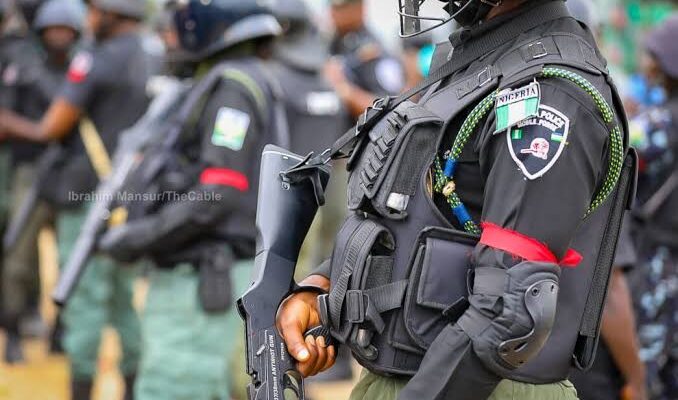

The Senate’s endorsement of state policing has reignited one of the most consequential debates in Nigeria’s contemporary governance discourse. While national attention has focused on the constitutional and political dimensions of the proposal, its practical implications are likely to be felt most acutely in regions that have endured persistent security challenges. For Kogi State and the wider Middle Belt, the conversation extends far beyond legislative procedure. It concerns the fundamental question of whether a reconfigured security architecture can deliver the stability necessary for economic growth, social cohesion, and public confidence in the state.
The Middle Belt occupies a uniquely complex position within Nigeria’s security landscape. Its strategic geography, ethnic diversity, and role as a corridor connecting northern and southern economic zones have rendered it vulnerable to a spectrum of threats, including banditry, kidnapping, communal violence, and transboundary criminal activity. Kogi, often described as the nation’s gateway, exemplifies these realities. Communities situated along major transport routes have repeatedly confronted security pressures that strain the capacity of conventional policing structures. Advocates of state police argue that locally controlled forces would possess superior situational awareness, enabling more precise intelligence gathering and more rapid operational responses.
Yet the efficacy of state policing will depend on far more than proximity. The assumption that local control automatically translates into better security overlooks the institutional prerequisites that underpin effective law enforcement. Professional recruitment, operational discipline, technological capability, and independent oversight remain indispensable. Without these safeguards, decentralization risks reproducing existing deficiencies at a subnational level. The challenge, therefore, is not merely to relocate authority but to strengthen the institutions through which that authority is exercised.

For Kogi and the broader Middle Belt, the stakes are particularly significant because security is inseparable from development. Agricultural productivity, commercial activity, investment inflows, and intercommunal relations all depend upon a predictable and secure environment. Persistent insecurity imposes substantial economic costs, discourages private enterprise, and undermines public trust in government. If state policing is designed with sufficient accountability and professionalism, it could enhance local resilience and contribute to a more secure foundation for regional prosperity. If poorly implemented, however, it may compound governance challenges and deepen public scepticism.
The significance of the Senate vote ultimately lies not in its symbolism but in the policy choices that follow. Constitutional reform can create opportunities, but institutions determine outcomes. For Kogi and the Middle Belt, state policing should not be viewed as a panacea for entrenched security problems. Rather, it represents a strategic experiment in governance whose success will depend upon competence, transparency, and political restraint. Whether this reform becomes a catalyst for stability or another unrealized promise will be determined not by legislative ambition alone, but by the quality of its execution on the ground.
– Inah Boniface Ocholi writes from Ayah – Igalamela/Odolu LGA, Kogi state.
08152094428 (SMS Only)