
By Muhammed Sherifdeen Omeiza
Governments borrow money because development costs money. Countries need roads, electricity, schools, hospitals and other infrastructure, and domestic revenue is often not enough to finance all of these needs.
Borrowing is therefore not automatically a bad thing.

The problem begins when a country borrows more than its economy can comfortably repay, or when borrowed money does not produce enough economic value to justify the debt.
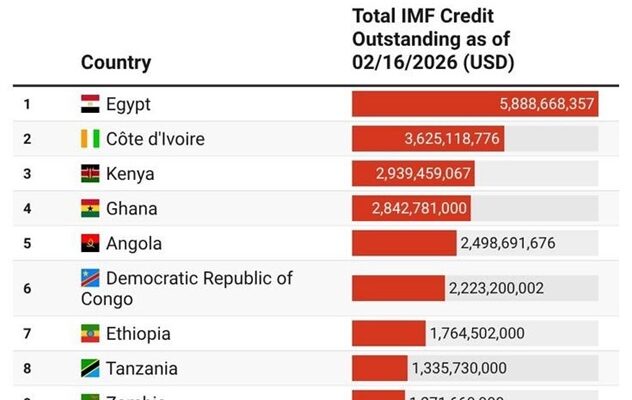
Africa is facing growing pressure from debt. Public debt across the continent has increased significantly over the past decade, placing greater pressure on national budgets.
The pressure is particularly serious because governments are now spending large amounts of money servicing existing debt.
Nigeria provides a useful example. The government has acknowledged that higher debt-servicing costs have absorbed a significant part of the savings expected from major economic reforms.
This creates a difficult situation.
A government may introduce reforms that improve its finances, but if debt obligations continue to consume a large part of public revenue, citizens may not immediately feel the benefits.
The same problem can be seen elsewhere.
Ethiopia has been working through debt restructuring after defaulting on its Eurobond. The country entered the G20 Common Framework for debt restructuring and has faced a difficult process of renegotiating its obligations.
These cases show that Africa’s debt problem is not one single problem.
Some countries borrowed to finance infrastructure and development. Others borrowed to deal with economic shocks, falling revenues, conflict or emergencies. In some cases, governments also borrowed because domestic revenue was simply too weak to meet public spending needs.
This raises the question of who ultimately pays for government borrowing.
It is the ordinary citizen.
When debt servicing becomes too expensive, governments have fewer resources available for education, healthcare, infrastructure and social protection. Governments may also increase taxes or reduce spending.
The problem is therefore not borrowing itself.
The problem is borrowing without a clear plan for repayment and economic returns.
Before taking on new debt, governments should be able to explain what the money will finance, how the investment will generate economic value and how the debt will eventually be repaid.
There also needs to be greater transparency.
Citizens should know how much their governments owe, who the creditors are, what interest rates are being paid and what the borrowed money was used for.
Parliaments must also take debt approval more seriously.
Borrowing should not become something governments can do without sufficient public scrutiny.
African countries also need to improve domestic revenue mobilisation. A country that cannot collect enough taxes from a growing economy will continue to depend heavily on borrowing.
But taxation must also be fair.
Citizens are more likely to accept taxes when they can see that government is using public money responsibly.
There is also a need for stronger regional and international cooperation on debt restructuring. When countries fall into debt distress, lengthy negotiations can make recovery more difficult.
The solution is therefore not simply to tell African countries to stop borrowing.
Africa still needs investment, and some borrowing will remain necessary.
The real question is what countries borrow for.
Debt used to build productive infrastructure, strengthen human capital and expand economic capacity can help a country grow.
Debt used mainly to cover recurring expenditure without improving future revenue can create another problem for the next generation.
Africa’s debt debate should therefore move beyond asking how much governments owe.
We should also ask what the borrowed money produced.
Because in the end, the people who repay government debt are not the politicians who signed the agreements.
They are the citizens who live with the consequences.
– Muhammed Sherifdeen Omeiza is a Nigerian researcher and writer whose work explores the intersection of humanitarian action, human rights, gender equality and global governance. With a keen interest in public policy, democracy, and political economy, he examines how local experiences and global decisions shape humanitarian outcomes in times of crisis. His writings draw from African and international contexts, reflecting a commitment to justice, accountability, and people-centered governance in global affairs.
Email: sherifdeenmuhammed001@gmail.com