
By Musa Bakare
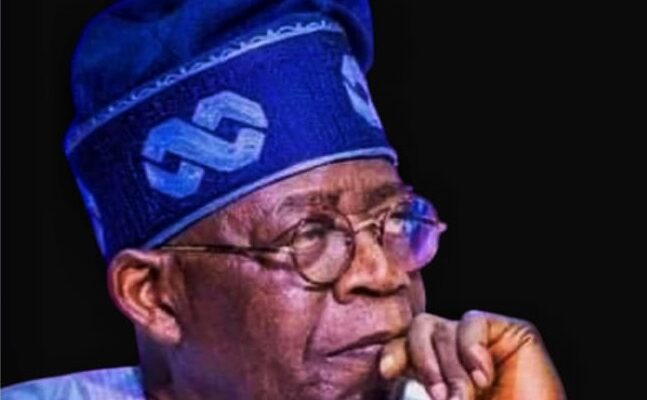
President Bola Ahmed Tinubu came to office in 2023 promising fundamental economic reform. His administration took difficult decisions, including the removal of the petrol subsidy and changes to the foreign exchange framework, while pursuing tax, education, power, infrastructure and security reforms.
The reforms have produced remarkable gains, and Nigerians are better off.

Structural reform cannot be measured only by the discomfort of its beginning.
It must also be judged by whether it creates a stronger foundation for the future.
And that is where the argument for Tinubu’s continuity in 2027 becomes compelling.
Nigeria has spent decades postponing difficult decisions. We have frequently preferred temporary comfort to structural correction.
The result has been familiar: problems are transferred from one administration to another until they become national emergencies.
Nigerians are noting with nostalgia that the Tinubu administration has chosen a different path.
They are happy that the country must confront structural weaknesses rather than continue managing them indefinitely.
That process is not complete.
The President himself has described the work as unfinished and has made consolidation of the reform programme central to his 2027 case.
The argument is therefore straightforward:
If the objective is economic transformation, why abandon the reform process before its full effects can be tested and consolidated?
The 2027 election should not merely ask what Nigerians think about the past three years. It should ask: What kind of Nigeria do we want to build over the next four years? Do we continue economic restructuring?
Do we deepen infrastructure investment? Do we strengthen the power sector? Do we expand opportunities for young Nigerians?
Do we continue rebuilding national security institutions? Do we pursue constitutional reform? Do we make the federation more responsive to local realities?
These are not abstract questions.
They determine whether Nigeria moves forward or repeatedly starts over.
President Tinubu’s reform agenda has pushed the state-police question to the centre of Nigeria’s constitutional debate, arguing that decentralised policing can strengthen grassroots intelligence and security.
By June 2026, the Presidency said consultations on the constitutional framework had advanced substantially.
This matters because Nigeria’s future cannot depend entirely on institutions designed for yesterday’s challenges.
There are strong indicators of economic expansion. The National Bureau of Statistics reported real GDP growth of 4.43% year-on-year in the second quarter of 2026, compared with 3.89% in the first quarter.
The question for 2027 is therefore not whether Nigeria has arrived at economic prosperity. The question is whether the foundations being built should be consolidated and improved or abandoned for another beginning.
Nations become developed not by endlessly beginning again. They develop by building, correcting, consolidating and continuing.
President Tinubu has expressly presented the next four years as an opportunity to consolidate economic reforms, strengthen infrastructure, improve energy security, expand industrialisation and deepen democratic consolidation.
He therefore has a clear message for Nigerians: We have begun the journey. Let us finish the work. Not because Nigeria has no problems, but because Nigeria has too many problems to keep starting from zero.
The continuity argument is clear: Nigeria needs a government that can build on what has already been started rather than spend another term dismantling, redesigning and restarting.
An unfinished work requires one thing above all: the courage to continue.
For the greater majority of Nigerians, the Tinubu administration has placed Nigeria on a reform path that should be consolidated. 2027 is therefore not merely another election.
It is a choice about continuity. A choice about consolidation. A choice about whether Nigeria should keep moving forward with the current reform direction.
2027: Let the work continue
Renew the mandate
Consolidate the reforms
Build the Nigeria we seek
– Musa Asiru Bakare, member, Tinubu Support Group (TSG), writes from Lokoja, Kogi State.