
By Mallam Hamisu Ahmed
There is a peculiar talent Nigerians possess, it is the talent of complaining loudly about neglect on Monday, romanticising the architects of that neglect on Tuesday, and then returning them to office on Wednesday. By Thursday, we gather under mango trees, in beer parlours, on WhatsApp platforms, and in market squares to ask why development continues to travel to our communities with the speed of a tortoise carrying a bag of cement.
This strange national gift came to mind as I reflected on the approaching political choices before the people of Ankpa, Omala, and Olamaboro Federal Constituency. Every election season arrives like the Harmattan. We know it is coming. We know what it brings. Yet somehow, we are surprised every single time.

The politician arrives in a convoy large enough to suggest that he has mistaken our constituency for a newly discovered oil field. The sirens scream. The praise singers sing. The rented crowd dances. The candidate speaks in the language of redemption. Roads will appear. Jobs will materialise. Electricity will descend from heaven like the tongues of fire at Pentecost. Before you know it, the people begin to behave like a man who has been deceived by the same herbalist fourteen times but is willing to try a fifteenth miracle because this time the herbalist has changed his cap.
Let us be honest with ourselves.
The story of many Nigerian constituencies like ours, is the story of communities trapped in a recurring cycle of political amnesia. We forget too quickly. We forgive too cheaply. We surrender our future for immediate excitement. The same roads remain death traps. The same schools continue to educate children under roofs that have entered into direct conversation with rainfall. The same health centres remain monuments to government abandonment. Yet election after election, we behave as though history is an optional subject.
History, however, is stubborn.
It keeps records. It remembers who came to power promising transformation and delivered excuses. It remembers who treated public office as a private inheritance. It remembers who saw representation not as service but as an investment portfolio from which profits must be extracted before the next election cycle.
You must remember that democracy is not a cultural festival. It is not a beauty pageant. It is not a competition for the loudest praise singers. Democracy is essentially an examination. Citizens are the examiners. Politicians are the candidates. Unfortunately, in Nigeria, we often allow the candidates to mark their own scripts and announce distinctions for themselves.
This is why moments of electoral choice matter.
A constituency is not merely a geographical space on a map. It is a living community of aspirations. It is the farmer in Omala hoping that government will finally notice the road connecting him to markets. It is the trader in Ankpa calculating the cost of transporting goods through infrastructure that belongs more appropriately in an archaeological museum. It is the young graduate in Olamaboro wondering whether public service still possesses any relationship whatsoever with public good.
These are not abstract concerns. They are the daily realities of people who have waited too long for meaningful representation. The challenge before the electorate, therefore, is not whether politicians can speak eloquently. Nigerian politicians can speak so eloquently that they could persuade a fish to buy water. The challenge is whether citizens possess the courage to break with familiar disappointments and invest their mandate in leadership that understands service.
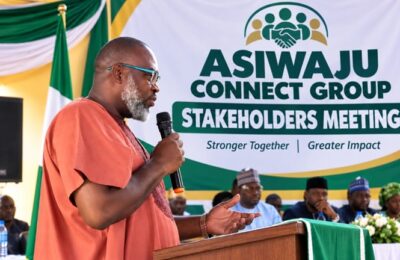
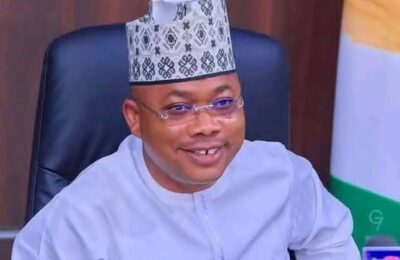
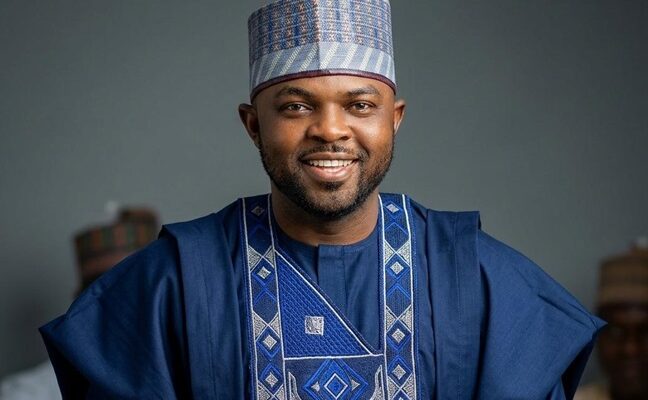
This is where the candidacy of Gowon Eneche, popularly known as G1, enters public conversation. His supporters argue that he represents an opportunity for renewal, a chance to confront years of perceived neglect and redirect the constituency toward purposeful representation. Whether one agrees entirely with every campaign promise is beside the point. Democracy thrives not on blind loyalty but on informed judgment. The critical question is whether voters see in him the capacity, commitment, and vision required to challenge the old habits that have kept development perpetually on the horizon.
For too long, many communities across Nigeria have lived in what I call the politics of tomorrow. Everything good is always coming tomorrow. Development is tomorrow. Employment is tomorrow. Infrastructure is tomorrow. Accountability is tomorrow. Unfortunately, tomorrow has become the most successful political office holder in Nigeria because it is always elected and never sworn in.
Perhaps the time has come to insist that tomorrow finally arrives today. The people of Ankpa, Omala, and Olamaboro face a decision that extends beyond party symbols and campaign slogans. It is a decision about whether representation should continue as routine political theatre or become a genuine instrument of community transformation. It is a decision about whether memory will triumph over amnesia. And that is the ultimate test.
For communities, like individuals, eventually become the sum of the choices they repeatedly make. If we continue rewarding failure, failure will become policy. If we continue celebrating neglect, neglect will become culture. But if we decide that public office must once again mean public service, then politics may yet recover its dignity.
History is watching. Future generations are watching. The ballot paper, silent and ordinary as it appears, is often the loudest voice a citizen possesses. The irony is that many people discover its power only after surrendering it.
May Ankpa, Omala, and Olamaboro remember what too many Nigerian communities forget: that the greatest tragedy is not electing the wrong leader once. The greatest tragedy is knowing better and repeating the mistake anyway.
As it stands, sending Gowon Eneche to the green chambers this time around, to represent Ankpa/Omala/Olamaboro federal constituency is the best deal. Make no mistake.
— Mallam Hamisu Ahmed writes from Ankpa LGA of Kogi State.