
By Musa Tanimu Nasidi
The recent arrest of Kogi Reports Editor, Opeyemi Owoeye, has once again brought concerns over press freedom to the forefront of public discourse. The incident has sparked renewed debate about the relationship between public office holders and the media, as well as the role of security agencies in a democratic society.
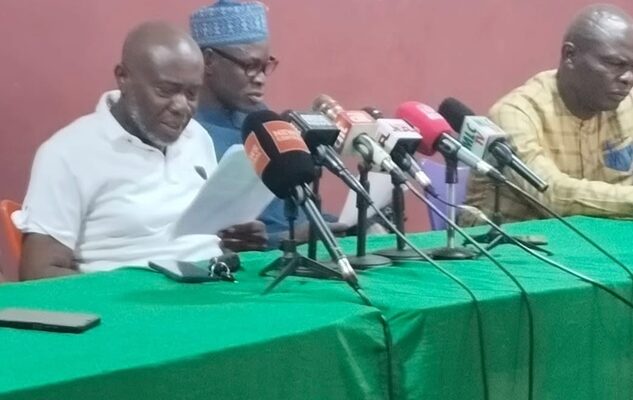
At a press conference in Lokoja, the Vice President of the Nigeria Union of Journalists (NUJ), Zone D, Alhaji Momoh-Jimoh Adeiza, strongly condemned the circumstances surrounding the journalist’s arrest. His remarks reflected growing apprehension within media circles over what many see as an increasing tendency to deploy security institutions in matters arising from media publications.

According to the NUJ leader, the alleged involvement of a serving federal lawmaker in the arrest raises critical questions about the appropriate channels for addressing grievances against journalists and media organisations. In any democratic society, disagreements over news reports and opinions are inevitable. Such disputes, however, are best resolved through dialogue, the right of reply, mediation, or recourse to the courts—not through actions that may be perceived as intimidation.
The union’s threat to boycott activities involving the lawmaker and to consider placing an embargo on coverage of the Nigeria Security and Civil Defence Corps (NSCDC) in Kogi State underscores the seriousness with which journalists view the incident. While such measures may appear drastic, they reflect a profession determined to safeguard its constitutional responsibility as the watchdog of society.
Particularly troubling is the allegation that the journalist’s bail could not be approved without the consent of the complainant. If true, such a development would raise significant concerns about due process and the independence of law enforcement agencies. The rule of law demands that security institutions operate strictly within established legal frameworks, free from political influence and personal interests.
The NUJ’s intervention is not merely about one journalist or one media organisation. Rather, it is a defence of the broader principle of press freedom—a cornerstone of democratic governance. A free and independent press remains essential for promoting transparency, ensuring accountability, and providing citizens with access to diverse viewpoints.
Significantly, the union also commended the Department of State Services (DSS) in Kogi State for maintaining what it described as a professional and cordial relationship with journalists. This acknowledgement demonstrates that constructive engagement between security agencies and the media is both possible and beneficial to society.
Beyond Kogi State, the concerns raised by the NUJ reflect a broader national challenge. Reports of attempts to silence critical voices, restrict media operations, or intimidate journalists have emerged from various parts of the country. Such developments serve as reminders that democracy is not self-sustaining; it requires constant vigilance and protection.
Public office holders, security agencies, media practitioners, and citizens all share a collective responsibility to uphold democratic values. Criticism may be uncomfortable, and journalism may occasionally provoke disagreement, but the answer to dissenting opinions is not suppression. Rather, it lies in dialogue, transparency, and unwavering adherence to the rule of law.
As Nigeria continues its democratic journey, the treatment of journalists will remain a vital indicator of the nation’s commitment to freedom, accountability, and justice. The warning issued by the NUJ should therefore be viewed not merely as a reaction to a single incident, but as a broader call to defend the principles that sustain democratic governance.
In the words of the union’s leadership, “An injury to one journalist is an injury to the entire profession.” The statement is a powerful reminder that when press freedom is threatened, it is not only journalists who suffer, but society as a whole.
– Musa Tanimu Nasidi is the Editor of THE ANALYST. He writes from Lokoja, Kogi State.