
“I am not here to try, I am not here to send condolences to victims of kidnapping; I am here to defeat criminality. I am here to win the war and battle; it is my responsibility to keep you safe.” – Governor Ahmed Usman Ododo of Kogi State.
The challenge of insecurity remains one of the greatest threats confronting modern societies and thus each passing day, we wallowed in infectious fear and hopelessness. In Nigeria, few states have experienced the evolving menace of banditry, kidnapping, armed robbery, and criminal violence as intensely as Kogi State. The Anebiras are lamenting, the Oworos are deeply bittered, the Okuns gnashing their teeth and the Igalas are sobbing due to death that lurks in the Corner. Strategically located at the confluence of Rivers Niger and Benue and serving as a gateway between Northern and Southern Nigeria, Kogi occupies a critical geographical position that ought to have been translated to massive fortune for the state. Unfortunately, this strategic location has also made it vulnerable to criminal infiltration, bandit movements, and organized kidnapping networks.
Today, the people of Kogi State face a difficult reality. Communities that once enjoyed relative peace now contend with the fear of abduction, attacks on highways, invasions of rural settlements, and criminal occupation of forests. At the slight shout of kidnappers, student that are busy learning in classroom, find the next exit to run for dear life, abandoning bags, notebook and their lunch box; Farmers are afraid to cultivate their lands, for they don’t know whether kidnapper had laid silent ambush to forcefully take them away along with the sweat of their harvest .traders travel with anxiety, peeping through the windows of their vehicles at the sight of any military checkpoint and parents worry about the safety of their children, for the sordid tales of those who once fell victim is too gory to allow their precious children got entangled in that ugly web. The growing menace of kidnapping and banditry threatens not only lives and property but also the social and economic future of the state. Thus, to travel for burial or any other celebration at home, you have to really count the cost, whether it worth the risk or just to parcel your goodwill through ubiquitous money venders.

Although Kogi State has historically enjoyed a reputation as one of Nigeria’s relatively peaceful states, signs of insecurity began to emerge significantly during the last decade. Initially, incidents were largely limited to armed robbery and communal conflicts. However, the security landscape changed dramatically as criminal gangs fleeing military operations in the North-West and North-East began infiltrating forests and remote communities within the state. We were actually involved in the training of stakeholder on how to build community resilience against insecurity and terrorism years back in Kogi state. The pragmatic and foresighted gentle giant, Governor Ahmed Ododo himself has noted that part of the insecurity confronting Kogi today is a spillover effect from criminal activities in neighboring regions, and very determined to address the ugly menace.
Today, sadly so, the vast and rich forests in areas such as Kabba-Bunu, Yagba East, Yagba West, Bassa, Lokoja, Ajaokuta, and Omala had gradually became attractive hideouts for criminal elements and they gleefully luxuriate in it. Over time, isolated criminal activities evolved into organized kidnapping operations targeting travelers, business people, students, traditional rulers, farmers, and public servants.
One of the incidents that drew national attention was the abduction of students from the Confluence University of Science and Technology in 2024, demonstrating that educational institutions were no longer immune from criminal attacks.
In recent years, kidnapping has become one of the most profitable criminal enterprises in Nigeria. Kogi State has unfortunately become one of the theatres of operation for these criminal networks. The state’s extensive road networks connecting Abuja, Lagos, Kaduna, Enugu, Benin, and other major cities make it attractive to kidnappers seeking targets and escape routes. Former Governor Yahaya Bello was fully aware of this, and in his gentle stubbornness his administration gave them a bloody nose and a run for their rascality. He matched them gun for gun, gut for gut and they flew away from the state, when thins become hotter to handle for the coward bandits.
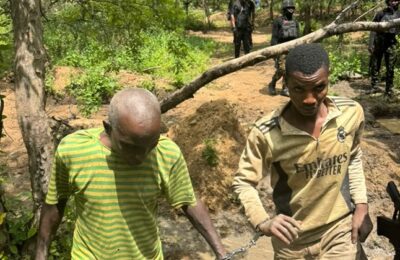
Reports from security agencies and government interventions indicate that kidnapping incidents have risen significantly, particularly in forested areas and along major highways. Recent operations by security agencies in Kabba-Bunu forests resulted in the arrest of 26 suspected kidnappers and collaborators, highlighting the scale of the challenge.
In 2026, troops operating in Kogi rescued 23 kidnapped victims following a major counter-kidnapping operation along the Ayegunle-Bunu Road after bandits attacked travelers. Similarly, security operatives foiled an attempted abduction of primary school pupils in Iluke Community, Kabba-Bunu Local Government Area, preventing what could have become another national tragedy. These incidents reveal a disturbing trend: criminals are becoming bolder, more organized, and increasingly willing to target vulnerable populations.
Successive administrations in Kogi State have recognized the threat posed by insecurity and have taken measures to address it. Under Governor Ahmed Usman Ododo, security has remained a top priority. Among notable interventions are: Establishment of the Quick Response Unit (QRU) to improve rapid response to security threats through the following tactical strategy; Deployment of modern surveillance systems and intelligence-driven policing. Acquisition of advanced surveillance drones for forest monitoring and intelligence gathering. Donation of 49 operational vehicles to security agencies across the state. Strengthening collaboration among the military, police, DSS, civil defence, hunters, and vigilante groups and Intensification of operations against kidnappers and their local collaborators.
These measures have produced measurable results. Security forces have dismantled several criminal camps, rescued kidnapped victims, arrested suspects, and disrupted kidnapping networks. Joint security operations recently overran multiple bandit camps operating within the state. Nevertheless, despite these achievements, insecurity remains a significant concern. Criminal elements continue to adapt their tactics, making continuous innovation and vigilance necessary.
With the pervading atmosphere of insecurity and threats of banditry in Kogi state, it becomes imperative that every stakeholder must be up and doing to address these challenges. The fight against insecurity cannot be won by government alone. Every stakeholder has a critical role to play. While Government need continue investing in security infrastructure, intelligence gathering, technology, and law enforcement capacity, the security agencies such as the military, police, DSS, NSCDC, and other agencies must strengthen inter-agency cooperation and intelligence sharing.
Traditional institutions remain the closest authorities to local communities and can provide valuable intelligence and mediation; hence, government need to support them to be more responsive. Religious institutions must promote peace, moral values, and community vigilance.
Young people must reject criminal recruitment and become ambassadors of peace. Advocacy groups can support awareness campaigns, victim support programs, and policy reforms. The media plays an indispensable role in exposing criminal activities, informing the public, and holding leaders accountable.
In this regard, special commendation must be given to the organization behind Kogi Reports. Through consistent reporting, public enlightenment, investigative journalism, and promotion of civic responsibility, Kogi Reports has contributed immensely to public awareness and the ongoing efforts to combat insecurity within the state. Its commitment to truth, accountability, and constructive engagement deserves recognition and encouragement.
The consequences of insecurity are devastating. Families have lost loved ones and are mourning endlessly. Many victims suffer physical injuries and psychological trauma. Businesses have closed and many more may go if nothing concrete is done to stem the tide. Investors are discouraged but must not be so for long, else it will be devastating for the state. Agricultural production has declined in several vulnerable areas as farmers abandon their farmlands due to fear, the fear is real, farmers in Iluke Bunu are now escorting themselves to fame in group,
Children miss educational opportunities and may be scared to go back to the classroom. Communities become displaced and the hope of return back is getting slimmer one wants to lose his or her beautiful life. Trust among citizens weakens and the discovery of informant in villages deepens mistrust. The atmosphere of fear undermines development and social cohesion and must not be allowed to fester for long.
Perhaps most painful is the emotional suffering endured by families whose loved ones are abducted and traumatized everlastingly in the process. The uncertainty, anxiety, and financial burden associated with ransom demands leave lasting scars that statistics alone cannot capture. Houses built with a sweat of life time are sold in a week to pay ransom, cars which were obtained by loan are fling up in a week to offset ransom.
This situation is tragic, pathetic, apocalyptic and highly unacceptable. We need to learn and imbibe deep lessons from some global best practices as to how such a delicate issue of insecurity was addressed. Several countries have successfully reduced kidnapping and organized criminal violence through innovative strategies.
Colombia significantly reduced kidnapping through intelligence-led operations, anti-kidnapping units, community engagement, and improved surveillance systems. The UK strengthened community policing and intelligence networks, allowing local communities to become active partners in security. Israel employs advanced surveillance technology, drones, intelligence fusion centers, and rapid response mechanisms to detect threats before they materialize. Following years of instability, Rwanda invested heavily in community security structures, citizen participation, and effective local governance.
Recent experiences in parts of northern Nigeria suggest that trusted local mediators and community-led peace initiatives can complement security operations when carefully designed and properly monitored. These examples demonstrate that sustainable security requires a combination of force, intelligence, technology, development, and community participation.
To permanently defeat banditry and kidnapping in Kogi State, the following actions are imperative: Expand surveillance technology across forests and highways, strengthen intelligence gathering at community levels, establish specialized anti-kidnapping courts for speedy prosecution, intensify border monitoring with neighboring states, create employment opportunities for youths, improve rural infrastructure and government presence in vulnerable communities, strengthen collaboration between security agencies and local vigilante groups, encourage citizens to report suspicious activities, improve witness protection mechanisms, sustain public awareness campaigns against criminal collaboration, deploy additional drones and modern security equipment and strengthen educational and economic empowerment programs that address the root causes of criminality.
Kogi State stands at a critical crossroads and we must provide are better path to a greater future and peace. The challenge of insecurity is real, but it is not insurmountable, with our resolve and collective collaborations. The state has demonstrated resilience, courage, and determination in confronting criminal elements. While progress has been made, much work remains to be done.The fight against banditry and kidnapping must become a collective mission involving government, security agencies, traditional rulers, religious institutions, civil society, the media, and every responsible citizen.
History teaches us that societies overcome insecurity when unity triumphs over division, vigilance over complacency, and courage over fear. The dream of a peaceful, prosperous, and secure Kogi State remains achievable, with all as a willing participant. With visionary leadership, sustained commitment, modern security strategies, and collective action, the state can move from crisis to stability, from fear to freedom, and from insecurity to lasting peace.The time to act is now.
– Prince Madiba Ibrahim Lapinni
Tel: 09011364063