
By Alao Adamadamosi Sunday,arpa
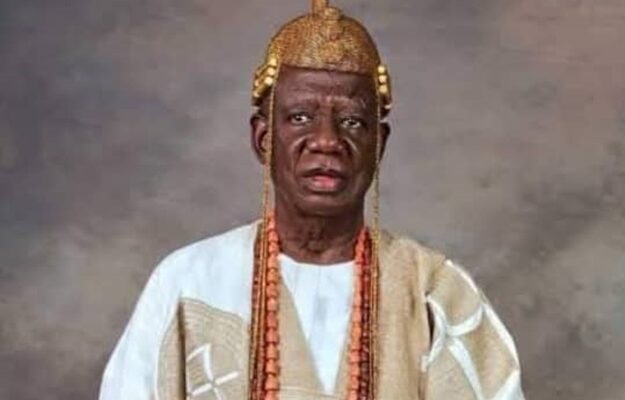
On August 25, 2025, the ancient town of Ogori in Kogi State, the entire academic community, and indeed Nigeria, bid a sorrowful farewell to one of its most distinguished sons—Professor Olugbemiro Akerejola, the Ubuoro Ajagajigi of Ogori Land. At approximately 80 years of age, this veterinary scientist, transformative administrator, and royal custodian completed his earthly assignment, leaving behind a void that may take generations to fill.
But as the dust settles on that fateful day, we are compelled to ask: What lessons does this towering figure leave behind for a nation grappling with leadership deficits, institutional decay, and a crisis of values?

Prof. Akerejola’s academic trajectory was nothing short of phenomenal. He attained the pinnacle of his profession—a full professorship—at the tender age of 38 in 1983, an accomplishment that many spend a lifetime chasing. This teaches us that excellence is not a function of age but of preparation, discipline, and relentless pursuit of knowledge.
In a country where mediocrity is often celebrated and quick fixes are preferred over rigorous scholarship, Akerejola’s rise reminds us that true distinction demands sacrifice. Young Nigerians must learn that there are no shortcuts to the top; rather, it is the accumulation of small, consistent efforts that produces the kind of enduring excellence that defined his life.
From 2000 to 2006, Prof. Akerejola served as the Director-General of the Industrial Training Fund (ITF), a period widely regarded as one of the most transformative in the agency’s history. He didn’t just occupy the office; he reformed, restructured, and reoriented the institution toward its core mandate of manpower development.
His tenure at the ITF provides a crucial lesson for Nigerian leaders: public office is a trust, not a treasure chest. He understood that the bridge between academia and industry was broken, and he worked tirelessly to rebuild it. His leadership was marked by institutional reform, transparency, and a genuine commitment to empowering Nigerian youth with practical skills—a template that many of today’s leaders would do well to study.
Beyond the lecture halls and corporate boardrooms, Prof. Akerejola bore the weight of his people as the Ubuoro Ajagajigi of Ogori Land. Born into the Eminefo Royal Dynasty, he did not treat his chieftaincy title as a mere ornament. Instead, he embraced it as a sacred call to serve his community, bridging the gap between modernity and tradition.
In a time when many traditional rulers have become distant or commercialised, Akerejola’s life teaches us that true royalty is rooted in responsibility. He was accessible, involved, and deeply committed to the development of Ogori. His passing on that August day was not just the loss of a professor or a bureaucrat—it was the departure of a father, a counsellor, and a pillar who gave his people a sense of identity and pride.
August 25, 2025, will forever be etched in the memory of those who knew him. But his death, like all deaths, is a stark reminder that life is but a fleeting vapour. As the Bible says in James 4:14, “What is your life? You are a mist that appears for a little while and then vanishes.”
Yet, Prof. Akerejola’s life did not vanish. It remains in the students he mentored, the policies he shaped, the institutions he reformed, and the family he raised—including his son, Major General Erema Akerejola, who has served the nation in uniform. Legacy is not built on titles but on impact. It is the sum total of the lives you touch, the systems you improve, and the values you instill in the next generation.
As we mourn Prof. Olugbemiro Akerejola, we must also confront an uncomfortable truth: Nigeria does not adequately celebrate or document the lives of its great men and women while they are alive. How many young Nigerians knew of his contributions before his death? How many academic institutions have archived his works for posterity?
This is a clarion call to our universities, our media, and our cultural institutions to create living archives of our heroes—not just as a posthumous tribute, but as a resource for ongoing learning. The story of Akerejola’s rise from Ogori to global prominence is one that must be taught in schools, told in homes, and referenced in policy discussions.
As Ogoriland still mourn the transition of Ubuoro Ajagajigi, we are reminded that the greatest tribute we can pay to the departed is not the grandeur of their funeral but the quality of the life we choose to live in their memory.
Prof. Olugbemiro Akerejola has left us—physically. But his blueprint for excellence, leadership, integrity, and community service remains. It is now up to us—students, academics, public servants, traditional rulers, and citizens—to pick up the baton.
Let August 25, 2025, not be remembered merely as a day of mourning, but as the day we resolved to build a Nigeria that honours its heroes by emulating their virtues.
Adieu, Ubuoro Ajagajigi. Adieu, great teacher. Your life was a lecture; your legacy, the enduring thesis.
– Alao Adamadamosi Sunday, arpa writes from Lokoja