
By Muhammed Sherifdeen Omeiza
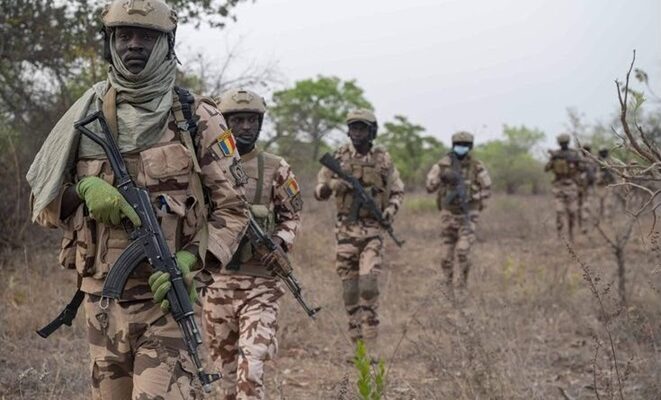
Security has become one of Africa’s biggest development challenges. In many parts of the continent, people are not only dealing with poverty and unemployment. They are also dealing with terrorism, kidnapping, armed groups and organised crime.
The worrying part is that these threats are no longer staying within national borders.

The Sahel is a clear example. Mali, Burkina Faso and Niger have experienced serious security challenges for years, while armed groups have increasingly expanded their activities towards coastal West African countries. A recent UN report said that an estimated $50 million ransom payment made in 2025 helped an al Qaeda-linked militant group expand its operations across the Sahel and parts of West Africa.
This shows how security threats can operate across borders.
Yet Africa’s response remains largely divided between individual countries.
Nigeria cannot solve insecurity in the Lake Chad Basin alone. Benin cannot deal with threats moving south from the Sahel alone. Mali, Burkina Faso and Niger cannot completely isolate themselves from their neighbours and expect cross-border armed groups to disappear.
This is why regional cooperation matters.
ECOWAS was created partly because West African countries understood that problems such as insecurity, trade and migration cannot always be solved by individual governments. But the withdrawal of Mali, Burkina Faso and Niger from ECOWAS has created a new challenge for regional security cooperation. The three countries have formed the Alliance of Sahel States, while ECOWAS is also trying to strengthen its own security arrangements.
The problem is not simply that countries disagree politically.
When regional institutions become weaker, criminals and armed groups can take advantage of the gaps between countries.
A terrorist group does not need a passport to cross a border. A kidnapping network does not care which country has jurisdiction. Weapons and illegal money can also move across borders more easily than governments sometimes expect.
This means African countries need to think about security differently.
Military operations remain important, but military force alone cannot solve the problem. The causes of insecurity also include poor governance, unemployment, poverty, weak institutions and lack of opportunities, especially in areas where governments have limited presence. The UN Security Council’s recent assessment of the Sahel also identified poor governance, underdevelopment, humanitarian conditions and climate change among the structural drivers of instability.
This is why development policy should be part of security policy.
If a young person has no school, no job and no hope of improving their life, an armed group can find it easier to recruit them. If rural communities do not trust the government or cannot access basic services, the state becomes weaker.
African governments therefore need to strengthen both security institutions and civilian institutions.
Regional intelligence sharing should be improved. Countries should coordinate their border security and develop systems that allow information about terrorist and criminal networks to move quickly between governments. There should also be stronger cooperation against money laundering, illegal weapons and ransom payments.
But regional cooperation must also be based on trust.
ECOWAS needs to understand why some member states have become frustrated with the organisation. If regional institutions want countries to cooperate on security, they must show that cooperation produces results and that smaller countries have a meaningful voice.
The solution is not to choose between ECOWAS and the Alliance of Sahel States. The bigger objective should be to find ways for countries across the region to cooperate even when their political relationships are difficult.
Africa’s security crisis is too large for individual countries to solve alone.
The continent needs a security system where information, resources and responsibility can cross borders as easily as the threats themselves.
Until African countries strengthen regional cooperation, insecurity will continue to move faster than the institutions created to stop it.
– Muhammed Sherifdeen Omeiza is a Nigerian researcher and writer whose work explores the intersection of humanitarian action, human rights, gender equality and global governance. With a keen interest in public policy, democracy, and political economy, he examines how local experiences and global decisions shape humanitarian outcomes in times of crisis. His writings draw from African and international contexts, reflecting a commitment to justice, accountability, and people-centered governance in global affairs.
Email: sherifdeenmuhammed001@gmail.com