
By Alao Adamadamosi Sunday
For decades, Nigeria has flirted with the paradox of importing rice while sitting on hydrological goldmines. Nowhere is this irony more glaring than in Kogi State. As the only state in Nigeria where the mighty Rivers Niger and Benue converge, Kogi possesses a natural irrigation advantage that could transform it from a subsistence farming zone into the nation’s unassailable rice basket.
Lokoja, the state capital, is historically famous as the confluence town. Every day, thousands of Nigerians drive across the bridges spanning these rivers without realizing that beneath them flows the solution to the nation’s food inflation crisis. While Kebbi and Ebonyi get the lion’s share of agricultural accolades, Kogi sits quietly on the most strategic water asset in West Africa. It is time to turn on the tap.

Walking through the rice fields of Ibaji, Omala, or Bassa Local Government Areas (LGAs), one sees a frustrating picture. Farmers, mostly elderly men and women, still rely on the erratic “God’s own irrigation” (rainfall). They plant once a year, struggle with floods during the wet season, and abandon vast fertile plains to weeds during the dry season.
Why? Because we have confused the presence of water with the presence of irrigation.
The River Niger does not automatically produce rice; controlled water does. Currently, Kogi State produces roughly 300,000 to 400,000 metric tons of rice annually. This is respectable, but given the hydrological assets, the state should be producing over 2 million metric tons yearly. That is the difference between “sufficient” and “surplus.”
To achieve sufficient rice production—meaning Kogi feeds itself and exports to neighboring states like Abuja, Nasarawa, and Benue—we must bridge three critical gaps:
- The Dry Season Infrastructure Gap: The River Niger never runs dry. Yet, our farmers run dry during the Harmattan. The Federal Government and the Kogi State Government must aggressively revive and expand the irrigation schemes abandoned in the 1980s. Specifically, the Lower Niger River Basin Authority (LNRBA) must be equipped with modern pumping stations. We need gravity-fed channels from Lokoja down to Idah. If we irrigate just 10% of the floodplains (fadamas) along the river during the dry season, Kogi will harvest rice three times a year instead of once.
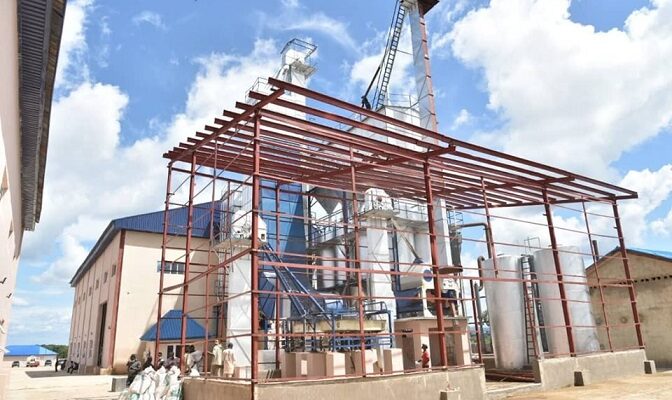
- The Processing Gap: One major reason rice production falters is post-harvest loss. Kogi produces paddy rice that is often smuggled to Rijau (Niger State) or Sokoto for milling. This kills the local economy. The state government, under the Kogi Agro-Processing Zone policy, must provide incentives for medium-scale integrated mills in Koton Karfe and Ankpa. When a farmer can sell his paddy within 10 kilometers of his farm, production explodes.
- The Seed Quality Gap: We cannot keep planting local varieties that mature in six months with low yields. We need to flood the confluence zone with Faro 44 and 60 varieties—high-yielding, flood-tolerant seeds. The River Niger brings fertile silt, but that silt is useless if the seed is weak.
Let us do the math. According to the Rice Farmers Association of Nigeria (RIFAN), one hectare of irrigated rice along the Niger can yield 6 tons per season. Kogi has an estimated 500,000 hectares of cultivable riverine land. If we intensively farm just 100,000 hectares across three cycles (dry season, early wet, late wet), we are looking at nearly 2 million tons of paddy. That translates to roughly 1.3 million tons of processed rice.
At current prices (N70,000 per 50kg bag), that is a multi-trillion Naira economy solely from Kogi State. That is not just sufficient; that is a strategic reserve for the entire North-Central zone
Governor Usman Ododo and President Bola Tinubu must view the Confluence as a national security asset. Banditry and insecurity have chased farmers away from the North-West. Climate change is destroying crops in the South-East. Kogi remains relatively peaceful, centrally located, and surrounded by water.
It is time for the Confluence Special Agro-Industrial Revolution. We need:
· A dredging and barrage system at the confluence point to redirect water for dry-season farming.
· Tax waivers for tractor and harvester dealers setting up shop in Kogi.
· A security “Green Force” dedicated to protecting rice fields in Ibaji and Omala, where cross-border movements from the East can disrupt farming.
For too long, Kogi State has been a transit point—where roads cross and rivers meet. We are tired of being a route; we want to be the destination for food.
The River Niger does not discriminate. It flows past the wealthy and the poor alike. But it offers an equal opportunity to produce. The question is not whether Kogi can produce enough rice. The question is whether we have the political will to build the dams, lay the pipes, and secure the fields.
The water is there. The land is fertile. The market is hungry. Let the sufficient rice production of Kogi State begin—right here at the confluence of rivers and resolve.
Amen.
– Alao Adamadamosi Sunday arpa writes from Lokoja.