
By Yusuf Kabiru David
When the future of a nation becomes a weapon in the hands of politicians, the people who suffer most are the youths who should be building that future.
Across Nigeria, one troubling question deserves our attention: Why do some young people believe that becoming a political thug, intimidating opponents, or engaging in electoral violence is the fastest route to political relevance and a better life?

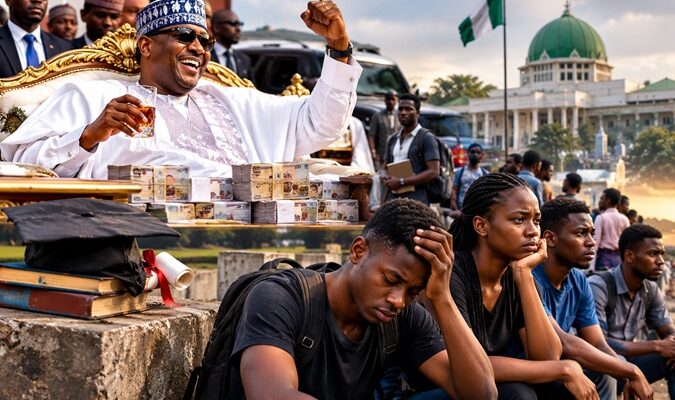
For many young Nigerians struggling with unemployment, poverty, and limited opportunities, politics can appear to be a doorway to financial survival. Unfortunately, some politicians exploit these challenges by using young people as instruments of intimidation, violence, and political rivalry during campaigns and elections.
The painful reality is that the consequences can be devastating. A young person who joins a political gang in the hope of gaining money, recognition, or favour may end up injured, imprisoned, or dead. Meanwhile, the politicians who encouraged the violence may return to their comfortable homes, leaving grieving families to bear the consequences.
Is it worth sacrificing your future for a politician whose political interest may disappear after the election?
This is a question every Nigerian youth must ask before allowing themselves to become instruments of political violence.
Politics should be understood as a responsibility to represent the interests of the people, not an opportunity to demonstrate loyalty through intimidation or violence. Supporting a candidate does not require attacking opponents, destroying property, spreading hatred, or threatening citizens who hold different political opinions.
True political participation begins with understanding policies, examining candidates’ records, asking difficult questions, and demanding accountability from those seeking public office.
Nigerian youths must also understand that political loyalty should never be greater than loyalty to the nation. No politician is more important than the life, dignity, and future of a young Nigerian.
Stop Selling Your Future for Temporary Rewards
Another serious concern is vote buying, which continues to undermine the democratic process in Nigeria. Some voters are offered money, food, or other incentives in exchange for their votes. For citizens facing economic hardship, such offers may appear attractive, but the long term consequences can be costly.
When voters surrender their choices for temporary rewards, they risk weakening their ability to demand good governance from those elected.
The money offered during an election cannot compensate for years of poor healthcare, inadequate educational facilities, unemployment, insecurity, and the absence of essential public services.
Every vote matters. Young people should use their voting power to support candidates based on their character, competence, policies, and commitment to public service not merely on financial inducements or political pressure.
Democracy gives citizens the right to choose their leaders freely. That right must be protected against bribery, intimidation, and manipulation.
Political Defeat Is Not a Declaration of War
Nigeria also needs a political culture in which election results do not automatically become reasons for violence and hostility.
Political parties may compete, disagree, and challenge one another’s ideas. Such competition is part of democracy. However, disagreement should never become an excuse for bloodshed, destruction, or the persecution of political opponents.
When a candidate loses an election, supporters should respect the democratic process while using lawful channels to challenge results where credible concerns exist. Likewise, winners should govern inclusively, remembering that they represent the entire population, not only those who voted for them.
A political opponent is not an enemy of the nation simply because they belong to another party.
Nigeria cannot build a stronger future if every election divides communities, destroys friendships, and turns young people against one another.
The Leaders of Tomorrow Must Act Today
Young Nigerians are frequently described as the leaders of tomorrow. But tomorrow’s leadership depends on the decisions they make today.
They must learn to question political leaders, demand transparency, reject corruption, and hold elected officials accountable. They should participate in peaceful campaigns, civic education, community development, and other activities that strengthen democratic institutions.
Most importantly, young people must recognise that leadership is not measured by the number of politicians they can defend or the amount of money they receive during elections. It is measured by their contribution to society and their willingness to protect the interests of ordinary citizens.
Parents, community leaders, religious institutions, civil society organisations, and security agencies also have a responsibility to discourage political violence and educate young people about its dangers. Young Nigerians need opportunities, skills, employment, and a political environment that rewards constructive participation rather than violence.
If today’s youths allow themselves to be manipulated by selfish political interests, the next generation may inherit the same cycle of corruption, division, and poor governance.
But if they choose responsibility over violence, integrity over bribery, and national interest over personal gain, they can help build a country where leadership becomes a genuine instrument of development.
Conclusion: Your Life Is Worth More Than Any Political Appointment
To every Nigerian youth, the message is simple: Do not allow a temporary political relationship to destroy a permanent future.
You do not need to become a political thug to prove your loyalty. You do not need to fight your fellow citizens to demonstrate support for a candidate. And you do not need to sell your vote to survive.
Demand better from politicians, participate peacefully in the democratic process, and stand against bad governance through lawful and responsible action.
Nigeria needs young people who can think independently, defend democratic values, and put the public interest above personal rewards.
The future of Nigeria should not be built on the graves of its youths, but on their ideas, courage, integrity, and commitment to good governance.
The time has come for Nigerian youths to stop being used as weapons in political battles and start becoming the voices of accountability, peace, and national development.
– Yusuf Kabiru David
Davidwisdom508@gmail.com
08140991717