
Power rarely collapses in one dramatic moment. It bends first. Quietly. Publicly. Then permanently. In Igalaland, many now argue that the political surrender to Yahaya Bello did not begin with force, but with silence — the silence of elites who traded regional leverage for proximity to power. What emerged was not merely political alignment. It became, in the eyes of many citizens, a mutiny against the dignity and political independence of the Igala people.
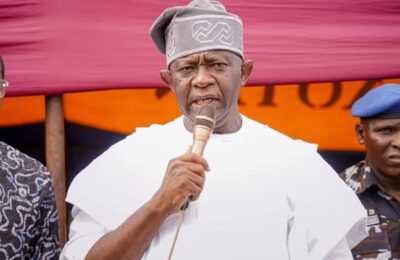
The image that unsettled many across Kogi East was not an election result or a legislative defeat. It was the spectacle of political submission itself. Seeing Muri Ajaka kneel publicly before Bello, a man facing highly publicized corruption allegations and court proceedings involving the Economic and Financial Crimes Commission over alleged embezzlement of state funds, became for critics a symbol larger than the individuals involved. Cameras captured the moment from every angle. To many observers, it was not merely a gesture of loyalty. It looked like proof that too many Igala leaders no longer carry the pain of their people with urgency or resistance.
For decades, the Igala political class projected itself as the stabilizing spine of Kogi State politics. That influence shaped governorship contests, legislative calculations and regional negotiations. But influence without cohesion decays quickly. As alliances shifted, several prominent actors from Kogi East appeared less interested in defending regional bargaining power than in securing personal survival within Bello’s political structure. The center weakened not because outsiders invaded it, but because insiders opened the gate themselves.

The result was psychological before it became electoral. A people once accustomed to negotiating from strength suddenly found themselves defending relevance inside a structure they once helped define. The political atmosphere resembled a once mighty iroko tree hollowed from within: standing tall in appearance while decay quietly consumed its core. Public loyalty replaced strategic dissent. Patronage replaced ideological direction. Fear of exclusion became stronger than the responsibility of representation.
Supporters of Bello reject this interpretation. They argue that political cooperation was necessary to stabilize a state long fractured by ethnic rivalry, elite conflict and regional distrust. They point to projects, appointments and coalition building as evidence that political realism matters more than emotional rhetoric. In their view, kneeling before power may be humiliating to critics, but survival in politics has never been governed by pride alone.
Yet politics is not judged only by roads, appointments or temporary alliances. It is judged by whether a people retain the confidence to speak for themselves without seeking permission from a dominant political center. Across parts of Kogi East, the deeper complaint is no longer about Bello alone. It is about a growing culture of surrender among those entrusted with defending Igala interests. History rarely forgives elites who exchange collective dignity for temporary access to power. And that may become the enduring lesson of the day Igalaland bowed.
– Inah Boniface Ocholi writes from Ayah – Igalamela/Odolu LGA, Kogi state.
08152094428 (SMS Only)