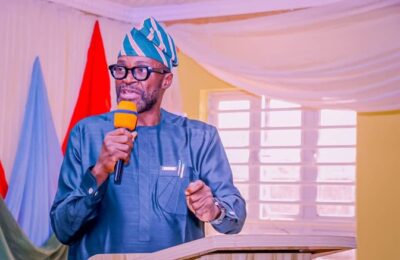

By Ahmed Dinar Abdulmumuni
Most parents have stated their reasons for rejecting government schools for their children, saying that bad and incompetent governments have destroyed public schools. However, some of these same parents bribe their way into securing government jobs for themselves and children within a system they describe as being full of corruption, bad governance, and incompetent leaders. This is hypocrisy.
There is a growing contradiction in our society that deserves serious attention: some parents do not want their children to attend government schools, yet the same parents desperately seek government employment, government contracts, government appointments and other opportunities provided by the government.

The question we should ask ourselves is simple: If government institutions are good enough to provide us with jobs and livelihoods, why are government schools suddenly considered unworthy for our children?
This is not an argument against private education. Private schools have an important role to play in the education sector, and many private schools provide excellent academic environments. However, the increasing abandonment of public education should concern everyone because government schools are not merely schools; they are public institutions designed to provide affordable education to the wider population.
The Importance of Government Schools
Government schools were established to ensure that every child, regardless of the financial status of their parents, has access to education.
A child from a wealthy family and a child from a low-income family should both have an opportunity to receive quality education. Public education therefore serves as one of the most important instruments for reducing inequality in society.
Government schools also bring children from different backgrounds together. They teach students not only academics but also social interaction, responsibility, discipline, leadership and the understanding that society belongs to everyone.
When public schools function properly, they become a powerful foundation for national development.
Government Schools Also Contribute to the Economy
Government schools should not be viewed simply as institutions that consume government resources. They are part of the wider economic system.
Government expenditure on schools supports teachers, administrators, construction workers, suppliers, textbook publishers, transport providers and numerous other businesses and workers.
Parents also spend money around schools on uniforms, books, transportation, food and other educational materials.
A strong public education system therefore represents investment in human capital, which eventually produces doctors, engineers, teachers, lawyers, entrepreneurs, civil servants, scientists and other professionals who contribute taxes and productivity to the economy.
Government schools are an investment whose returns may take years to become visible, but those returns benefit the entire society.
The Rising Cost of Private Education
Private school fees have become increasingly difficult for many Nigerian families to afford.
Some parents enroll their children in private schools because they believe that doing so demonstrates success or provides better opportunities. But education should not become a competition among parents.
In some families, parents struggle to pay school fees simply because they do not want their children to attend the same public school as their neighbours’ children.
The result is painful: some children are sent home because their parents cannot meet increasingly expensive private-school fees.
A child should not lose access to education because his or her parents cannot maintain a particular social image.
Instead of asking, “Where do my neighbour’s children attend school?” parents should ask, “Where can my child receive quality education within what I can genuinely afford?”
Private School Does Not Automatically Mean Better Education
We must stop assuming that a private-school uniform automatically represents academic excellence.
There are exceptionally brilliant students in private schools, just as there are exceptionally brilliant students in government schools.
There are also public-school students who outperform private-school students in examinations, competitions, universities and professional careers.
A child’s competence is determined by several factors, including intelligence, discipline, quality of teaching, parental support, learning environment, personal commitment and access to educational resources.
The name of the school alone does not determine the future of a child.
A well-supported public-school student who attends lessons after school, reads consistently and receives proper parental guidance can perform better academically than a private-school student whose parents pay very high fees but provide little supervision.
The Problem of Parental Competition
One of the problems confronting education today is parental competition.
Some parents send their children to private schools because their friends, colleagues or neighbours do the same. The decision is sometimes driven more by status than educational necessity.
A parent who earns modestly may borrow money or struggle financially simply to maintain the appearance that their children attend an expensive school.
This can create unnecessary financial pressure on families.
Education should not be a fashion competition.
Parents should choose schools based on quality, affordability, discipline, safety and academic performance, rather than social pressure.
Concerns About Children’s Exposure to Inappropriate Content
Another issue that deserves attention is the exposure of young people to inappropriate sexual content through smartphones and the internet.
This is not exclusively a private-school problem. Children in both private and public schools can access inappropriate online content.
However, in some schools where students have unrestricted access to smartphones, there have been concerns about pupils sharing sexually explicit materials among themselves, including pornography.
There are also wider concerns about some adolescents experimenting with sexual relationships and other behaviours before they are emotionally mature enough to understand the consequences.
The solution is not simply to blame private schools. Parents, teachers, school proprietors and government regulators all have responsibilities.
Parents must monitor what their children are watching online. Schools should establish clear technology policies and provide age-appropriate sex education, digital-safety education and counselling.
Giving a child an expensive smartphone without supervision is not the same thing as giving that child education.
Discipline Must Return to Our Schools
Academic excellence without discipline is incomplete education.
Some private schools operate under a business model where retaining fee-paying students becomes extremely important. In such environments, there can be pressure on teachers to avoid confronting students whose parents are important customers.
In some cases, teachers may be discouraged from disciplining students appropriately because proprietors fear that strict treatment could cause parents to withdraw their children.
This can create an unhealthy environment in which students believe that because their parents pay school fees, teachers cannot correct them.
Children need love, but they also need boundaries.
Discipline does not mean abuse. Schools should never permit corporal punishment or humiliating treatment. But teachers must be empowered to correct misconduct through clear, lawful and professional disciplinary procedures.
Parties, Smoking, Drinking and Other Risky Behaviour In Private Schools
There are also concerns about some schools organising social activities without sufficient supervision.
Where school parties are poorly supervised, students may be exposed to inappropriate music, sexualised behaviour or substance use.
There are also reports and concerns in some communities about students smoking, drinking or engaging in sexual activity outside school hours or in places connected to school environments.
These behaviours should not be used to condemn every private-school student. Many private-school students are responsible, disciplined and academically excellent.
But the lesson for parents is clear:
Paying school fees does not replace parental supervision.
Parents must know who their children’s friends are, where they go after school, what they watch online and how they spend their free time.
The Strength of Public-School Teachers
One of the greatest strengths of the public education system is its pool of trained teachers.
Many government-school teachers are professionally trained, qualified and experienced educators who have spent years developing their teaching skills.
This does not mean that private-school teachers are unqualified. There are highly competent and professionally trained teachers in private schools.
However, some private schools employ inexperienced individuals simply because they are cheaper to employ. In some cases, young secondary-school graduates or inexperienced graduates may be given teaching responsibilities without adequate professional training.
This can affect the quality of education.
The government must therefore ensure that every teacher—public or private—meets appropriate professional standards.
Public-School Teachers Need Motivation
If we want government schools to succeed, we must also be honest about the challenges facing government teachers.
Many teachers work under difficult conditions. Some classrooms are overcrowded, teaching materials are inadequate, infrastructure is poor and teachers may feel undervalued.
A teacher who is poorly motivated may eventually lose enthusiasm for the profession.
Government must therefore improve teacher welfare through timely salaries, professional development, recognition, adequate teaching materials, better working environments and opportunities for career progression.
A motivated teacher can transform a generation.
Some Government Schools Are Already Doing Better
It is wrong to assume that every public school is automatically inferior to every private school.
There are government schools, particularly in some urban areas, that have better facilities, more experienced teachers, stronger academic traditions and better examination results than some private schools.
The problem is that the success stories of public schools are often ignored.
Instead of abandoning public education, society should demand that more government schools reach the standard of the best-performing ones.
Why Did Public Schools Decline?
The decline of public education has several causes.
Poor funding is one.
Weak maintenance of school infrastructure is another.
Teacher shortages, inadequate learning materials, overcrowded classrooms, poor supervision, delayed implementation of education policies and insufficient accountability can also contribute.
Political interference and the failure to consistently invest in education have further weakened confidence in public schools in some areas.
But the answer is not to abandon the public-school system.
The answer is to rebuild it.
A Textbook In a Private Schools Can Cost More Than a Year’s Public-School Fees
One of the strongest arguments for public education is affordability.
In many government schools, parents can educate their children at a fraction of the cost of some private schools.
There are situations where the amount a parent spends on a single textbook or other compulsory private-school requirement can represent a significant portion of what another family spends on an entire year’s public-school education.
Parents should therefore carefully consider whether they are paying for genuine educational value or simply paying for a school brand.
Education Should Not Become a Profit-Only Business
Private education is a legitimate business, and school proprietors deserve to make reasonable returns on their investment.
However, education is also a social responsibility.
There are private schools established primarily as businesses, and some proprietors may take substantial loans to establish or expand their schools. The pressure to recover those investments can sometimes result in numerous compulsory charges being placed on parents.
Uniforms, textbooks, excursions, activities, technology fees and other requirements can accumulate into enormous costs.
The government must regulate private schools properly without destroying legitimate private investment.
Parents should also demand transparency about what they are paying for.
What Government Must Do
The Federal Government and state governments must urgently rebuild confidence in public education.
Government should renovate dilapidated classrooms and provide modern learning facilities.
Teachers should receive competitive salaries, regular training and professional support.
Schools should have adequate textbooks, laboratories, libraries, computers, internet facilities and sporting equipment.
School management should be strengthened through transparent accountability.
Government should also publish measurable performance indicators so citizens can see how education funds are being used.
There should be regular inspection of both public and private schools to ensure compliance with educational standards.
Most importantly, education funding must be protected from diversion and unnecessary political interference.
Parents Also Have a Responsibility,
Government cannot solve the problem alone.
Parents must stop measuring their success by the price of their children’s school fees.
A child does not become intelligent because the parents pay expensive school fees.
Parents should monitor homework, encourage reading, attend school meetings, communicate with teachers and supervise their children’s use of smartphones and social media.
Parents should also teach discipline at home.
The home is the first school, and parents are the first teachers.
National Unity, the National Anthem and Religious Freedom in Schools
One important advantage of the government-school system is the opportunity it provides for children from different ethnic, cultural and religious backgrounds to come together under one national identity.
In many government schools, students begin their school activities by standing together to recite or sing the Nigerian National Anthem and observe the National Pledge. This simple practice reminds students that, regardless of whether they are Christians, Muslims or members of another faith, they are first and foremost Nigerians.
This principle should be respected in both public and private schools.
There are concerns, however, about situations in which a privately owned school adopts the religious practices of its proprietor and expects students of different faiths to participate in them. When parents believe that their children are being compelled to participate in another religion’s prayers or religious observances, it can create fear, distrust and tension.
Some parents may eventually withdraw their children because they feel that the school is attempting to influence their children’s religious beliefs.
We Must Stop the Contradiction
There is something fundamentally contradictory about a society where people say government schools are not good enough for their children but simultaneously spend years seeking government jobs.
If government employment is desirable, then the institutions of government deserve to be strengthened.
If government hospitals should serve the public, they should be improved.
If government universities should educate our young people, they should be improved.
And if government primary and secondary schools are meant to educate the children of ordinary citizens, they must also be improved.
We cannot continuously destroy confidence in public institutions and then complain when those institutions fail.
The Future Generation Is at Stake
The consequences of today’s educational choices will not end with today’s children.
The children we educate today will become tomorrow’s leaders, professionals, employers, teachers, parents and policymakers.
If education becomes an expensive competition that excludes children from less wealthy families, inequality will deepen.
If discipline continues to decline, society will eventually pay the price.
If teachers are not respected and motivated, the quality of future professionals will suffer.
If public schools collapse completely, the poor will be left with fewer opportunities while only wealthy families can comfortably access quality education.
That is not the society we should build.
Conclusion
The argument is not that every child must attend a government school.
The argument is that government schools must be good enough that parents can confidently choose them without shame.
Private schools should continue to exist and compete on quality. But public schools must not be abandoned.
Parents should stop competing over school fees and start competing over the values, discipline, knowledge and character their children acquire.
Government must stop treating education as an ordinary expenditure and begin treating it as a national investment.
And citizens must stop saying, “Government school is not good enough for my child,” while simultaneously saying, “I want a government job.”
The solution is not to abandon government schools.
The solution is to make government schools better.
A society that wants competent leaders tomorrow must be willing to invest in the education of its children today.
We cannot continuously condemn a broken system while participating in the very practices that keep it broken. If we want quality government schools, competent government workers, and effective public institutions, the change must begin with rejecting corruption—not only when it affects us, but also when we are the ones benefiting from it.
– Activist Ahmed Dinar Abdulmumuni
ahmedabdulmumuni100a@gmail.com