
By Muhammed Sherifdeen Omeiza
Water is one of the most basic needs of human beings, yet access to reliable water is becoming a serious problem in many African cities and communities. Climate change is making the situation worse, but climate change is not the whole explanation.
Sometimes the problem is sitting inside the pipes.

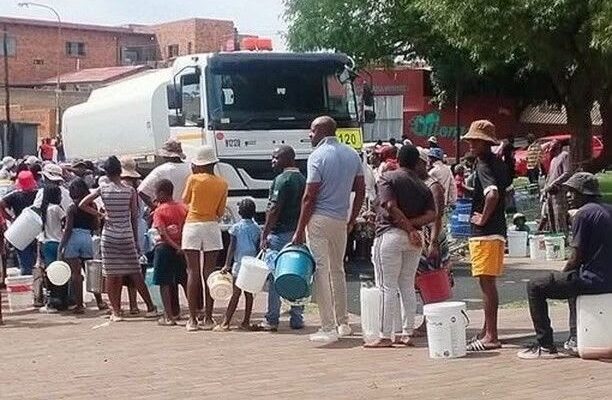
Johannesburg provides a good example. The city is losing an estimated 655 million litres of water every day through leaking and damaged infrastructure. Some communities have gone for years without reliable water, while wealthier residents are increasingly installing boreholes and other private systems to avoid depending on the municipal network.
This is not simply a drought problem.
It is also a governance problem.
When infrastructure is old and governments fail to maintain it, a large amount of available water can be lost before it even reaches households. When municipalities lack money, technical capacity or proper planning, the problem becomes worse.
Climate change is certainly putting additional pressure on water resources. But blaming every water crisis on climate change can allow governments to avoid responsibility for problems that could be addressed through better management.
This is why water governance matters.
Governments need to know how much water they have, how much they are losing and where the biggest problems are. They also need to invest in maintenance instead of waiting until infrastructure completely fails.
The situation becomes even more worrying when poor communities are affected more severely.
Wealthier households can buy water tanks, drill boreholes or install private systems. Poor households usually cannot. This means a water crisis can quickly become an inequality crisis.
The same problem can affect agriculture. Farmers depend on reliable water, yet many African countries still have limited irrigation systems. When rainfall becomes unpredictable, farmers become more vulnerable.
Water policy therefore needs to be connected to agriculture, urban planning, health and climate policy.
Africa also needs stronger cooperation over shared water resources. Rivers and lakes do not stop at national borders. Decisions made by one country can affect another country downstream. This makes regional cooperation important, especially in major river basins.
The 2026 UN World Water Development Report has also placed water governance at the centre of the global water debate, showing that solving water problems requires better institutions and inclusive decision-making.
African governments should therefore stop treating water as something that will always be available.
Water needs to be planned, protected and properly managed.
The solution is not only to build more dams or search for new sources of water. Governments must also reduce waste, maintain existing infrastructure, improve urban planning and make water institutions more accountable.
A city does not necessarily have a water problem because it lacks water.
Sometimes it has a water problem because it has failed to manage the water it already has.
– Muhammed Sherifdeen Omeiza is a Nigerian researcher and writer whose work explores the intersection of humanitarian action, human rights, gender equality and global governance. With a keen interest in public policy, democracy, and political economy, he examines how local experiences and global decisions shape humanitarian outcomes in times of crisis. His writings draw from African and international contexts, reflecting a commitment to justice, accountability, and people-centered governance in global affairs.
Email: sherifdeenmuhammed001@gmail.com