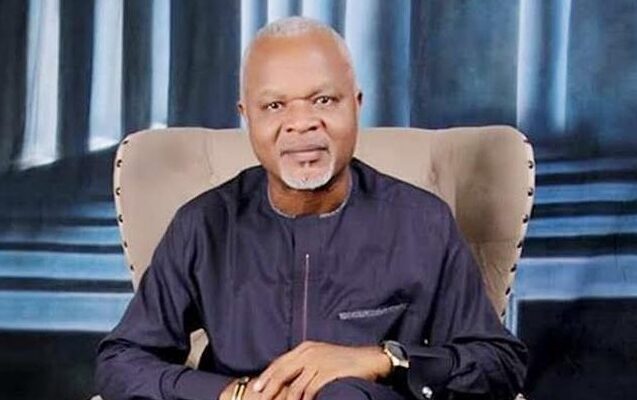

For years, Kogi Equity Alliance has maintained that the long term stability of Kogi State rests on one unresolved structural question: since the return of democratic governance in 1999, the state’s highest office has rotated between two senatorial districts, while a third has never occupied it. That argument has now received significant cross zonal validation, not from within Kogi West, but from Kogi Central itself.
Dr. Tom Ohikere, a proud son of Ebiraland and a former two time Commissioner for Information in Kogi State, has published a public appeal titled “The Kogi Question: Justice, Equity and the Case for 2027.” In it, he sets out, with the perspective of a former senior government official, the same fundamental reality that this Alliance has advanced for years: Kogi East and Kogi Central have taken turns at the governorship since 1999, while Kogi West has yet to produce a governor.
The historical arithmetic requires precision. From the return of democratic governance in 1999 to 2027, Kogi State will have experienced twenty eight years of the Fourth Republic. During that period, the governorship has been occupied by leaders from Kogi East and Kogi Central, while Kogi West has remained outside the rotation. The central issue, therefore, is not merely the number of years attributed to each district, but the structural exclusion of one senatorial district from the state’s highest elective office.

What lends Dr. Ohikere’s intervention its weight is not simply the argument itself, which KEA has long championed, but its source and its candour. He writes as a Kogi Central indigene, making an argument that does not serve the immediate political interest of his own zone. He states that extending Central’s hold on the governorship risks “institutionalizing an imbalance that will haunt Kogi for another generation,” and calls specifically for the 2027 APC governorship ticket to be ceded to Kogi West, thereby allowing the administration of Governor Ahmed Usman Ododo to complete its constitutionally prescribed single term and exit honourably, while establishing a clear and enduring principle of rotational governance thereafter.
This is, in substance, the equity framework this Alliance has championed since inception, now articulated from outside the zone seeking the opportunity.
The significance of Dr. Ohikere’s intervention therefore lies not merely in what he said, but in what it demonstrates: the case for Kogi West is capable of commanding serious support beyond the zone that stands to benefit from it.
Dr. Ohikere is also careful, and correctly so, to separate his equity argument from personal attack. He acknowledges the current administration’s development record in Kogi West, citing township road projects, investment in tertiary education, and healthcare infrastructure, while still arriving at the conclusion KEA has long held: performance and equity are not mutually exclusive.
A government can receive credit for projects delivered while citizens can simultaneously demand fairness in the distribution of political opportunity. Gratitude for governance already delivered must not be used to cancel the legitimate claim of a senatorial district that has waited since 1999 for its opportunity to produce a governor.
That distinction is fundamental. Equity is not a reward for failure, nor is it an indictment of anyone’s performance. It is a principle of inclusion designed to ensure that every component of a state has a credible pathway to the highest level of political leadership.
This is why the Kogi question should not be reduced to personalities, factions or individual ambitions. The larger issue is whether Kogi State is prepared to build a political culture in which rotation, inclusion and mutual accommodation become enduring principles rather than temporary slogans deployed only when convenient.
When a former Commissioner for Information from Kogi Central publicly argues that Kogi West deserves the opportunity in 2027, the conversation moves beyond a sectional demand. It becomes evidence that the principle of equity can be recognized across senatorial boundaries.
The question now is straightforward: if two senatorial districts have already occupied the governorship since 1999, and the third has not, what stronger case for inclusion can there be than allowing Kogi West its turn in 2027?
Kogi Equity Alliance welcomes Dr. Ohikere’s intervention as significant cross zonal confirmation of a position we have never wavered from: justice for one zone is stability for all.
We therefore echo his appeal and extend it further. Let 2027 be the year Kogi chooses equity over entitlement, inclusion over exclusion, and stability over perpetual contestation. Let it be the year every senatorial district can look at the political structure of Kogi State and see a future in which its own people have a fair opportunity to lead.
Kogi has waited long enough for that principle to become reality.
– Yusuf M.A., PhD
For: Kogi Equity Alliance
Advocacy | Research | Equity | Governance