
The ongoing political drama engulfing Ijumu Local Government Area—centered on the beleaguered incumbent Chairman, Alhaji Haruna (popularly known as DSTV)—has generated fierce debate. Listening to the opposing sides reveals a troubling pattern that serves as an urgent lesson in leadership, accountability, and the temporary nature of political influence.
There is a timeless adage: “You can get a job for a man, but you cannot do the job for him.” Across Okunland, the inability of many public officers to manage success has reached near-epidemic proportions. This critique may feel sharp, but a stark assessment is necessary to force meaningful retrospection among leaders and followers alike.
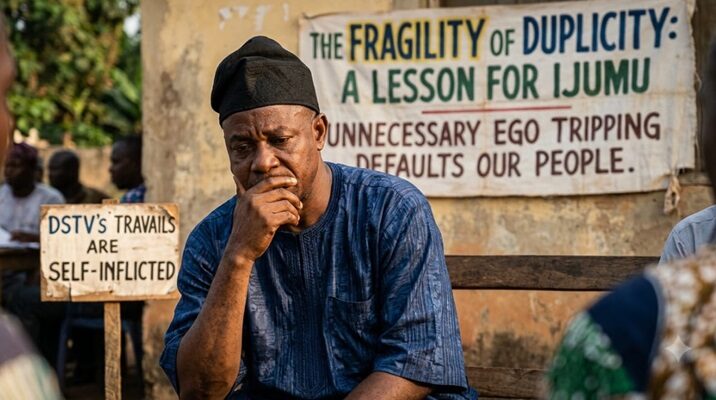
While certain leaders and political stakeholders in the region suffer from an acute “entitlement mentality,” Alhaji Haruna has largely authored his own present ordeal. Throughout his current tenure, a pattern of duplicity has alienated former allies and created unnecessary adversaries. The victims of these political schemes have seen through the trickery, leaving him isolated as consequences catch up.

Attempts by the Chairman’s camp to whip up public sentiment—claiming his troubles stem solely from his loyalty to Hon. James Abiodun Faleke—are fundamentally flawed. Haruna understands the reality: his current exposure stems from financial indiscretions and a habit of “playing the bat” between competing factional leaders. Furthermore, assertions that he is merely resisting improper interference from state political appointees represent a narrative that only his immediate circle still accepts.
This standoff leaves the electorate in a precariously familiar position, raising critical questions for the future of the local government:
- Are the challenger factions any better? The figures angling to replace Haruna offer little evidence of superior governance or higher ethical standards.
- Can the incumbent reform his approach? Given the entrenched nature of these political habits, a genuine pivot away from duplicitous governance remains unlikely.
- Where does this leave the public? The ordinary citizens of Ijumu bear the brunt of this paralysis while political figures engage in unnecessary ego clashes.
Resolving the crisis requires moving past public relations maneuvers and self-serving political interventions.
A genuine stakeholders’ meeting—strictly cleared of political thugs, touts, and mercenaries—must be convened to address the core grievances directly.
The assembly must identify where administrative and financial breaches occurred, administer appropriate reprimands, and establish clear terms for resolution.
Reject opportunistic Mediation as certain self-styled “elders and leaders” view this dispute primarily as an opportunity for personal financial settlement. Taking sides for personal gain rather than mediating in good faith is both selfish and destructive.
For Alhaji Haruna, this episode serves as a clear reminder that political authority is both fragile and fleeting. When an official’s only remaining defenders are the direct material beneficiaries of their office, the systemic failure of that leadership becomes obvious.
The people of Ijumu Local Government Area deserve focused administration rather than high-stakes political theater.
Amid pressing economic and developmental challenges, demanding that all gladiators step back and allow peace to reign is the absolute minimum the public should expect.
– Ponle Adeniyi
ponleadeniyi457@gmail.com