
The Initiative for Grassroot Advancement in Nigeria (INGRA) has called on the Kogi State Government to urgently address the state’s transportation, water supply and sanitation challenges, warning that the huge revenue accruing to the state must translate into services citizens can see and use.
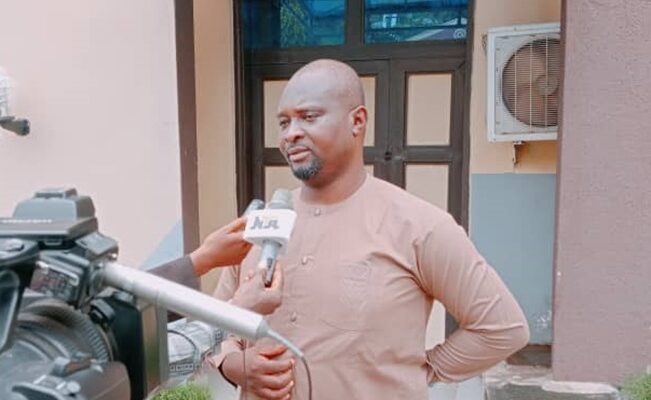
In a statement signed by its Executive Director, Hamza Aliyu, the civil society organisation said Governor Ahmed Usman Ododo’s administration should treat affordable mass transit, reliable water supply and environmental sanitation as urgent priorities with clear timelines and measurable results, rather than “luxury projects.”
INGRA noted that the Ododo administration has repeatedly pledged to implement the Kogi State Development Plan 2024–2056, a 32-year blueprint covering infrastructure and essential services. The group insisted, however, that the plan’s success should not be judged by conferences and policy documents alone, but by whether “water flows, buses are available, roads are accessible, refuse is collected and communities are clean and healthy.”

Citing the state’s 2026 Second Quarter Budget Implementation Report, INGRA said Kogi recorded about ₦258.94 billion in combined recurrent and capital receipts between January and June 2026 — made up of ₦141.42 billion in recurrent revenue and ₦117.52 billion in capital receipts — with cumulative capital expenditure of roughly ₦121.61 billion over the same period. While acknowledging that capital receipts include loans and grants tied to specific programmes, the group said the scale of resources available creates a legitimate public expectation that basic services will receive sustained attention.
On transportation, INGRA called for a properly managed and subsidised Kogi Mass Transit Scheme, starting in Lokoja and extending to major routes across the three senatorial districts. The group said the scheme must go beyond ceremonial bus unveilings to include transparent procurement, published routes and fares, dedicated services for workers and students, and an accountable maintenance and revenue system. It described the planned Federal Bus Terminal in Lokoja as a positive step that nonetheless cannot substitute for affordable daily transport within the metropolis and between local government areas.
On water supply, INGRA said tanker distribution — used as a stopgap while the Old Lokoja and Greater Lokoja Water Works await full restoration — cannot remain a long-term solution to what it called a structural water crisis. It urged the government to publish the current status of both water works, funds released and expended on rehabilitation, communities currently served, an expected restoration date, and a long-term production and distribution plan. It also called for reliable water schemes for other urban and rural communities, saying boreholes should complement rather than replace public water systems.
On sanitation, the group described conditions in Lokoja — refuse heaps, blocked drains, inadequate public toilets and irregular waste collection — as requiring emergency attention, given the capital’s status as a gateway to the state. It recommended a comprehensive sanitation programme including door-to-door refuse collection, drainage clearance ahead of the rainy season, public toilets in markets and commercial areas, enforceable standards for waste contractors, and monthly public performance reports. INGRA added that enforcement against residents should not precede government providing basic waste infrastructure.
The group, which described itself as non-partisan, also linked service delivery to the political climate ahead of 2027, noting that supporters have already begun mobilising for Governor Ododo’s re-election. “The strongest campaign message will not be billboards, endorsements or political rallies,” the statement said, adding that citizens would judge government by whether they could travel affordably, access water and live in clean communities.
INGRA’s specific demands include a time-bound inter-ministerial response on transport, water and sanitation; adequate funding release; publication of project details, contractors and timelines; community and civil society engagement in monitoring; quarterly public progress reports; and equitable delivery across Kogi East, Kogi Central and Kogi West.