
“This clinic was not built because funds were readily available. It was built because the need was undeniable.”
Every institution is ultimately measured not only by the quality of education it provides, but also by the value it places on human life, safety, and wellbeing.
Over the years, the Nigeria-Korea Friendship Institute of Vocational and Advanced Technology (NKFI), Lokoja, has recorded remarkable progress in student enrolment, academic development, technical training, institutional partnerships, digital transformation, and infrastructure expansion. Yet, despite these achievements, one critical gap remained: the absence of a dedicated health facility within the campus.

Whenever a student or staff member required urgent medical attention, there was no immediate point of medical response within the institution. The only available option was to transport the individual to Kogi State Polytechnic’s health facility before professional care could be accessed. While this arrangement served as a temporary solution, it also highlighted a reality that could no longer be ignored. In emergencies, every minute counts, and the absence of a first-response healthcare facility represented a significant challenge to the welfare of members of the NKFI community.
The need for a campus clinic became even more apparent following incidents involving students who required urgent medical attention. In one instance, a student undergoing practical training sustained an injury that required immediate medical intervention. Although assistance was eventually obtained, the experience reinforced a simple but important question: should any student have to leave the campus before receiving basic medical attention?
For the leadership of the institution, the answer was clear.
No student should suffer before help arrives.
That conviction marked the beginning of a journey that would eventually lead to the establishment of the NKFI Campus Clinic.
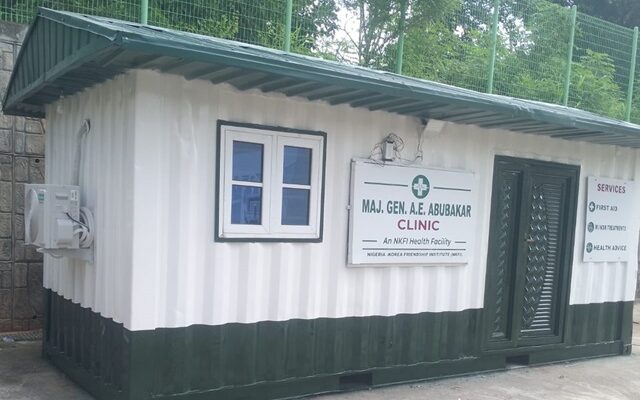
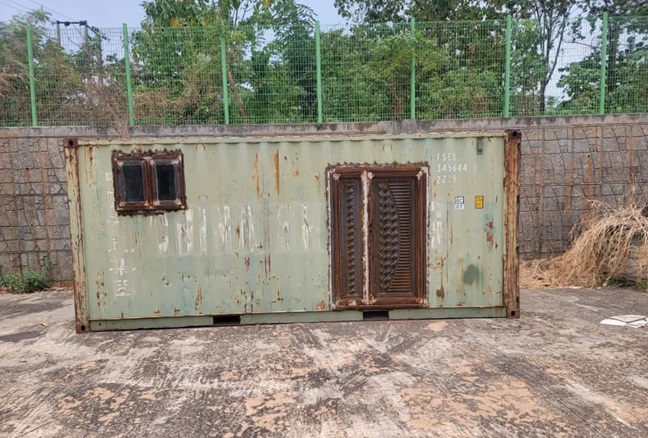
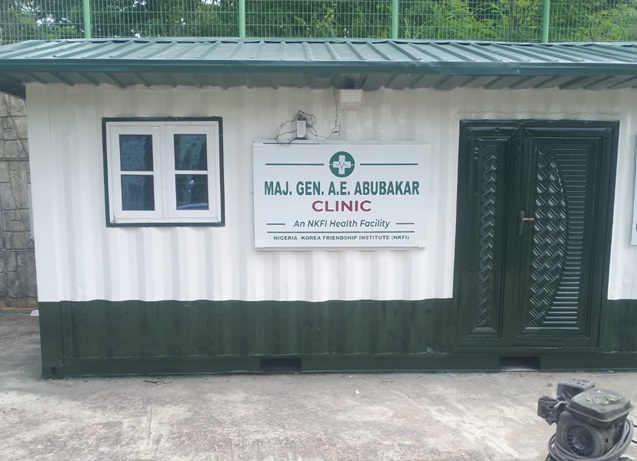
Recognising the urgent need for a healthcare facility but also mindful of the realities associated with constructing a conventional clinic, an innovative solution was conceived. Rather than allowing the project to remain an aspiration for the future, the decision was taken to convert a shipping container into a functional health facility capable of providing first aid, basic healthcare services, emergency response, health consultations, and patient stabilisation before referral when necessary.
What initially appeared to be a simple intervention soon evolved into a major undertaking. The container underwent extensive modifications and transformation. Structural works were carried out, insulation installed, electrical systems fitted, roofing improved, interior spaces redesigned, air-conditioning provided, and essential healthcare facilities incorporated to create a safe, comfortable, and functional environment capable of meeting the immediate healthcare needs of students and staff.
The project was driven not by convenience but by necessity.
This clinic was not built because funds were readily available. It was built because the need was undeniable. No government allocation was sought, and no public funds were expended in bringing this vision to reality. What made this project possible were personal sacrifices, the support of my family and friends, and a shared belief that the health, safety, and wellbeing of students and staff are worthy investments.
The journey was not an easy one. There were challenges, difficult decisions, and moments when postponement would have been the easier option. Yet one question continued to demand an answer: what happens when the next student requires urgent medical attention?
That question became the driving force behind the project.
It inspired determination when obstacles emerged. It justified sacrifices when resources became stretched. It transformed a vision into a mission and a mission into reality.
Today, the NKFI Campus Clinic stands as more than a healthcare facility. It is a symbol of compassion, responsibility, innovation, and student-centred leadership. It reflects a commitment to ensuring that no member of the NKFI community is left without immediate support during moments of medical need.
It is also a testament to the power of vision and determination. A shipping container that might otherwise have served an entirely different purpose has been transformed into a centre of care, reassurance, and hope. What once existed only as an idea now stands as a practical solution to a long-standing institutional challenge.
As the Nigeria-Korea Friendship Institute continues its journey towards becoming a leading centre of technical and vocational education in Nigeria, the Campus Clinic joins a growing list of transformative initiatives designed to improve the quality of life and learning within the institution.
This facility represents more than steel, equipment, and infrastructure. It represents a promise. A promise that the welfare of students and staff matters. A promise that leadership must respond to genuine needs. A promise that institutional growth should be measured not only by buildings and programmes but also by the extent to which it improves the lives of people.
The NKFI Campus Clinic is more than a healthcare facility. It is a statement of values. It reflects the belief that education is not only about classrooms, workshops, laboratories, and examinations. It is also about creating an environment where every student feels safe, supported, protected, and cared for.
As this facility is unveiled, it stands as a lasting reminder that meaningful progress is achieved when compassion is matched with action, when challenges are met with innovation, and when the wellbeing of people remains at the heart of institutional development.
From a recognised need came a bold decision. From personal sacrifice came institutional progress. From a shipping container emerged a centre of care and hope.
From container to care, this is the NKFI story.