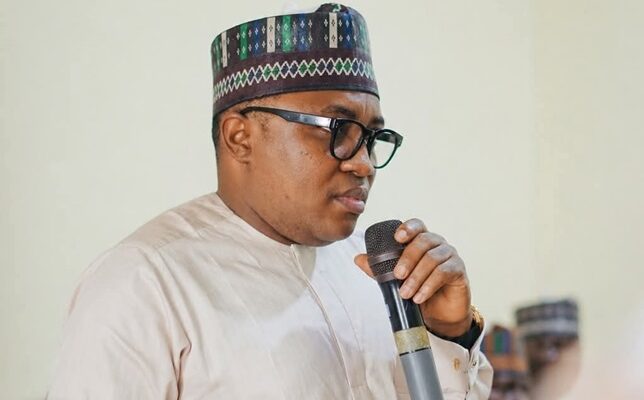

In the brutal theatre of Nigerian politics, alliances rarely end in peace. They end in sacrifice. Today, many voices across Igala land believe Muri Ajaka has become the latest casualty of a machine he once trusted. The same political structure that embraced him during moments of convenience now appears to have abandoned him at the crossroads of survival. To many angry supporters in Kogi East, the recent APC Senate primary defeat was not merely an electoral loss. It was a public execution carried out by loyalists of Yahaya Bello and the internal power architecture of the APC.
The bitterness runs deeper because memory remains fresh. During the last governorship election, many in Kogi East accused powerful forces within the APC of weaponising division, local greed and clan rivalries to weaken Ajaka’s momentum. In Igalamela Odolu, accusations of manipulation and political deception spread rapidly among voters who believed their emotions were exploited for a larger strategy. What appeared then as reconciliation now looks, in the eyes of many supporters, like a carefully staged political embrace before the final betrayal. The smiling photographs, handshakes and public peace meetings that flooded social media are now being reinterpreted by critics as symbols of calculated containment.
Politics in Kogi has increasingly resembled a forest where ambitious men are first decorated before they are quietly hunted. That is why the anger across parts of Kogi East is no longer directed at a single election alone. It is directed at a growing fear that an entire generation of eastern politicians is being systematically weakened before it can mature into an independent force. For many observers, the fall of Ajaka is being discussed not simply as the downfall of one politician, but as another chapter in the long struggle over who controls the future voice of the Igala people within the APC structure.

Yet there is also a harsher public argument emerging from the streets and online spaces. Some citizens insist Ajaka walked willingly into the storm. They argue that by bowing politically to Yahaya Bello instead of building an independent coalition after the governorship contest, he ignored the warning signs that power never protects weakness. In their view, Nigerian politics rewards caution, not emotional reconciliation. To such critics, what happened during the Senate primary was not betrayal. It was the predictable outcome of a political culture where loyalty flows upward but protection rarely flows downward.
Still, the larger tragedy may not belong to Ajaka alone. It belongs to a region increasingly trapped between loyalty and humiliation, ambition and dependency. Kogi East remains rich in political talent, but divided by suspicion and fragmented by internal contests for influence. Until the region develops a collective political identity stronger than temporary alliances and godfather calculations, many fear the cycle will continue. In the end, power, like fire, never stops after consuming dry grass. It keeps moving until the forest itself is silent.
– Inah Boniface Ocholi writes from Ayah – Igalamela/Odolu LGA, Kogi state.
08152094428 (SMS Only)