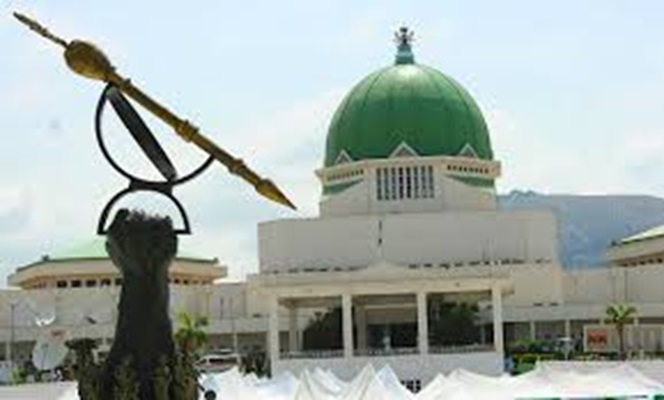

There is something profoundly grotesque about a political order in which allegations of financial impropriety become transient inconveniences, public outrage evaporates into partisan amnesia, and the pursuit of higher office proceeds with astonishing impunity. When a politician whose public record is shadowed by questions concerning the stewardship of state resources seeks elevation to the Senate, the controversy transcends personal ambition. It becomes an indictment of the institutional architecture, ethical foundations and accountability mechanisms of the democratic enterprise.
The Senate is neither a sanctuary for politically inconvenienced elites nor a rehabilitation centre for reputations imperilled by unresolved financial controversies. It is a constitutional institution vested with legislative authority, fiscal oversight and the responsibility to scrutinise executive power. Consequently, anyone seeking its privileges must be prepared to withstand rigorous examination of their public record, financial stewardship, administrative decisions and fidelity to the principles of accountable governance.
The fundamental issue, however, demands intellectual precision. An allegation is not a conviction, suspicion is not proof, and political controversy does not extinguish the presumption of innocence. Yet these safeguards of justice must never be weaponised to discourage legitimate scrutiny. Where credible evidence raises questions about the appropriation, expenditure or management of public funds, citizens are entitled to demand transparent investigation, procedural fairness and demonstrable institutional diligence. Neither premature condemnation nor calculated silence constitutes justice.

Public treasury is not the patrimony of political officeholders, nor is governmental revenue a discretionary reservoir for private enrichment. It represents resources entrusted to public institutions for the provision of essential services, the construction of infrastructure and the advancement of collective welfare. Where misappropriation is established, its consequences may reverberate through abandoned projects, inadequately equipped hospitals, underfunded schools, deteriorating roads and the systematic foreclosure of opportunities for citizens already burdened by economic hardship.
The tragedy of impunity emerges when political machinery becomes more effective at rehabilitating controversial personalities than public institutions are at resolving substantive questions. Party negotiations, strategic alliances, financial influence and factional calculations can propel individuals towards renewed political relevance even while legitimate questions about their records remain unanswered. In such circumstances, political survival risks being misconstrued as exoneration, and the spectacle of advancement can obscure the distinction between an individual’s capacity to retain influence and the public’s entitlement to accountability.
This is the accountability paradox: the higher the office sought, the more consequential the scrutiny should become. Yet political environments characterised by personality cults, transactional loyalties and institutional timidity can invert this principle. Instead of requiring greater transparency from those pursuing greater authority, political advancement may proceed through carefully choreographed endorsements, partisan mobilisation and the strategic displacement of uncomfortable questions. The result is a dangerous normalisation of reputational controversy without corresponding institutional resolution.
Nevertheless, electoral politics and criminal jurisprudence must remain distinct. An electoral victory does not constitute judicial vindication, just as electoral defeat cannot establish criminal culpability. The ballot confers a political mandate under applicable electoral laws; courts determine criminal liability through established legal procedures. To conflate these functions is to undermine both democratic choice and the administration of justice. Neither popularity nor political influence should confer immunity from lawful investigation, and neither accusation nor public hostility should substitute for proof.
Political parties therefore bear a substantial burden of institutional responsibility. Candidate selection should not be reduced to an auction of financial influence, a negotiation among factional patrons or a calculation of electoral convenience. Credible political organisations should maintain transparent screening procedures, examine substantiated concerns, disclose relevant information where legally permissible and articulate defensible reasons for their decisions. Where wrongdoing has been judicially established, the applicable legal and constitutional consequences must be respected rather than neutralised through political patronage.
The electorate, equally, must transcend the intellectual impoverishment of personality driven politics. Ethnic affiliation, partisan loyalty, financial inducements, political endorsements and episodic generosity can exert considerable influence over electoral choices, but none independently establishes legislative integrity. Voters should interrogate candidates’ records, policy commitments, legislative competence, administrative conduct and treatment of public resources. Democratic citizenship becomes consequential when admiration is accompanied by scrutiny and political allegiance remains subordinate to evidence.
The Senate’s oversight mandate makes this imperative particularly acute. Legislators participate in appropriations, scrutinise executive expenditure, examine public institutions and shape the statutory framework governing national life. The credibility of these responsibilities depends upon a demonstrable commitment to transparency, ethical consistency and institutional accountability. A political culture that treats scrutiny as an inconvenience for aspirants to power risks weakening the very standards legislators are expected to enforce upon others.
Nigeria’s predicament is not simply the possible advancement of a controversial politician. It is the broader danger of institutional asymmetry: rigorous consequences for the politically expendable, elaborate defences for the politically connected, and prolonged uncertainty where public accountability should be decisive. Such asymmetry can erode public confidence, entrench cynicism and encourage the belief that political proximity offers a more reliable defence than transparent conduct. Whether that perception is justified in a particular case must be established through evidence, not insinuation.
The remedy is neither indiscriminate denunciation nor politically motivated exclusion. It is the consistent application of due process, independent investigation, accessible public records and impartial legal standards. Investigative agencies must pursue credible evidence without partisan discrimination. Courts must adjudicate cases without political interference. Parties must exercise responsible candidate screening, while citizens and journalists must distinguish documented findings from allegations and avoid presenting unresolved claims as proven criminal conduct.
Ultimately, a democracy is measured not by the sophistication with which its political class navigates controversy, but by the consistency with which its institutions enforce public standards. Where wrongdoing is established, political stature must not dilute accountability. Where allegations remain unproven, justice must protect the accused against prejudicial conclusions. The governing principle must be that neither influence nor public indignation supersedes evidence, and neither ambition nor incumbency places anyone beyond the reach of the law.
The Senate must never become an institutional laundromat for compromised reputations, and electoral ambition must never be mistaken for moral exoneration. Public office is a fiduciary obligation, not a refuge from scrutiny. The ultimate question is whether Nigeria’s democratic institutions will continue to accommodate a politics in which accountability is negotiable, or insist upon a constitutional culture in which the pursuit of greater power entails an equally uncompromising obligation to answer for the exercise of power already entrusted to an individual.
– Inah Boniface Ocholi writes from Ayah – Igalamela/Odolu LGA, Kogi state.
08152094428 (SMS Only)