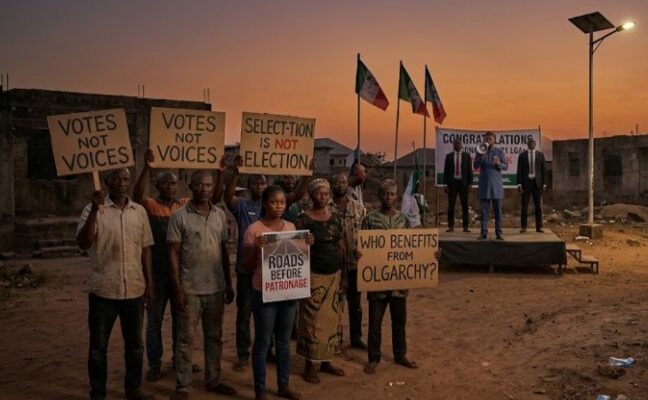

There is an illusion of Democracy at the Grassroots, in what has become a routine ritual across Nigeria’s political landscape, the official declarations follow a scripted narrative: “peaceful conduct,” “impressive turnout,” and “unanimous endorsement.” The announcement by the Kogi State Independent Electoral Commission (KOSIEC)—declaring the ruling All Progressives Congress (APC) winner of all 21 chairmanship seats and 239 councillors in the local council polls—surprised no one.
What was presented to the public as an exercise in popular democracy was, in reality, another carefully orchestrated selection process. Across the state’s 21 Local Government Areas, political machinations replaced genuine electoral contestation, ensuring that power remained strictly within the grasp of a tight political elite.
The local government council, originally designed as the third tier of government closest to the rural populace, has been steadily emasculated across Nigeria. State Independent Electoral Commissions (SIECs), heavily reliant on state executive funding and patronage, have effectively transformed into administrative arms of incumbent state governors.

Where opposition candidates once secured council seats or ward positions to offer healthy check-and-balance dynamics, the current political era reflects total exclusion:
- Sweeps where ruling parties claim 100% of all contested seats have shifted from rare anomalies to standard practice.
Vile tactics, administrative bottlenecks, and selective disqualifications routinely stifle opposition candidates before ballot papers are ever printed.
- Independent oversight gives way to pre-determined outcomes, reducing citizen participation to mere performative compliance.
When political and economic control belongs to a tight circle rather than the general population, governance ceases to be a public service. Leaders selected through these flawed mechanisms govern to satisfy their political sponsors, social class, and factional alliances rather than addressing the dire social needs of their communities.
Where genuine democratic grassroots take root, local leaders derive their authority directly from the people they serve. Unbound by political godfathers, their primary incentive is to remain accountable to their neighbors, ensuring that public resources are directly funneled into vital local priorities—paved access roads, functioning primary health centers, and equipped elementary schools. This direct feedback loop fosters deep institutional faith, encouraging vibrant civic participation, active voter turnout, and a shared sense of ownership over community development.
Conversely, when local elections succumb to oligarchic selection, this democratic link is completely severed. Handpicked local officials answer only to state party bosses and elite political patrons who secured their seats. Instead of building public infrastructure, local revenues are redirected to satisfy patronage networks and sustain factional political upkeep. Denied a real voice in their own governance, citizens retreat into deep voter apathy and widespread alienation, watching their local institutions transform into tools for elite wealth extraction rather than engines for public good.
The negative repercussions on local development are stark. Funds intended for rural infrastructure, healthcare centers, and primary education are routinely diverted to maintain patron-client networks. As local councils lose autonomy, rural communities remain underdeveloped, underserved, and disenfranchised.
As formal congratulatory messages flood the airwaves and state actors praise the “orderly conduct” of the exercise, a fundamental question remains: Who is fooling who?
The state elite may celebrate a clean sweep, but the public recognizes these exercises for what they are—a complete capture of local governance by an entrenched political class. Until state electoral commissions are genuinely insulated from executive control and local councils granted political and administrative autonomy, grassroots democracy in Nigeria will remain an illusion, and real development will continue to suffer.
— Ponle Adeniyi
ponleadeniyi457@gmail.com