A farmer can harvest a bumper crop and still struggle to feed his family. A community can sit on land associated with oil and remain cut off from economic opportunity. In Ibaji, Kogi East, these contradictions raise an uncomfortable question for Nigeria: what is the value of natural wealth when the people who live closest to it must still plead for the basic infrastructure needed to escape poverty? The tragedy is not a lack of potential. It is the persistent gap between what a community could become and what its people experience.
Ibaji’s economic promise rests on more than oil. Its agricultural capacity, including the cultivation of rice, yam and cassava, could support a stronger rural economy, create jobs and attract investment in processing and trade. Yet productive land cannot deliver its full value when poor connectivity raises transportation costs, limits market access and makes essential services harder to reach. For farmers, traders, schoolchildren and patients, infrastructure determines whether opportunity is accessible or remains a promise made from a distance. Natural wealth may attract attention, but only effective public investment can turn it into broad based prosperity.
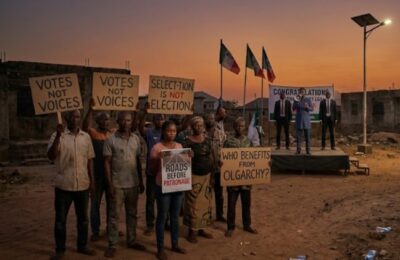
The contradiction becomes more troubling when the area’s oil bearing status is considered alongside continuing demands for development. On January 9, 2026, THISDAY reported that Ibaji stakeholders had questioned the delivery of development projects in oil bearing communities and raised concerns about the use of oil derivation resources. Those concerns warrant transparent investigation, not automatic assumptions of wrongdoing. The essential questions are concrete: what funds have been allocated, which projects were approved, what has actually been delivered, and how can residents independently verify the results? Until these questions receive evidence based answers, claims of development will remain difficult to measure against everyday experience.

There has been movement on the infrastructure question. In July 2026, the Kogi State Government announced that the design for a proposed Ibaji road project had been completed and made available for stakeholder review. That is a preparatory step, not proof of delivery. Residents need clear information about financing, procurement, construction timelines and implementation milestones. The distinction matters because a project announced is not necessarily a project funded, and a project funded is not necessarily one completed. The measure of progress must be the infrastructure delivered and the difference it makes to people’s lives, not the number of official announcements made in its name.
For an agricultural community, reliable transportation is an economic instrument. Better connections between Ibaji, Idah and markets beyond Kogi State could reduce the cost of moving produce, improve access to farm inputs and encourage investment in storage and processing. They could also strengthen access to healthcare, education and commercial services. When these connections are inadequate, farmers can lose income despite working productive land, while young people face fewer opportunities to build sustainable livelihoods at home. The result is a damaging paradox: an area with resources and productive capacity can remain economically constrained because the systems required to unlock its potential are insufficient.
Responsibility for addressing this gap must be matched by transparency. Relevant state authorities, oil producing area development institutions and agencies responsible for public expenditure should make applicable allocations, project approvals and implementation records accessible. Where funds have been committed, citizens should be able to establish what was delivered; where projects have stalled, the reasons should be explained. Community leaders, residents and journalists also have a responsibility to scrutinise public commitments through documents, credible testimony and independent verification. Such scrutiny is not hostility towards government or investors. It is a necessary safeguard against the possibility that development becomes a language of political announcements rather than a measurable improvement in public welfare.
The implications extend beyond Ibaji. Across resource rich communities, the central challenge is whether the economic value extracted from the land translates into lasting benefits for the people who inhabit it. Oil exploration and agricultural production should contribute to better livelihoods, stronger public services and opportunities for future generations. That requires more than resource revenue: it demands sound planning, accountable institutions, environmental responsibility and infrastructure that connects local production to wider markets. For Igala land, the standard should be neither the volume of wealth beneath the soil nor the promises made around it, but the extent to which ordinary families experience meaningful improvements in their lives.
Ibaji should not have to choose between celebrating its natural resources and demanding the conditions necessary to benefit from them. Its oil and agricultural potential ought to support a future in which farmers can reach markets, children can access education, patients can reach medical care and local businesses can grow. That future will not emerge from potential alone; it requires public commitments that can be tracked, institutions that can be questioned and projects that can be seen and used. The real measure of Ibaji’s wealth is not simply what can be extracted from its land, but what its people can build with the opportunities that wealth should create. Until that distinction is reflected in everyday life, the question facing Kogi East will remain: who truly benefits from the riches beneath Igala land?
– Inah Boniface Ocholi writes from Ayah – Igalamela/Odolu LGA, Kogi state.
08152094428 (SMS Only)