
By Musa Bakare
By every serious reading of history, nations are not transformed by noise makers, emotional agitators, or political merchants of propaganda. Nations rise on the shoulders of men who understand sacrifice, strategy, patience, and power, men who can walk through fire, absorb pressure, endure betrayal, and still keep their eyes fixed on the destiny of their country.
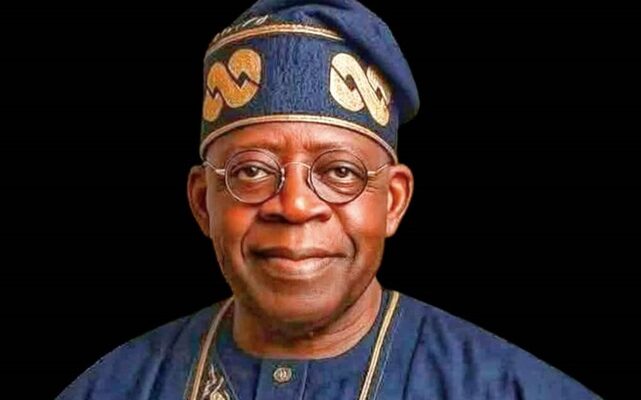
That is the political and philosophical essence of Asiwaju Bola Ahmed Tinubu and his administration.

By 2031, the Nigeria that Asiwaju Bola Ahmed Tinubu will bequeath shall not be measured only by bridges, roads, rail lines, economic indices, or skyscrapers. No. The true legacy will be the rebirth of a nation that once stood dangerously close to hopelessness but rediscovered its soul through courageous leadership.
History teaches one eternal truth: every great nation passed through seasons of pain before entering seasons of glory. Gold does not emerge purified without fire. A tree does not stand tall without surviving storms. And no nation escapes the difficult surgery required to heal years of economic recklessness, institutional decay, and political irresponsibility.
Nigeria’s challenge did not begin yesterday. For decades, the country survived on borrowed illusions: fuel subsidies that enriched a few while impoverishing millions, a fragile economy dependent on oil rents, a weakened currency, institutional corruption, and a dangerous culture where consumption replaced productivity.
But destiny sometimes raises leaders prepared to take difficult decisions that others fear. For Nigeria, that leader is Ọmọ olodo idẹ, Bola Ahmed Tinubu.
That is exactly where Asiwaju Bola Ahmed Tinubu stands distant apart.
He came into office not to decorate power, but to confront reality. He understood that a nation cannot continue spending its future to finance temporary comfort. He recognized that leadership is not a popularity competition; leadership is the courage to do what is necessary, even when it is politically inconvenient.
The spiritual tragedy of many nations is that they often crucify the leaders sent to rescue them before later building monuments in their honor. This happened in Nigeria to Chief Obafemi Awolowo, Bashorun Moshood Kashimawo Abiola, and others.
History has repeated this pattern from ancient civilizations to modern democracies. Visionaries are rarely understood in the moment because they see tomorrow while their opposition only sees today.
By 2031, the Nigeria Tinubu will leave behind shall be a nation more conscious of productivity than dependency. A Nigeria where states begin to rediscover economic competitiveness. A Nigeria where local industries regain confidence. A Nigeria where infrastructure expands not as propaganda, but as the bloodstream of commerce and national integration. Most importantly, it will be a Nigeria psychologically liberated from the illusion that government exists merely to share oil money. That transformation is deeper than politics; it is philosophical.
The greatest battle before Nigeria has never been merely economic; it has always been mental. A nation rises first in consciousness before it rises materially. The countries Nigerians admire today were built by generations willing to endure difficult reforms in exchange for lasting greatness.
In every generation, Providence raises certain individuals for certain seasons. Some emerge to stabilize chaos. Some emerge to defend institutions. Others emerge to rebuild broken systems. The emergence of President Tinubu’s leadership at this time is certainly not accidental; it is historical necessity. Asiwaju Bola Ahmed Tinubu represents a defining political instrument of transition in Nigeria’s democratic evolution.
His story itself carries the philosophy of resilience. From surviving political persecution during the military era to building one of the most formidable political structures in modern African democracy, Tinubu embodies strategic endurance. He understands power not merely as authority, but as organization, negotiation, vision, and long-term nation building.
That is why his opponents often underestimate him to their utter peril. They interpret politics emotionally while he interprets it structurally. They chase headlines while he builds institutions. They focus on temporary applause while he calculates generational consequences.
By 2031, Nigerians will more clearly understand that some of the difficult reforms resisted today were the very foundations needed for tomorrow’s stability. The Nigeria Tinubu seeks to bequeath will not be perfect, no nation ever is, but it will be stronger, more competitive, more infrastructurally connected, and more economically realistic than the Nigeria he inherited.
Future historians will eventually write that his presidency marked the necessary turning point where Nigeria began the long journey from a consumption driven state to a production oriented nation. And when that chapter is written, one truth will echo loudly: that leadership is not measured by how sweet the moment feels, but by how enduring the legacy becomes. For nations, like destinies, are not built by comfort alone. They are built by courage.
By 2031, the courage of Bola Ahmed Tinubu will certainly become one of the defining pillars upon which a stronger Nigeria stands.
– Musa Asiru Bakare, a foundational member of APC and political analyst, writes from Lokoja, Kogi State.