
Definition:
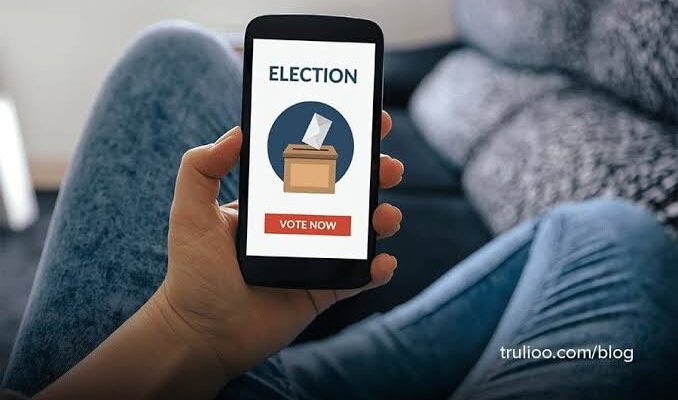
Phone Line Voting is a form of remote electronic voting where eligible voters cast their ballot using their registered mobile phone line usually via USSD, SMS, IVR call, or a secure mobile app. The voter’s SIM card, linked to their national ID/BVN/NIN, acts as the unique identifier to ensure one person, one vote.
Think of it as: Your phone number becomes your polling unit
HOW IT WORKS – BASIC COMPONENTS
Voter Authentication*: Your registered SIM , NIN BVN and OTP sometimes biometric/face scan verifies you are the real voter.
Voting Channel
USSD Dial *123# and select candidate. Works on button phones

SMS
Send candidate code to a short code
IVR, Call a toll-free number and press options Mobile Apps, Smartphones app with encryption
Ballot Delivery & Capture
The vote is encrypted and sent to INEC’s central server.
Audit & Result Collation
Votes are counted in real-time and a digital audit trail is kept.
Voter can get a confirmation that their vote was recorded.
KEY FEATURES
Remote Access Vote from anywhere with network. No travel to PU
One-Line-One-Vote SIM is tied to your voter registration to prevent duplicates
Real-time Collation Results can be transmitted instantly after polls close
Paperless No ballot papers, boxes, or manual sorting
TYPES OF PHONE LINE VOTING
USSD- Based Most inclusive. Works on all phones, no internet needed.
SMS-Base ,Simple but less secure, prone to interception.
App-Based, Most secure with encryption , biometrics, but needs smartphone and data.
Hybrid, Combine phone voting and physical voting for different voter categories.
CORE REQUIREMENT FOR IT TO WORK
For phone line voting to be trusted, you need 3 things integrated:
INEC Voters Register , NCC SIM Database and NIMC NIN Database
Plus strong cybersecurity, secret ballot protection, and public auditability.
Phone Line Voting is Using your unique, registered phone number as your voter card to cast and transmit your vote electronically.
where your registered SIM is your vote, one vote per line.
POTENTIAL ADVANTAGES / EFFECTIVENESS
Higher Turnout
No travel, no queues, no rain/sun. People in diaspora, IDP camps, sick, elderly, or in insecure LGAs can vote. Could push turnout from 30% to 60%
Reduced Violence at Polling Units
No ballot box snatching, thuggery, or voter intimidation at physical locations.
Cost Saving
Less money on ballot papers, ad-hoc staff, buses, security deployment, and storage. INEC spends billions on logistics.
Faster Results
Results can be collated and announced within hours instead of days. Reduces tension and rumor period.
Convenience
Vote from anywhere in Nigeria. Good for traders, students, NYSC, and workers who can’t travel home.
SECURITY RISKS & CHALLENGES
This is where it gets tricky:
SIM Ownership and Voter Identity
Many people use SIMs registered to others. SIM swap fraud is common. Someone could hijack your line and vote.
Vote Buying Becomes Easier
Instead of buying votes at polling units, politicians can just collect people’s phones and OTPs and vote for them at home. Harder to police.
Hacking & DDoS
: If INEC’s voting server is attacked, the whole election can be shut down. Phones can be cloned, SMS intercepted.
No Secret Ballot
People can be forced to vote in front of family, boss, or party agent with their phone. Privacy is hard to guarantee.
Network & Power Failure
Many rural communities in North Central, NE, NW have poor network or no power. That disenfranchises millions.
Duplicate Votes
Need a bulletproof system to ensure 1 SIM to 1 vote and that SIM matches BVN , NIN and PVC registration.
ACCURACY CONCERNS
Database Integration
Must sync INEC register , NCC SIM register ,
, NIN , BVN in real time. Any mismatch is fake votes or disenfranchisement.
Audit Trail
With paper ballots you can do physical recount. With phone voting, you must trust software. How do we prove there was no manipulation?
Error Rate
Wrong OTP, poor signal, app crash could make people think they voted when they didn’t.
WHAT OTHER COUNTRIES DID
Estonia, Has done internet voting since 2005. Works because of national ID cards, high internet and trust.
India Tried SMS voting pilots but stopped due to security.
Most democracies, Still use physical voting and electronic transmission of results, not full phone voting.
VERDICT: FEASIBLE, BUT NOT YET READY FOR FULL ROLLOUT
To make it work in Nigeria, INEC would need:
Hybrid Model First
Physical voting and optional phone voting for diaspora, IDPs, and special cases. Test for 2-3 election cycles.
Biometric , OTP , NIN
Face scan or fingerprint on phone ,OTP to your SIM and NIN match before vote counts.
Block chain/Audit Log
Public, verifiable ledgers so anyone can check their vote was counted without seeing who they voted for.
Mass Civic Education and Network Upgrade Especially for rural areas.
Independent Security Audit: Before any national election.
Effectiveness,
Very high potential for turnout and cost
Accuracy,
Can be high IF databases are clean
Security
Biggest hurdle. Without strong safeguards, it risks fraud and loss of trust
For Nigeria 2027, the safer step would be INEC Result Viewing and Transmission from PU, like we have now, then pilot phone voting for off-cycle elections.
– Benjamin Ibrahim writes from Lokoja, Kogi state.
+2348069596250