
By Steve Monu Idowu
Fifty-nine years after the Nigerian Civil War began in 1967, the country still speaks the language of suspicion, exclusion, and unresolved memory. The guns stopped in 1970, but the deeper war—the war inside the national soul— never truly ended.
When General Yakubu Gowon declared “No Victor, No Vanquished,” it sounded like the beginning of healing. Yet history has shown that slogans cannot rebuild broken trust. Roads can be repaired. Bridges can be reconstructed.

Government offices can reopen. But nations are not held together by concrete alone. They are held together by memory, justice, and shared belonging.
Nigeria succeeded in physical reconstruction after the war. The Eastern region was gradually reintegrated into the federation. Infrastructure returned. Economic activity resumed. But psychological reconstruction failed. The country never built a shared national narrative capable of carrying the pain of all sides.
Instead, silence became policy.
Children grew up hearing different versions of the war depending on their ethnicity, region, or religion. Some inherited bitterness. Others inherited denial. Entire generations were raised without an honest national conversation about what happened, why it happened, and how to prevent it from happening again.
This is where Nigeria diverged from what may be called the “Lincoln Standard.”
After the American Civil War, the United States also faced deep wounds. Southern states had attempted to break away from the Union. Hundreds of thousands died. Hatred was intense. Yet over time, America invested heavily in rebuilding not only infrastructure but also national identity. The project was imperfect and remains incomplete, but the Union itself became sacred. The idea of America survived the conflict.
Nigeria never fully created that sacred national covenant.
The tragedy is not merely historical. It is contemporary.
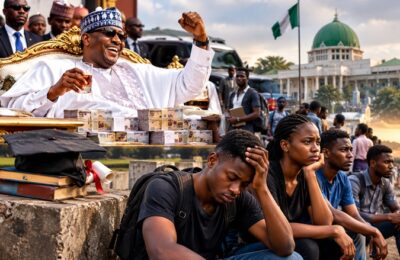
Today, many Nigerians still feel excluded from the “Palace of Power.” In every region, there are complaints of marginalization, selective inclusion, and unequal access to opportunity. When appointments, resources, and influence appear concentrated within certain groups, national unity weakens. Citizens begin to see the state not as a common home but as an ethnic fortress controlled by competitors.
This is the forensic failure of reintegration.
True reintegration is not symbolic representation. It is the mathematics of belonging. A nation cannot preach unity while practicing visible imbalance. If citizens perceive that the “30 percent” controlling the commanding heights of power belongs mostly to one bloc, then the “70 percent mercy” offered through speeches and political promises will be viewed with suspicion.
Unity cannot survive on propaganda.
A divided nation also suffers from fragmented memory.
Nigeria has never established a single honest historical blueprint accepted across regions. As a result, citizens build their internal understanding of the country through hearsay, ethnic trauma, political myths, and inherited grievances.
This is dangerous.
When young people are taught only the pain of their own side, they grow into architects of resentment rather than builders of the republic. Eventually, every political disagreement becomes a continuation of old wars.
That is why Nigeria remains emotionally trapped in 1967 even while physically existing in 2026.
The deeper question is uncomfortable but necessary: can a nation move forward without confronting its unresolved past?
South Africa attempted a painful answer through truth and reconciliation. Rwanda attempted another through national reconstruction after genocide. America, despite its contradictions, built a powerful national identity strong enough to outlive civil conflict.
Nigeria chose avoidance.
And avoidance is not reconciliation.
A country does not become united simply because people live within the same borders. True unity emerges when citizens genuinely believe they share equal ownership of the national future.
Fifty-nine years later, Nigeria still stands at that unfinished bridge.
– Stephen Olorunmonu Idowu is a Historian and Political Commentator.
08055804421. stevemonuidowu@gmail.com