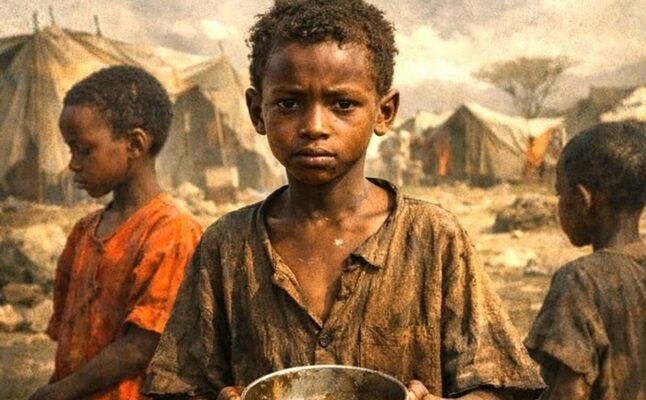

Dyslexia deserves attention, but Nigeria must be careful not to mistake one educational crisis for the whole crisis. A report by The Guardian cited a study indicating that one in six primary school pupils shows significant signs of dyslexia. That finding should provoke action, not panic. But before Nigeria asks how children read, it must confront the more brutal question: how many are trying to learn while hungry?
Hunger is not simply an economic statistic. It enters the classroom with the child. It weakens concentration, undermines development and can turn school into an endurance test rather than a pathway out of poverty. Current IPC analysis estimates that about 6.4 million Nigerian children under five are acutely malnourished, including roughly two million suffering severe acute malnutrition.
This is why Nigeria’s education debate requires greater intellectual honesty. A child with dyslexia needs identification, patience and appropriate educational support. But a hungry child needs food before many of the sophisticated interventions of modern education can achieve their full effect. UNICEF notes that malnutrition is associated with poor cognitive development and lower educational performance.

The danger is that Nigeria repeatedly treats symptoms in isolation. We discuss learning disabilities while poverty empties classrooms of concentration; we debate examination performance while household food insecurity corrodes childhood development. The answer is not to rank one vulnerable child against another, but to recognise that education policy without nutrition policy is incomplete human capital policy. The World Bank has similarly warned that Nigeria’s deficits in nutrition, learning and skills are imposing substantial long term costs on the country’s future earnings.
So yes, let us talk about dyslexia. Let us screen children early, train teachers and end the cruel habit of calling struggling pupils lazy or dull. But let us also remember the child who arrives at school having eaten nothing. Nigeria cannot build a knowledge economy by asking hungry children to concentrate harder. Before we demand excellence from the classroom, we must create the conditions in which excellence can reasonably be expected.
– Inah Boniface Ocholi writes from Ayah – Igalamela/Odolu LGA, Kogi state.
08152094428 (SMS Only)