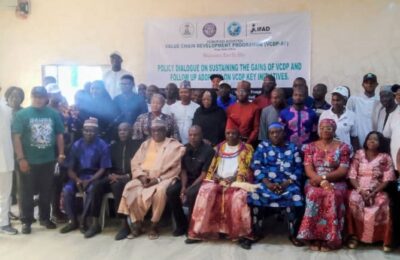
Kogi East cannot eat potential. It cannot build prosperity from fertile soil, waterways, minerals and geological promise alone. Natural wealth is merely possibility; development begins when institutions transform possibility into productive capacity.
The Niger Benue confluence gives the region a geographical advantage few communities can manufacture. Yet rivers do not automatically create prosperity. Without irrigation, storage, processing, transportation, financing and markets, agricultural abundance can remain trapped within subsistence.
Agriculture must therefore move beyond production into an industrial value chain. Farmers need aggregation centres, processing facilities, reliable electricity, cold storage, transport corridors, agricultural credit and predictable markets. The objective should be wealth creation, not merely harvest celebration.

Then comes the mineral question. Kogi East possesses geological potential that could become strategically significant as Nigeria intensifies its pursuit of critical minerals. But extraction without local processing, environmental safeguards, transparent licensing and community benefit mechanisms risks exporting value while retaining poverty.
Ibaji deserves particular strategic attention. Its oil related possibilities have generated expectations for years, but expectations are not economic transformation. The region needs clear frameworks for exploration, infrastructure, environmental protection, revenue accountability, local employment and downstream opportunities whenever commercial viability emerges.
The danger is confusing possession with prosperity. A community may possess fertile land, strategic waterways, minerals and hydrocarbons while remaining economically fragile. Resources become development only when governance connects them to skills, infrastructure, enterprise, technology, markets and accountable investment.
This is where Kogi East must rethink its political conversation. The question should no longer be which politician will announce another resource opportunity, but which institutions can build a regional economic strategy strong enough to outlive political administrations.
Imagine an integrated regional strategy linking agriculture with processing, waterways with logistics, minerals with manufacturing, universities with innovation, and local enterprises with national markets. That would convert geography into competitiveness and raw resources into productive economic power.
Kogi East does not lack potential; it lacks sufficient strategic conversion. The region must stop treating natural endowments as development itself. Its real inheritance will not be what lies beneath its soil, but what institutions build above it.
– Inah Boniface Ocholi writes from Ayah – Igalamela/Odolu LGA, Kogi state.
08152094428 (SMS Only)