
The Kogi State Government has reiterated its strict prohibition on cash collection and illegal roadside roadblocks for revenue generation, as it officially unveiled a modernized Daily Ticketing framework designed to streamline collections across the state.
Under the new arrangement, the state government announced Solution Network Consults as the newly appointed consultant saddled with the management of Daily Ticketing, a scheme formerly known as the Infrastructure Maintenance Levy (IML).
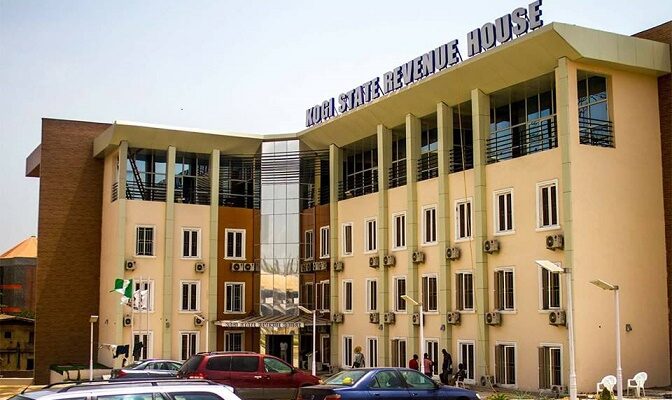
The policy shift was announced during a high-level stakeholders’ engagement organized by the Kogi State Internal Revenue Service (KGIRS) at its corporate headquarters in Lokoja. The strategic meeting brought together top government officials, including the Executive Chairman of KGIRS, Dr. Sule Salihu Enehe; Special Adviser to the Governor on Internally Generated Revenue (IGR), Dr. Rahman Nasir Ichanyi; and executive directors of the revenue agency. Also in attendance were leaders of key transport unions, including the National Union of Road Transport Workers (NURTW), the Okada Riders Association, and the Tricycle Owners Association, alongside representatives of Solution Network Consults led by its Chief Executive Officer, Chief Yomi Charles, and Chief Richard Asaje.

Addressing the gathering, Dr. Enehe explained that the engagement aimed to introduce the new revenue management firm to transport leaders and establish a consensus on collection processes, applicable rates, and operational responsibilities. He recalled that the state had banned transport unions from collecting revenue on highways two years ago, emphasizing that Governor Ahmed Usman Ododo remains committed to a peaceful, inclusive, and transparent approach to revenue administration.
Rather than excluding transport unions entirely from the revenue value chain, Dr. Enehe noted that the state government instituted a seamless structure where a percentage of legitimate state revenue is shared with the unions to sustain their operations. He disclosed that Solution Network Consults emerged through a competitive bidding process following the expiration of the previous consultant’s contract.
Warning against non-compliance, the revenue boss stated that cash collection and unauthorized roadblocks now constitute serious legal offenses, noting that the Federal Government is finalizing plans for a national task force to arrest and prosecute offenders across states. He highlighted that Kogi State domesticated the relevant federal tax legislation on December 31, 2025, becoming the fourth state in the federation to align its revenue laws with national standards.
To enforce compliance and eliminate leakages, KGIRS has deployed an automated real-time tracking dashboard. Dr. Enehe demonstrated that transport operators can now purchase monthly tickets digitally, adding that even where physical agents handle transactions, the automated system ensures immediate capture on the state’s central monitoring dashboard to prevent financial diversion. He urged union leaders to approach rate reviews with understanding, citing inflation and rising public administrative costs, while advocating continuous dialogue.
Aligning with the revenue service, Dr. Ichanyi commended KGIRS for fostering stakeholder collaboration. He stressed that fairness, technology, stakeholder cooperation, accountability, and the total elimination of multiple taxation must drive the new Daily Ticketing regime. The Special Adviser called for grassroots sensitization, clear public education on approved rates, and robust feedback channels to report field abuses.
Providing technical context, the Director of Income Tax at KGIRS, Mr. Emmanuel Yusufu, clarified that the core structure of the Infrastructure Maintenance Levy remains unchanged under current tax reforms, save for its formal renaming to Daily Ticketing. He revealed that the agency conducted a thorough four-month review before awarding the management contract to Solution Network Consults.
In his response, Chief Yomi Charles pledged that Solution Network Consults would leverage modern expertise to enhance revenue generation without harassing motorists or transport workers. The session concluded with an interactive segment where transport union leaders voiced operational concerns, after which Dr. Enehe assured stakeholders that existing operational agreements would be upheld to build a transparent, tech-driven, and business-friendly revenue ecosystem in Kogi State.