
By Stephen Adeleye
The Federal Government of Nigeria’s Federal Department of Development Partners Projects (FDDPP), in partnership with the International Fund for Agricultural Development (IFAD), has concluded a 3-day follow-up mission to assess progress on the Value Chain Development Programme Additional Financing (VCDP-AF) in Kogi State.
The mission tracked implementation of recommendations from the 12th Supervision Mission held last year and verified preparations ahead of the 13th Supervision Mission scheduled for September 2026.

Speaking for the team, Dr Abubakar Ahmad, Assistant Director at FDDPP, Federal Ministry of Agriculture and Food Security, said the visit focused on ensuring Kogi VCDP was delivering on agreed actions within set timelines.
“We developed a tracker to monitor monthly implementation of recommendations from the last supervision mission. The essence of this follow-up is to verify what has been done, identify gaps, and address issues before the next mission,” Ahmad said.
He added that the team also reviewed the climate adaptation sub-grant in Kogi and Niger States, which supports farmers to adopt climate-resilient agricultural practices.
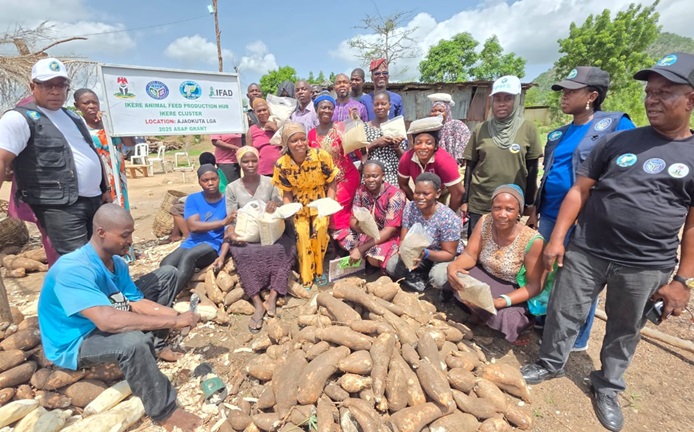
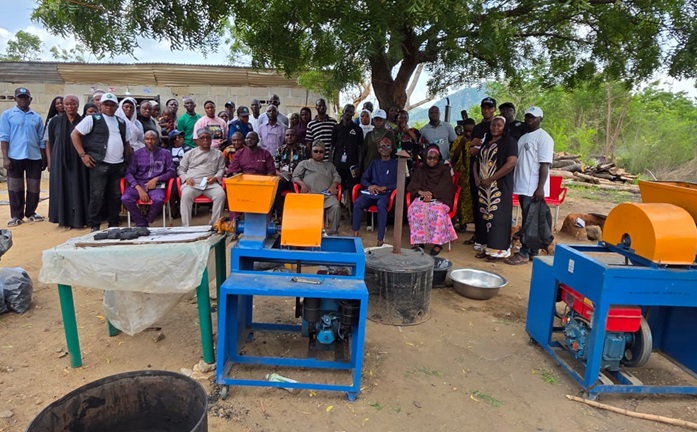
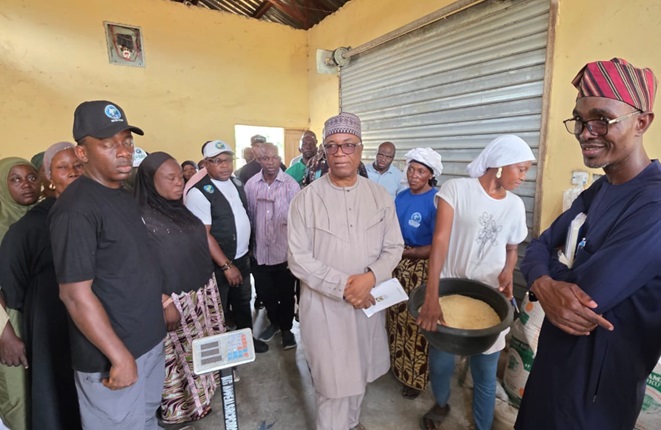
After visiting rice and cassava clusters, Ahmad commended the Kogi VCDP team and the state government for mobilizing farmers and boosting productivity.
He cited the introduction of tube wells and improved seed varieties as key interventions driving change.
“Before now, farmers were not using irrigation methods. With tube wells, they are now engaged in irrigated dry-season rice farming. Improved seeds and seed multiplication enterprises have increased yields significantly,” he said.
He noted that farmers were adopting good agricultural practices and sharing knowledge with neighboring communities beyond the project scope.
The shift to dry-season farming, he said, was reducing losses from seasonal flooding and serving as an effective climate adaptation strategy.
Ahmad rated Kogi’s implementation as “excellent,” highlighting efforts to empower women and farmers through Commodity Alliance Groups.
He also pointed to innovations such as converting rice husk waste into briquette charcoal, which reduces deforestation, mitigates climate change, and provides alternative fuel for cooking and small-scale processing.
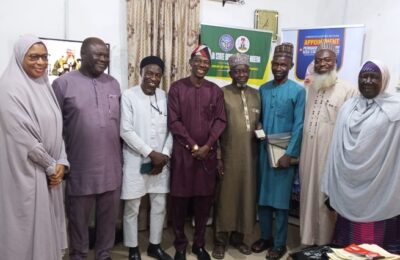
The mission team paid a courtesy visit to the Kogi State Commissioner for Agriculture and Food Security, Mr Timothy Ojomah.
The commissioner said constant monitoring was vital to keeping projects aligned with standards and lauded the FGN/IFAD partnership.
“The team’s excitement shows Kogi is doing well. This encourages us to do more. Our focus now is sustainability,” Ojomah said.
He assured that Governor Ahmed Usman Ododo’s administration would ensure the project continues beyond its current cycle by creating a dedicated desk in the ministry and replicating successful models across local government areas.
Ojomah also disclosed that Kogi was close to qualifying for the Special Agro-Industrial Processing Zone (SAPZ) programme, with funding support from the North Africa Development Bank and partnership with Chinese investors.
“His Excellency, the agri-friendly governor, will not allow any good agricultural project to die. Sustainability is assured,” he stated.
Dr Stella Adejoh, State Project Coordinator, represented by Procurement Officer, Mr Adewumi Olamide, thanked the mission team and pledged full support to achieve the visit’s objectives.
The SPC also appreciated the governor for creating an enabling environment and ensuring regular, timely payment of state counterpart funds.
The SPC stated that Kogi State Government’s prompt payment of counterpart funds has been key to their success.
She added that over 85 per cent of the recommendations set by development partners have been implemented.
She also noted that the projects are open for verification during the field visit.
The team visited rice and cassava clusters in Ajaokuta and Lokoja LGAs, including the ASCO Camp cluster, ASCO Camp Briquettes Production Hub, ASCO Camp Weather Station, the Ikere Animal Feed Production Hub, and rice production sites using tube wells, solar panels, and pumping machines under ASAP grants.
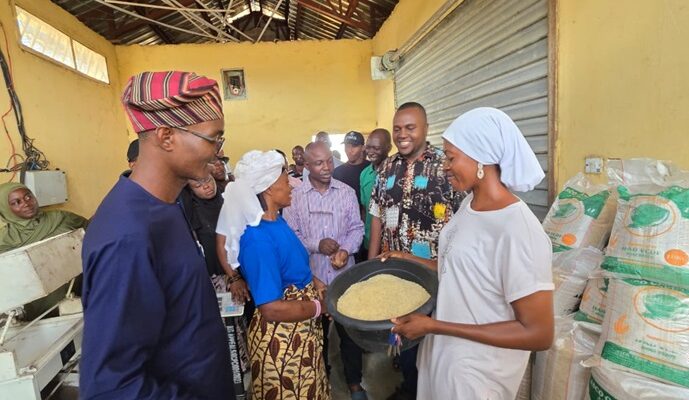
They engaged with Climate Change Champions on weather information dissemination, met with rural women processors on the “waste-to-wealth” intervention, and held discussions with producers on their farms.
Beneficiaries said the support had improved productivity and livelihoods.
“We have been trained and introduced to policy, so that if we have a business mindset, whether the program is on or not, we can move ahead,” said Gabriel Otohinoyi.
Latifat Audu said the programme had fostered unity among farmers. “The best thing VCDP has done for us is bringing us together. Before, we were not united like this. VCDP has improved our productivity and livelihoods.”
For many women processors, the training has been transformative.
“I really appreciate what VCDP has done for us women,” said Temitope Oyewole.
“Before, we were idle. Now we are earning money to send our children to school. We didn’t know anything about packaging or adding value. We just sold our produce raw.”
Oyewole also noted the value of the weather information hub. “We check conditions before going out to market our products, especially during the rainy season. VCDP has really tried for us.”
John Sunday said mechanization had boosted output. “Without this engine, there would be no flow in production. Now we are producing in bulk and supplying to marketers and other players.”
Johnson Ugu added that the programme had created employment and increased incomes for women. “All our women are now busy doing one work or the other. VCDP has increased our incomes. We appreciate VCDP.”
Other beneficiaries who expressed appreciation included Christiana Raphael, Agada Abdulazeez, and Sefi Yusuf.
The VCDP-AF initiative in Kogi State continues to support smallholder farmers through improved inputs, mechanization, climate-smart practices, and market linkages aimed at boosting food security and rural incomes.