
Here’s how human rights abuses under Nigeria’s military rule compare with today’s civilian democratic era,
based on reports from Human Rights Watch, U.S. State Dept, Amnesty, and Nigerian scholars:
Nature of the system & rule of law
Military rule (1966–1979, 1983–1999)

- Suspended constitution, rule by decree: Each coup suspended the constitution, replacing rule of law with “rule of force”. Decrees prevented courts from reviewing military acts.
- Authoritarian control: Government banned political activity, opposition parties, free press, and independent unions. Notable decrees: Decree No.2 allowed indefinite detention without trial, Decree No.4 punished free speech.
- Institutionalized repression: Military rulers “muzzled the press, denied Nigerians any right to influence how they were governed, and targeted opponents with harassment, arrest and even murder”.
Civilian democratic rule (1999–present)
- Constitutional protections restored: The 1999 Constitution explicitly guarantees the right to life, assembly, expression, and personal liberty. Military decrees like Decree No.2 were repealed in 1999.
- Democratic institutions exist: Courts, elections, and civilian legislatures operate. Nigeria has had uninterrupted civilian rule since 1999 and civilian-to-civilian transitions.
- But institutional weakness remains: Nigeria’s “history of military rule has left a legacy of human rights abuses and a weak rule of law” with “corruption, impunity, and lack of access to justice”.
Key changes since 1999
Improvements
. Legal framework: Repeal of repressive decrees and restoration of constitutional rights.
Reduced systematic political detention: “Arbitrary arrests, detention, and torture that were prevalent during military rule have since subsided”. Abubakar’s 1998 transition govt “took steps to reduce human rights abuses”.
Elections exist: Despite flaws, Nigerians can vote. “Return to civilian rule has not delivered a democratically accountable government” but there are elections, unlike the military era.
Continuing problems
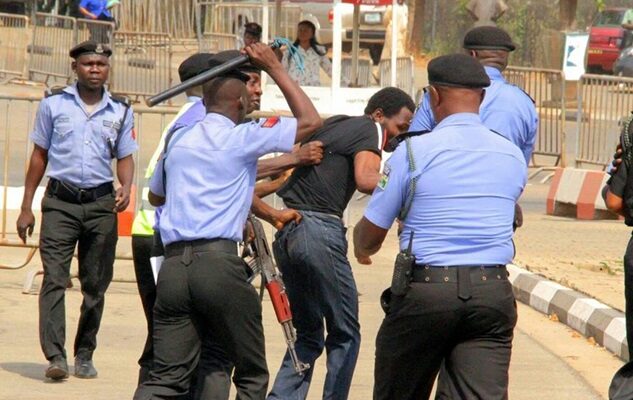
Security force impunity: “Across the country, the security forces continued to carry out more widespread and serious abuses, including summary executions and torture”.
. Conflict-related abuses: Boko Haram/ISWAP conflict led to “arbitrary arrests, torture, detention, enforced disappearance” by authorities.
Civil liberties pressure: “Current day Nigeria continues to exert enormous pressure on the media and other forms of freedoms”. HRVIC found multiple past military leaders liable for violations even after transition.
Paradox of democracy: Scholars note a “paradox” — civil rule “has not resulted in improved human rights”. Some argue “human rights abuses have been on the increase” under democracy.
. The bottom line from researchers • HRW 2007: Transition to civilian rule “has not delivered democratically accountable government” and abuses “remain pervasive”.
- SAIS Review: Human rights record “has improved significantly” since 1999, but “more work still needs to be done” and some old methods have returned.
- Scholars: Military rule was “complete authoritarianism”, but civilian rule also saw “institutional failure in observing people’s rights”. Military legacy continues to affect the nation.
Military rule
systematic, state-sanctioned repression with no legal recourse.
Civilian rule ,constitutional rights and elections exist, abuses are less systematic but still widespread due to weak institutions, impunity, and security crises. The change is more in structure than in elimination of abuses.
Political repression
Military
Systematic: detention of opposition politicians, activists, trade unionists, journalists. Political prisoners faced unfair trials by special tribunals with death sentences.
Civilian rule
Reduced but still present: “serious problems with independence of judiciary”, political prisoners reported. Elections 1999 & 2003 had “violence, intimidation, bribery, vote rigging”.
Freedom of expression/press
Military
Severely curtailed, when there was attacked on universities. and Decree No.4 punished free speech.
Civilian
Constitutionally protected, but “enormous pressure on media” continues. 2020/2022 reports cite “serious restrictions on free expression and media, including violence or threats against journalists, criminal libel and blasphemy laws”, Twitter ban noted.
Security force abuses
Military
Institutionalized. Military/security forces in Ogoniland and elsewhere had “longstanding pattern of human rights abuses”.
Civilian
Remains pervasive. HRW: “human rights abuses remain pervasive in Nigeria”. Includes “summary executions and torture”, sexual violence/harassment.
Accountability
Military
None. Decrees barred courts from reviewing executive acts. Culture of impunity.
Civilian
Limited. “The government at all levels is riddled with corruption and abuse of human rights”. Obadare 2022 notes “lack of investigation and accountability for gender-based violence”.
– Benjamin Ibrahim writes from Lokoja, Kogi state.
+2348069596250