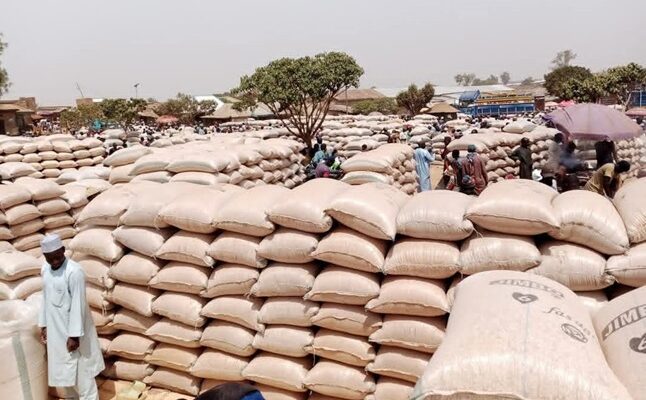

The escalating banditry along the Kwara State and Benin Republic border has transitioned from a localized security concern to a systemic threat to Nigeria’s national food security. Historically a peaceful gateway, this corridor has recently seen a surge in violence—including reports of massacres claiming over 100 lives—that threatens to sever the primary artery feeding the Southwest’s industrial and consumer markets.
1. The Strategic Importance of the Kwara Corridor
Kwara State, particularly the border regions like Kaiama and Baruten, serves as a critical “food bridge.” It connects the vast agricultural output of the North to the industrial processing hubs of the Southwest (Lagos, Ogun, and Oyo).
The Hub of Raw Commodities: This region is a primary source of cassava, maize, yam, and shea nuts—the lifeblood of Southwest flour mills, ethanol plants, and food processing industries.
The Transit Vein: The border serves as a major trade route for livestock and grains coming from West African neighbors.

2. Impact on Food Security: A Crisis of Supply and Price
The recent killings and kidnappings have created a “no-go zone” for farmers and traders, leading to several immediate consequences:
Farmer Displacement and Abandoned Harvests
The loss of life has triggered a mass exodus. Farmers are fleeing their ancestral lands, leaving thousands of hectares of arable land fallow. When farmers cannot plant, the entire 6–9 month agricultural cycle is broken, guaranteeing a future scarcity that cannot be fixed by immediate intervention.
Disruption of the “Just-in-Time” Supply Chain
Southwest processing industries rely on a steady flow of raw materials. Banditry on the Kwara-Benin axis causes:
Increased Logistics Costs: Transporters now demand “danger pay” or take longer, circuitous routes to avoid ambush.
Factory Downtime: Several processing plants in the Southwest are operating below capacity because the “raw commodity tap” from the Kwara border has been tightened.
Food Inflation
With reduced supply and higher transport risks, the cost of staples has spiked. As of early 2026, the price of grains in markets across Ibadan and Lagos has seen a direct correlation with the intensity of border skirmishes.
3. The Threat to the Southwest Processing Industry
The Southwest is Nigeria’s industrial engine. However, an engine cannot run without fuel.
Raw Material Scarcity: Industries that process cassava into starch or maize into poultry feed are facing an existential threat.
Investment Flight: Insecurity makes the region “unbankable,” stalling planned expansions of agro-processing zones that were meant to reduce Nigeria’s import dependence.
4. Why It Must Be Nipped in the Bud
If the insecurity along the Kwara-Benin Republic border is not decisively addressed, Nigeria faces a tripartite crisis:
Permanent Food Inflation: Prices will stabilize at a “new high” that the average citizen cannot afford.
Industrial Collapse: The Southwest’s processing sector may pivot back to expensive imports, draining foreign reserves.
Cross-Border Contagion: Unchecked banditry could invite more sophisticated transnational criminal networks, further destabilizing the West African sub-region.
The Path Forward
To restore the food supply chain, a multi-agency approach is required:
Joint Border Patrols: Coordinated efforts between the Nigerian Army, Customs, and the Benin Republic military.
Agro-Rangers: Deployment of specialized security to protect farming clusters.
Infrastructure: Improving the road networks to reduce the “bottlenecks” where bandits typically strike.
Key takeaway: Kwara is not just a state; it is a vital organ in Nigeria’s economic anatomy. If it continues to bleed, the entire body—particularly the Southwest’s industrial heart—will fail.
– Aribido David Jayeoba
Ibadan Nigeria