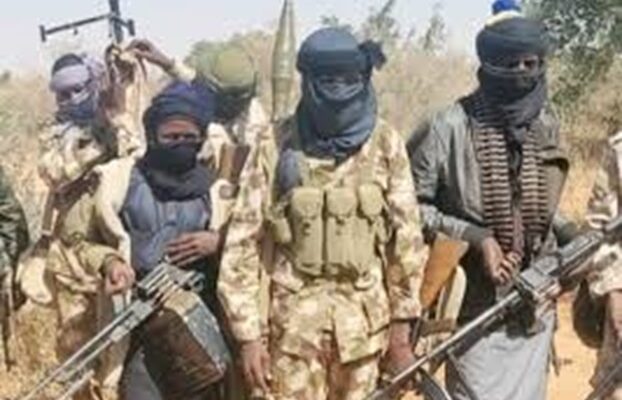

This is a real and worrying trend across Nigeria’s highways. Bandits and kidnappers increasingly dress in full military camouflage to mount fake checkpoints, stop travelers, and carry out abductions.
It creates both legal consequences for the criminals and serious reputational fallout for the Nigerian Army as an institution.
Legal implications for bandits/insurgents wearing army uniforms

a. Impersonation of military personnel is a criminal offence
Under Nigerian law, it’s illegal for civilians to wear military uniforms.
The Army has repeatedly warned that civilians caught in camouflage risk arrest and prosecution.
The Chief of Civil-Military Affairs stated: “If you are not in the armed forces, please don’t use our uniform… troops are to get the person to remove it, arrest them, and hand them over to the police for prosecution”.
Kidnapping + impersonation = terrorism
Since late 2025, the Federal Government officially designated kidnappers and armed bandits as terrorists.
The Information Minister said: “Henceforth, any armed group or individual that kidnaps our children, attacks our farmers and terrorises our communities is officially classified and will be dealt with as a terrorist”.
That means bandits caught in army uniform committing kidnapping face charges under the Terrorism (Prevention and Prohibition) Act.
Penalties include:
Terrorism charges: Life imprisonment or death penalty if lives are lost.
Kidnapping: Under various state laws, 21 years to life imprisonment; death penalty in some states if victims die.
Illegal possession of firearms: Up to 14 years under the Firearms Act.
Impersonation: Additional jail time for unlawful use of military uniform.
Evidence from arrests
Army and police operations show this playing out. In Kaduna, troops arrested a suspect with an AK-47 magazine whose phone had “incriminating photographs showing him dressed in military camouflage and armed with a PKT machine gun alongside other suspected bandits”.
In Abuja, police nabbed 3 suspected kidnappers dressed in military camouflage with AK-47s.
Impact on the Nigerian Army as an institution
Erosion of public trust
The Army itself admits the problem: “There are a lot of criminals using military garb to perpetrate crime.
If people keep dressing like that, how do you differentiate between a criminal and a genuine soldier?”.
Social media shows massive public anxiety. Commenters now obsess over details like boots vs. slippers to tell real soldiers from impostors.
“False flag” damage to reputation
When crimes happen, the default public assumption becomes “soldiers did it.”
The Army had to publicly dispel “unfounded narrative that all acts committed by persons dressed in military uniform are always military personnel”.
Daily Trust fact-checks have debunked viral claims that actual soldiers were kidnappers — they were imposters paraded by the Army.
Operational and security consequences
Loss of deterrence: Real checkpoints lose legitimacy because travelers fear stopping.
Increased scrutiny on soldiers: The Army says it sanctions soldiers who harass civilians found in uniform, but the line is blurred.
Calls for uniform change: Public discourse now demands the Army redesign uniforms to make impostors easier to spot.
Legal status of the Army itself
The Army doesn’t lose its legal status because criminals impersonate it. But institutionally it faces 3 pressures:
Duty to protect uniform: Must prosecute impersonators aggressively to maintain the uniform’s integrity.
Civil-military relations damage: More suspicion from civilians at real checkpoints, making operations harder.
International image: Designation of bandits as terrorists helps the Army use counterterrorism measures, but also raises expectations that it should end the impersonation problem.
What the Army is doing about it
Operation Checkmate: Military Police paraded 12 imposters in Lagos/Ogun who used uniforms for crimes.
Public sensitization: The Army urges families to tell relatives not to wear camouflage.
Intensified offensives: COAS ordered troops to “intensify ongoing operations aimed at decisively routing kidnappers, bandits”.
Practical takeaway if you’re traveling
Nigerians on social media now share tips: Real soldiers typically wear boots, have name tags, patrol vehicles, and act professionally.
Impostors often wear slippers, lack IDs, and set up isolated roadblocks. The Army advises not to engage but to note details and report to police.
This tactic by bandits is legally treated as terrorism + armed robbery + impersonation.
For the Army, it’s a PR and operational crisis that forces them to constantly prove “we weren’t the ones who did it”.
– Benjamin Ibrahim writes from Lokoja, Kogi state.
+2348069596250