
By Muhammed Sherifdeen Omeiza
For a long time, climate change was treated mainly as an environmental issue. Today, that is no longer enough.
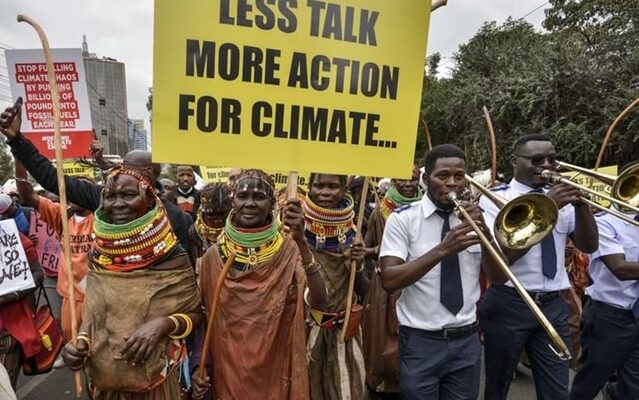
Climate change is becoming an economic issue for Africa.

When floods destroy roads, governments have to spend money rebuilding them. When drought destroys crops, governments have to respond to food shortages. When water systems fail, public money is needed to repair them. Every time a climate disaster happens, resources that could have been used for schools, hospitals, roads and other development projects are redirected towards emergency response.
This is becoming a serious problem for African countries that already have limited public resources.
The World Meteorological Organization estimates that African countries lose between 2% and 5% of GDP on average because of climate extremes, while some governments divert up to 9% of their budgets to responding to these events. The cost of climate adaptation in Sub-Saharan Africa is estimated at between $30 billion and $50 billion every year over the next decade.
This means climate change is making development more expensive.
Nigeria provides a good example. Flooding has repeatedly damaged farms, roads and communities. When this happens, the government has to spend money responding to the disaster instead of investing that money somewhere else.
The same problem can be seen in other parts of Africa. Drought affects farmers in Southern and Eastern Africa, while water shortages are creating serious problems in parts of South Africa. Recent reporting has also shown how drought and weak water infrastructure are combining to put pressure on cities such as Johannesburg.
The danger is that climate change can create a cycle.
A flood destroys a road. Government repairs the road. Another flood damages it again. Government repairs it again. The same money keeps being spent on recovery instead of building infrastructure that can withstand future climate shocks.
This is where African governments need to change their approach.
Instead of waiting for disasters before responding, governments should invest more in adaptation. Roads should be built with future climate risks in mind. Cities should improve drainage systems. Farmers should have access to drought-resistant seeds, irrigation and better weather information. Water systems should be planned for changing rainfall patterns.
There is also a financial problem.
African countries are being asked to spend more on climate adaptation at a time when many already face debt, unemployment and pressure on public services. This is why international climate finance is important. But African governments should also ensure that whatever climate finance they receive is used for projects that directly reduce vulnerability.
Climate policy should also become part of normal development planning.
A road project should consider flooding. Agricultural policy should consider changing rainfall. Urban planning should consider heat and water shortages. Health policy should consider the effects of extreme heat and climate-related diseases.
Africa should also not wait for climate disasters before taking action. The African Development Bank has warned that a possible strong El Niño could cause major economic losses across the continent, affecting food and water security, infrastructure and migration.
The important lesson is that adaptation is cheaper than repeatedly rebuilding after disasters.
African governments therefore need to move from emergency response to prevention. They need better climate data, stronger local institutions and more investment in resilient infrastructure. Communities should also be involved because people living in areas affected by floods, drought and water shortages often understand the risks better than anyone else.
Climate change is not something Africa can completely stop. But Africa can reduce how much damage it causes.
The real challenge is therefore not only reducing emissions. It is building economies and institutions that can survive the climate that is already changing.
If African governments continue to treat climate disasters as emergencies rather than development risks, the continent will keep spending more money repairing yesterday’s damage instead of building tomorrow’s future.
– Muhammed Sherifdeen Omeiza is a Nigerian researcher and writer whose work explores the intersection of humanitarian action, human rights, gender equality and global governance. With a keen interest in public policy, democracy, and political economy, he examines how local experiences and global decisions shape humanitarian outcomes in times of crisis. His writings draw from African and international contexts, reflecting a commitment to justice, accountability, and people-centered governance in global affairs.
Email: sherifdeenmuhammed001@gmail.com