
By Abdulkarim Abdulmalik
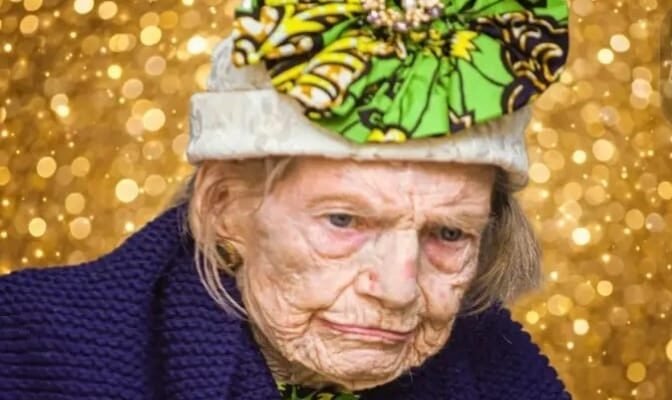
She arrived in Nigeria as a three-year-old British girl and died at 91 as a Nigerian mother. Beyond her missionary calling, Mama Ruth Elton’s extraordinary life offers a profound lesson in religious tolerance, cultural integration, selfless service and the power of humanity to transcend racial and religious boundaries.
There are stories that remind us that nationality is more than the passport we carry, religion is more than the label we proclaim, and humanity is far greater than the differences that sometimes divide us. The life of Mama Ruth Elton, the British-born missionary who spent almost her entire life in Nigeria, belongs to this remarkable category.

Come to Nigeria as a little white girl of barely three years old and eighty-eight years later, she departed this world as a Nigerian mother whose life had become deeply woven into the social and cultural history of communities across parts of southwestern and north-central Nigeria.
Mama Ruth Elton, born September 7, 1933, in England, arrived Ilesa in present-day Osun State in July 1937, accompanying her parents, Pa Sydney Granville Elton and Mama Hannah Elton. What began as a missionary family’s journey to Nigeria eventually became an extraordinary lifelong commitment to a country that she would embrace as her permanent home.
She died August 30, 2025, at the age of 91, at Sharon Compound, Alafia Bamin Quarters, Ilesa, the same compound where her father had served for approximately five decades.
Her story deserves to be told, not merely as a Christian missionary’s biography, but as an inspiring example of what interfaith understanding, cultural accommodation and genuine human solidarity should look like in a society increasingly challenged by religious, ethnic and racial divisions.
Beyond the Colour of Her Skin
In a world where racial identity sometimes determines how people relate to one another, Mama Elton’s experience among Nigerian communities offers a refreshing alternative.
She did not remain an outsider who merely came to preach to people whose languages, traditions and everyday experiences she barely understood. Instead, she immersed herself in their communities, learned their languages and established relationships that went beyond the conventional boundaries of missionary work.
She has lived in various places including Ilesa, Egbe and Okene, among other communities; travelling through villages in present-day Kogi, Ondo, Oyo and Osun States.
Remarkably, she learned Yoruba and Ebira languages fluently, enabling her to communicate directly with the people she served.
Among the Ebira, she became affectionately known as Ometere (a name associated with someone who does good).
That description captures something important about her legacy. The people did not simply remember her because she was a white woman who had come from Britain. They remembered her because of what she represented in their lives.
Her identity was gradually defined less by the colour of her skin and more by the kindness, compassion and practical assistance she extended to ordinary people.
This is one of the fundamental principles of interfaith engagement: relationships become meaningful when people recognise one another’s humanity before their religious, ethnic or cultural differences.
When Faith Became Practical Service
Perhaps the most remarkable aspect of Mama Elton’s missionary journey was her understanding that religious commitment must translate into practical concern for human welfare.
In Okene and surrounding communities, she encountered mothers struggling with infant mortality, poor hygiene and inadequate knowledge of childcare.
Rather than limiting her intervention to spiritual encouragement among the Christians, she became involved in educating women on proper infant feeding, personal hygiene and childcare practices.
She also taught sewing and other practical skills that could help women support their families economically.
This approach deserves particular attention in contemporary discussions about interfaith cooperation.
Religion should not be confined to places of worship, theological arguments or competing claims about spiritual superiority. Its moral value should also be measured by its contribution to human dignity, public health, education, poverty reduction and peaceful coexistence.
Mama Elton’s example demonstrates how faith-inspired service can address common human challenges without requiring beneficiaries to surrender their religious or cultural identities.
A Muslim mother concerned about her child’s health, a Christian woman seeking practical skills and a traditional religious believer struggling with poverty all have needs that transcend doctrinal differences.
Helping them is not a religious concession. It is an expression of shared humanity.
An Interfaith Lesson for Nigeria
Nigeria’s religious landscape is characterised by considerable diversity, particularly between Islam, Christianity and indigenous religious traditions.
Unfortunately, this diversity has sometimes been exploited by political interests, religious extremism, deliberate ignorance, misinformation and mutual suspicion.
Communities that should cooperate in addressing poverty, insecurity, unemployment, illiteracy and other social challenges occasionally find themselves divided by questions of religious identity.
It is against this backdrop that Mama Elton’s life offers an important lesson.
Although her missionary identity was firmly rooted in Christianity, her relationships with the people she served were not limited to Christians. Her work among Yoruba and Ebira communities brought her into contact with people from different cultural and religious backgrounds.
The significance of this experience is not that she abandoned her Christian convictions or that religious differences ceased to exist. Rather, it demonstrates that strong religious convictions need not prevent meaningful relationships with people of other faiths.
Indeed, religious commitment should inspire greater compassion, humility and respect for others.
The Qur’an, in Surah Al-Mumtahanah 60:8, teaches Muslims that Allah does not forbid them from showing kindness and acting justly towards those who do not fight them on account of religion or drive them from their homes.
Similarly, Jesus Christ’s teaching in Matthew 22:39 emphasises the commandment to love one’s neighbour as oneself.
These teachings, though originating from different religious traditions, reinforce a shared moral responsibility: people should not be denied kindness because they belong to another religious community.
Mama Elton’s life provides a practical illustration of this principle.
She may have, with her parents, come to Nigeria with a Christian missionary assignment, but her eventual contribution extended into the everyday lives of people whose identities and circumstances were diverse.
Citizenship Beyond the Passport
Another remarkable chapter in her story concerns her decision to become fully Nigerian.
In 1975, following Nigeria’s citizenship policy changes concerning dual nationality, she reportedly surrendered her British citizenship and embraced Nigerian nationality.
At a time when many Nigerians increasingly regard foreign passports and permanent residency permits as symbols of security and social advancement, her decision offers an interesting perspective on belonging and patriotism.
Of course, nobody should be condemned for seeking opportunities or better living conditions outside Nigeria. Migration is a legitimate human aspiration.
However, Mama Elton’s decision challenges Nigerians to reconsider what it means to belong to a country.
Citizenship is not simply about possessing a national identity document. It is also about commitment, responsibility, contribution and a willingness to participate in the collective wellbeing of society.
She did not merely reside in Nigeria. She invested her life in its people.
Her decision also raises an important question for religious organisations and missionary institutions: how can faith communities demonstrate lasting commitment to the societies in which they operate?
The answer lies partly in the example she left behind: build relationships, understand local cultures, respect people’s dignity and contribute meaningfully to community development.
A Legacy Beyond Religious Institutions
Mama Elton authored three books:
The Gospel of the Kingdom,
Your Citizenship: Hell or the Kingdom? and
The Kingdom Has Come.
These publications reflected her Christian convictions and missionary orientation.
Yet her most enduring legacy may not be found exclusively in her writings or religious activities. It is also reflected in the countless individuals and families whose lives were touched by her presence and a heart flowing with milk of compassion.
She never married and had no biological children, but many Nigerians came to regard her as a mother. That distinction is significant.
Motherhood, in its broader humanitarian expression, is not determined exclusively by biological relationships. It can also be demonstrated through care, sacrifice, guidance, protection and sustained commitment to the wellbeing of others.
Her death on August 30, 2025 therefore, was not simply the passing of a foreign-born missionary. It was the departure of a woman whose life had become part of the collective memory of several Nigerian communities.
What Nigeria Should Learn
The story of Mama Ruth Elton should challenge religious leaders, interfaith organisations, government institutions, civil society groups and the media to rethink the meaning of religious engagement.
Interfaith dialogue must move beyond ceremonial meetings, exchange of greetings and occasional declarations of solidarity. It must become practical.
Muslims, Christians and traditional religious communities can cooperate in maternal and child healthcare, education, vocational training, environmental protection, humanitarian assistance and peacebuilding.
Religious organisations should also encourage their members to learn about other Religious communities, appreciate cultural differences and reject narratives that portray people of different faiths as enemies.
This is where the work of interfaith media practitioners becomes particularly important. The media must, as its social responsibility, deliberately tell stories that highlight cooperation, compassion and shared citizenship rather than giving disproportionate attention to religious disagreements and sensational controversies.
Mama Elton’s life is precisely a story that deserves greater national attention.
Her example also challenges missionary organisations to measure their impact not merely by the number of converts they attract, but by the quality of relationships they build and the positive changes they facilitate in their host communities.
A Mother Whose Humanity Transcended Boundaries
There is something deeply instructive about a woman who arrived in Nigeria at three years old, grew up among its people, learned their languages, embraced their nationality and eventually found her final resting place on Nigerian soil.
She came from Britain, but Nigeria became her home.
She was a Christian missionary, but her humanitarian contribution reached beyond the boundaries of religious identity.
She was biologically childless, yet many people called her mother.
Perhaps this is the most enduring lesson of Mama Ruth Elton’s remarkable life: the true test of religion is not merely how loudly we profess our beliefs, but how faithfully we translate those beliefs into compassion, justice and service to humanity.
As Nigeria struggles with insecurity, religious intolerance, ethnic suspicion and declining social trust, her story reminds us that peaceful coexistence is not an impossible aspiration.
It begins with ordinary people making extraordinary choices to understand, respect and serve one another.
The Bible’s account in 1 Kings 19:18 speaks of a faithful remnant that remained committed to righteousness despite the prevailing circumstances of its time. Mama Elton’s admirers may find inspiration in this passage as they reflect on her lifelong dedication.
But her legacy should not be reduced to admiration or emotional tributes. It should inspire action.
Nigeria needs more people, irrespective of religious affiliation, who are prepared to invest their time, knowledge, resources and talents in the service of others.
Perhaps we do not need ten more people exactly like Mama Elton. We need millions of Nigerians willing to embrace the values she exemplified: humility, compassion, cultural respect, selflessness and unwavering commitment to the common good.
She came as a three-year-old British girl. She departed as a 91-year-old Nigerian mother.
And in between those two moments, she left behind a very strong interfaith message that Nigeria must never forget: Our differences may define our identities, but our humanity should define our relationships.
Additional reports from Jonathan Philip.
– Abdulkarim Abdulmalik is Chairman, Governing Board, Guild of Interfaith Media Practitioners Nigeria (GIMP-Nigeria). Email: info@interfaithmediaguild.org; interfaithmediaguild@gmail.com