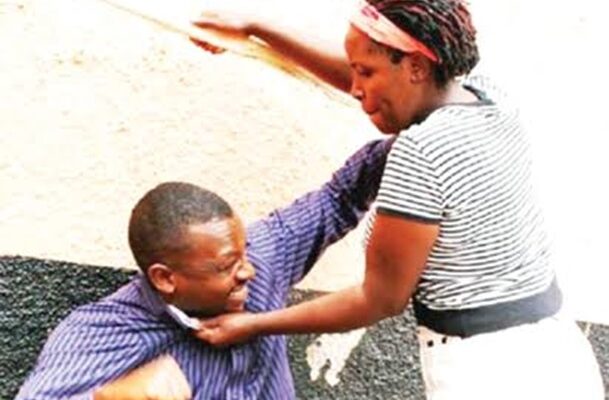

GBV is any harmful act directed at someone because of their gender.
It’s recognized internationally as a human rights violation because it attacks a person’s right to life, security, dignity, and equality.
How GBV violates human rights
Human right violated

How GBV connects
Right to life & security of person
Femicide, honor killings, domestic violence, trafficking
Right to be free from torture & inhuman treatment
Rape, sexual assault, female genital mutilation, forced marriage
Right to health
Physical injury, forced pregnancy, STD/HIV exposure, mental trauma
Right to equality & non-discrimination
Laws/practices that treat women, men, or LGBTQ+ people unequally
Right to education & work
School dropout due to harassment, workplace sexual exploitation
Reproductive rights
Forced abortion, denial of contraception, obstetric violence
Key international frameworks:
UDHR Article 3 & 5: Right to life, liberty, security; freedom from torture
CEDAW: Calls on states to eliminate discrimination & violence against women
Istanbul Convention:
Europe’s treaty on preventing/domestic violence
Maputo Protocol: African Union treaty addressing GBV in Africa
In Nigeria specifically, GBV is addressed under the Violence Against Persons Prohibition Act 2015, which criminalizes rape, spousal battery, harmful widowhood practices, FGM, and more.
Many states including FCT Abuja have domesticated it.
Forms of GBV that count as human rights violations
Physical: Beating, burning, acid attacks, FGM
Sexual: Rape, marital rape, sexual harassment, forced prostitution, sextortion
Psychological: Threats, intimidation, stalking, coercive control, cyberbullying
Economics: Denying access to money, property, employment; dowry-related abuse
Harmful traditional practices: Child marriage, widow inheritance, honor crimes
Required/ recommended actions for victims
If you or someone you know is experiencing GBV, here are steps recognized by human rights groups, UNFPA, and Nigerian law.
You don’t have to do all of them, and safety comes first.
- Immediate safety
Get to a safe place: Friend’s house, family member, shelter. If in danger now, leave if you can do so safely.
Emergency help: In Nigeria, call 112 or 767 for emergencies. NAPTIP hotline: 627 for trafficking/violence. Lagos DSVA: 08000-333-333.
Medical attention within 72 hours: For rape/sexual assault, go to a hospital for emergency contraception, PEP for HIV prevention, and treatment.
This also preserves forensic evidence.
- Preserve evidence
Don’t bathe, change clothes, or clean up if you plan to report sexual assault.
Keep clothes in a paper bag, not plastic.
Save texts, emails, call logs, photos of injuries, medical reports.
Write down what happened with dates/times while memory is fresh.
- Report to authorities
Police: You can report at any police station. Ask for the Gender Desk or Family Support Unit.
In FCT Abuja, Gender Unit is at Force HQ.
VAPP Act: Gives you the right to apply for a protection order from court to restrain the abuser.
You are not required to report to get medical help or counseling, but reporting creates a legal record.
- Access support services
Medical: Mirabel Centre Lagos, Women at Risk International Foundation, and most general hospitals have GBV units.
Psychosocial: Counseling through NGOs like Women’s Rights Advancement and Protection Alternative, Project Alert, or FIDA Nigeria.
Legal aid: FIDA Nigeria, Legal Aid Council, or NBA branches offer free legal help for GBV cases.
Shelters: Temporary safe housing available through state ministries of women affairs and NGOs.
- Know your rights as a victim
Right to privacy during investigation and trial
Right to free medical treatment for sexual assault under VAPP Act
Right to be heard and to apply for compensation
Right not to be blamed or forced to reconcile - Longer-term steps
Safety planning: Change locks, vary routines, tell trusted people, keep emergency money.
Documentation: Keep a journal of incidents if abuse is ongoing.
Economic empowerment: Many NGOs link survivors to skills training and grants to reduce financial dependence.
Court action: You can pursue criminal case against abuser and/or civil case for protection order and damages.
Important notes
You are not to blame. The violation is the abuser’s responsibility, not yours.
You choose what to do next. There’s no “required” action – you decide based on safety and readiness. Reporting is a right, not an obligation.
Male and LGBTQ+ victims: GBV affects all genders. Support services exist, though stigma is higher.
Your rights are still protected.
If you’re in Abuja right now and need immediate help:
FCT Sexual and Gender-Based Violence Response Team: 0807-111-1122
Mirabel Centre national line: 0815-577-0000
Key stakeholders in addressing Gender-Based Violence (GBV) and what each one does
GBV response works best when multiple groups act together. No single person or agency can end it alone.
Here’s who’s involved and how they fit:
. The Survivor/Victim
Role: Central decision-maker. You choose what steps to take and when.
Rights: Safety, medical care, privacy, legal protection, to be believed and not blamed.
Note: You’re not obligated to involve anyone you don’t want to, but these stakeholders exist if you choose to use them.
Family & Community
Immediate family/friends: Provide emotional support, safe housing, help with reporting, accompany to hospital/police.
Community leaders: Traditional rulers, religious leaders, youth leaders. Role is to condemn GBV publicly, mediate only when safe/appropriate, refer cases instead of “settling” criminal cases like rape at home.
In Nigeria, many communities now have “GBV champions” trained to link survivors to services.
Bystanders: Intervene safely, document if possible, don’t victim-blame, connect survivors to help.
Health Sector
Hospitals & Primary Health Centres:
Emergency treatment for injuries, PEP within 72hrs for HIV, emergency contraception
Forensic medical exams to document evidence for court
Mental health care for trauma, depression, PTSD
Mandatory to treat without police report under VAPP Act
Specialized centers: Mirabel Centre Lagos, WARIF, Women’s Health and Action Research Centre. They offer one-stop medical + counseling + legal services.
Law Enforcement
Nigeria Police Force:
Gender Desks/Family Support Units in most state commands, including FCT. Trained to handle GBV cases with confidentiality
Investigate, arrest suspects, collect evidence, charge to court
Enforce protection orders issued by courts
NSCDC: Also has Gender Unit and responds to GBV, especially in schools and IDP camps.
Key point: Police cannot ask you for money to file a case. It’s illegal.
. Justice Sector
Courts: Issue protection/restraining orders, remand suspects, try cases. VAPP Act allows special GBV courts in some states.
Ministry of Justice: Prosecute offenders. Many states have Sexual and Gender-Based Violence Response Units with dedicated prosecutors.
Legal Aid Council & FIDA Nigeria: Provide free legal representation to survivors who can’t afford lawyers.
NBA: Some branches have free GBV legal clinics.
Government Ministries & Agencies
Agency
Role
Federal/State Ministry of Women Affairs
Coordinates GBV policy, runs shelters, manages toll-free lines, trains responders.
In FCT: FCT Social Development Secretariat
NAPTIP
Handles trafficking, sexual exploitation, and domestic servitude. Hotline 627
National Human Rights Commission
Receives complaints, investigates violations, recommends action
NACA
Links HIV services for sexual violence survivors
Ministry of Education
School-based prevention, responds to teacher-student abuse, safe school policies
Ministry of Youth
Engages young men/boys in prevention programs
. Civil Society Organizations / NGOs
Service providers: Project Alert, Women’s Aid Collective, Stand to End Rape, Dorothy Njemanze Foundation. They offer shelters, counseling, legal aid, court accompaniment.
– Benjamin Ibrahim writes from Lokoja, Kogi state.
+2348069596250