
By Atuluku Samuel, PhD
The responsibility of conducting credible local government elections in Kogi State rests squarely on the shoulders of the Kogi State Independent Electoral Commission (KOSIEC), an institution established to strengthen grassroots democracy and ensure the emergence of legitimate local government leadership through a transparent electoral process.
Since its establishment, KOSIEC has been led by different Chairmen, each contributing in various ways toward the realization of the Commission’s mandate.

As with every public institution, leadership styles and levels of achievement have differed from one administration to another.
While some leaders recorded modest successes, others left more remarkable footprints in the Commission’s history.
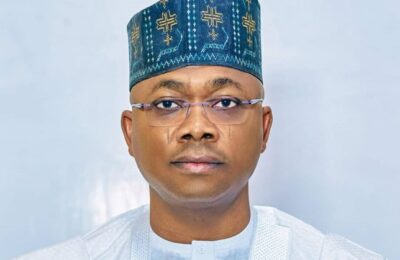
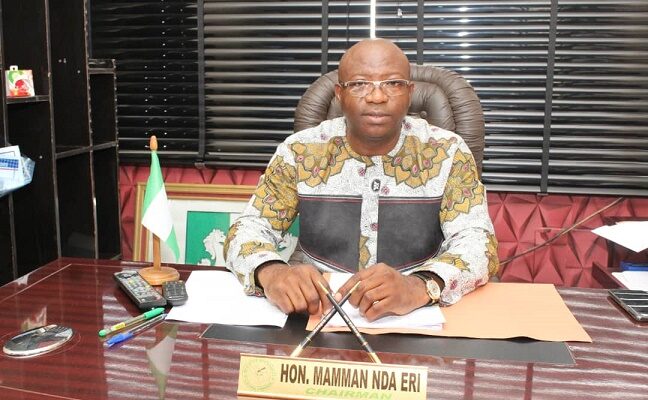
Among those whose stewardship has attracted considerable public attention is the current Chairman, Honourable Mamman Nda Eri.
His first tenure witnessed the successful conduct of local government elections on December 12, 2020, an exercise that many observers considered a significant test of the Commission’s capacity.
His reappointment was widely viewed as a vote of confidence in his leadership, experience, and commitment to duty.
As preparations intensify for the next local government elections scheduled for October 17, 2026, KOSIEC’s activities have continued to attract the attention of political stakeholders, civil society groups, traditional institutions, and the electorate across Kogi State.
One of the Commission’s earliest and most significant steps was the release of the official Notice of Election and a comprehensive electoral timetable.
By announcing the election date well in advance, KOSIEC provided political parties, candidates, and other stakeholders with adequate time to prepare for the electoral process.
This early planning has been widely regarded as a positive step towards ensuring orderliness, transparency, and effective coordination.
Beyond the release of the timetable, the Commission has also embarked on extensive stakeholder consultations.
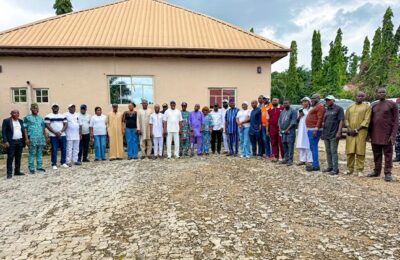
A notable example was the stakeholders’ engagement held in Lokoja, where KOSIEC presented the reviewed KOSIEC Law 2025 alongside the operational guidelines for the elections.
The meeting brought together representatives of political parties, security agencies, civil society organisations, traditional rulers, religious leaders, media practitioners, and development partners. Such broad-based consultations are generally viewed as essential for building public trust, promoting inclusiveness, and reducing political tension ahead of elections.
Another important area of focus has been voter education and public sensitisation.
Through engagements across the three senatorial districts, KOSIEC has continued to educate citizens on electoral procedures, voter responsibilities, and the need for peaceful participation in the democratic process.
The involvement of traditional rulers and community leaders is particularly significant, given their influence at the grassroots level and their ability to mobilise citizens towards peaceful and responsible participation.
Security remains another critical component of election management.
Recent engagements between KOSIEC and security agencies under the Inter-Agency Consultative Committee on Election Security (ICCES) underscore the importance of collaboration in safeguarding voters, electoral officials, and sensitive election materials before, during, and after the polls.
The Commission has also formally notified political parties of the commencement of election campaigns from May 20, 2026.
At various engagements, KOSIEC has consistently advocated issue-based campaigns while cautioning political actors against hate speech, violence, voter intimidation, and other forms of electoral misconduct.
This emphasis on peaceful political engagement reflects an appreciation of the often sensitive nature of elections in Nigeria and the need to preserve public confidence in the electoral process.
Despite these preparations, public expectations remain high. Across Nigeria, citizens increasingly demand greater transparency, accountability, and credibility in elections at all levels of government. Local government elections are no exception.
Concerns relating to voter participation, vote-buying, election-day logistics, transparency, and the overall integrity of the process continue to feature prominently in public discourse.
Consequently, the success of the 2026 local government elections will be measured not only by what happens on election day, but also by the credibility, fairness, inclusiveness, and public acceptance of the entire process.
While KOSIEC’s preparations suggest a strong commitment to institutional readiness, the ultimate test lies in its ability to maintain neutrality, enforce electoral regulations without bias, and deliver outcomes that genuinely reflect the will of the electorate.
Political parties, candidates, and supporters also have important responsibilities.
Respect for electoral rules, peaceful conduct, and adherence to democratic principles will be crucial in ensuring a successful election.
Meanwhile, Honourable Mamman Nda Eri’s emergence as the National Chairman FORUM OF STATE INDEPENDENT ELECTORAL COMMISSIONS OF NIGERIA, (FOSIECON) has further elevated his profile within the Country’s electoral administration landscape.
The position comes with greater responsibility and increased public scrutiny, making the 2026 Kogi local government elections even more significant.
As the countdown to October 17, 2026 continues, many observers remain optimistic that KOSIEC will build on its previous experience and deliver an electoral process that meets acceptable standards of credibility, transparency, and fairness.
Ultimately, the Commission’s legacy will not be defined by promises or preparations alone, but by its ability to conduct elections that inspire public confidence and strengthen democracy at the grassroots level in Kogi State.
– Atuluku Samuel, PhD writes from Lokoja.