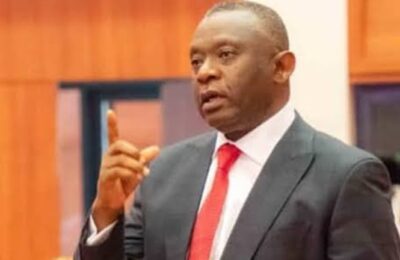

By Pastor Stanley Ajileye.
Nigeria’s growing defence partnership with Turkey is not happening in a vacuum. It is, in many ways, a response to years of frustration with Western partners, particularly countries like the United States, where military cooperation is often slowed by bureaucracy, legislative bottlenecks, and stringent human rights conditions.
For a nation battling urgent and evolving security threats, the delays in procuring critical equipment, the diplomatic hurdles, and the constant scrutiny have made rapid response difficult.

Turkey, on the other hand, presents itself as a willing and efficient alternative, a partner that offers faster access to military hardware, fewer political conditions, and practical battlefield experience in modern warfare.
To Nigerian policymakers, this is attractive, even compelling.
But attraction must not replace caution.
On paper, the Nigeria–Turkey alliance sounds impressive, advanced training, modern warfare tactics, drone technology, and counterterrorism expertise.
In reality, however, this alliance risks becoming a dangerous gamble if Nigeria refuses to confront the hard truth about the current state of its own security architecture.
Yes, Nigeria needs help. The war against insurgency, especially from groups like Boko Haram, has dragged on for too long. Our military needs modernization. Our troops deserve better tools, better intelligence, and better training.
But let us be honest, you do not pour clean water into a leaking vessel and expect to store it.
Before importing sophisticated military training from Turkey, Nigeria must answer one uncomfortable question, who exactly will be receiving this training?
There is a growing and deeply troubling belief among many Nigerians that our security institutions have, over time, been compromised. Allegations persist that under the administration of Muhammadu Buhari, individuals with questionable pasts were granted amnesty and, in some cases, found their way into the broader security framework.
Whether the full extent of these claims is officially acknowledged or not is almost beside the point. What matters is this, the doubt exists, and in matters of national security, doubt is dangerous.
Let us speak plainly.
If there are indeed compromised elements within our military or security services, then bringing in advanced foreign training, no matter how well-intentioned, could backfire catastrophically.
You are not strengthening your army, you may be upgrading your enemy.
You are not securing your nation, you may be exposing your tactical intelligence.
You are not winning the war, you may be prolonging it.
No serious country trains blindly. No responsible government ignores internal vulnerabilities while seeking external solutions.
The average Nigerian soldier is not just battling insurgents in the field. There is an increasing fear, rightly or wrongly held, that he may also be operating within a system where trust is fragile.
Morale suffers when soldiers doubt the integrity of their ranks, when intelligence leaks become a possibility, when operations fail under suspicious circumstances.
A military divided against itself cannot win, no matter how advanced the weapons or training.
Let’s be clear, Turkey is acting in its own strategic interest, just like any nation would. Under Recep Tayyip Erdogan, Turkey is expanding its global influence through defence partnerships, and Nigeria is a valuable ally.
However, there is also a subtle but growing concern that must not be ignored. Turkey is widely known for projecting not just military and economic influence, but also cultural and religious soft power through state-linked institutions. In a country like Nigeria, where religious balance is delicate and often politically sensitive, this raises legitimate questions.
Even if no direct religious agenda is embedded in the military agreement, perception alone can be powerful. There is a fear, however subtle, that deeper engagement could gradually open doors to external religious influence, intentionally or otherwise.
In a nation already grappling with identity tensions, this is not a matter to be dismissed lightly.
The real issue is not Turkey.
The real issue is whether Nigeria understands its own internal weaknesses, and is willing to fix them before importing external strength.
No amount of foreign training will save a system that is internally compromised.
Nigeria must conduct a thorough, transparent audit of its security personnel, strengthen vetting and counterintelligence mechanisms, draw a clear line between rehabilitation programmes and national security responsibilities, restore trust within the ranks of its armed forces.
Anything less is cosmetic.
The time for diplomatic language is over.
Nigeria cannot afford to pretend. The stakes are too high. Lives are being lost daily. Communities are under siege. Soldiers are risking everything.
If there are indeed individuals within the system whose loyalty is questionable, then they must be identified and removed through lawful and credible processes.
Not tomorrow, now.
The Nigeria–Turkey alliance could be beneficial. It could strengthen our military. It could accelerate our fight against insecurity.
But only if it is built on a solid, trusted foundation.
Otherwise, it becomes what many fear it already is, a well-packaged solution layered top of a dangerous, unresolved problem.
Nigeria does not just need better weapons.
Nigeria needs a clean, united, and trustworthy security system.
Without that, no alliance, no matter how powerful, will deliver victory.
– Pastor Stanley Ajileye writes from Ekinrin-Adde, Kogi State