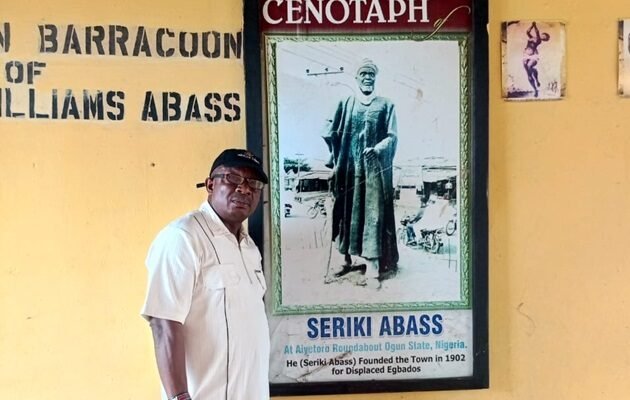

By Pastor Stanley Ajileye
There is an interesting, though deeply disturbing, story in Nigerian history about a man called Seriki Williams Abass of Badagry.
Abass was reportedly captured as a young boy, sold into slavery and taken away from his homeland. His original name was Ifaremilekun Fagbemi, and he was said to have come from the Egba area of present-day Ogun State in Yorubaland. He experienced the bitterness, humiliation and cruelty of being somebody else’s property. One would ordinarily expect that a man who had passed through such an experience would become a lifelong advocate of freedom, dignity and human emancipation.

But history has a strange sense of humour.
After gaining his freedom and returning to West Africa, Abass became involved in the very business that had once victimised him. He reportedly became a major slave merchant, acquiring and supplying fellow Africans to foreign slave traders.
In other words, the former victim became a beneficiary and active participant in the system of oppression.
What a tragic irony!
My understanding of the Seriki Abass story is not merely from reading history books or listening to accounts of the transatlantic slave trade. I had a personal encounter with this painful history.
Last August, I deliberately travelled to Badagry and spent two nights in the historic town. My mission was simple: I wanted to see for myself the relics and physical evidence of the inhuman treatment reportedly meted out to enslaved Africans by Abass and other participants in the slave trade.
I wanted to walk through the historical site, see the structures, examine the relics and connect the stories I had read with the physical realities that remained.
What I encountered was deeply disturbing.
Standing within the walls of the former compound of Seriki Williams Abass, now preserved as a slave history museum, I tried to imagine the anguish of those unfortunate men, women and children who were confined there, awaiting sale and transportation into an uncertain future.
I imagined mothers separated from their children, husbands torn away from their wives, young men deprived of their freedom and innocent children whose childhood was stolen by a cruel commercial enterprise.
I could hardly hold back my tears.
But what broke my heart even more was the reported role of Abass himself.
Here was a man who had once experienced the cruelty of slavery, yet reportedly became an active participant in the same inhuman enterprise. Historical accounts associate his commercial activities with the exchange of enslaved Africans for European merchandise, including bottles of gin, mirrors, umbrellas and other imported goods supplied by foreign slave traders.
Think about that for a moment!
A fellow human being, a brother, somebody who shared the same humanity and perhaps the same cultural ancestry, reduced to a commodity that could be exchanged for a bottle of gin, an umbrella or a mirror!
What manner of brotherhood was that?
What happened to the blood of kinship? Where was the conscience of a man who had himself tasted the bitterness of captivity?
How could someone who knew the pain of being captured, humiliated and sold turn around to subject others to the same experience?
I left that historical site with a heavy heart. I wept, not just for those whose lives were destroyed, but also for the tragic betrayal of humanity by someone who should have understood their suffering.
And that experience has continued to trouble my conscience.
It is against this background that I cannot help seeing disturbing parallels between the story of Seriki Abass and the conduct of some privileged political appointees from Kogi West today.
History may not repeat itself in exactly the same form, but human behaviour sometimes reproduces the same tragedy in different circumstances.
Yesterday, some people reportedly exchanged their brothers for bottles of gin, mirrors and umbrellas. Today, some people appear willing to sacrifice the political dignity, collective aspirations and freedom of their brothers and sisters for appointments, allowances, political favours and the occasional beef from the government table.
The commodities have changed. The mentality of betrayal is what we must confront.
And that is why the Seriki Abass story is not just about Badagry. It is also a warning to Kogi West.
In our contemporary political arrangement, some privileged sons and daughters of Kogi West have found themselves occupying political appointments. Some have acquired government positions, access to corridors of power, official vehicles, security details and, occasionally, the privilege of dining close to the political kitchen.
Some have also developed an extraordinary appetite for traditional titles. Everywhere they turn, another chieftaincy title seems to be waiting for them. If traditional titles were academic certificates, some of these political appointees would have earned enough qualifications to establish their own universities!
There is nothing wrong with receiving traditional honours. Indeed, public recognition is commendable when it is earned through genuine service to the people.
But one begins to wonder: What exactly are these titles celebrating? Service to the community or loyalty to the political master?
A man can be a chief in ten communities and still be a stranger to the aspirations of his own people.
A person can wear the most elaborate traditional regalia and still be politically naked when it comes to defending the collective interest of his constituency.
Unfortunately, some of our political appointees appear to have mistaken access to government for achievement, proximity to power for political relevance, and personal comfort for community development.
There is another curious breed of political actors in our region.
They are so fascinated by the occasional benefits that fall from the government table that they have forgotten the difference between a meal and a future.
In their political vocabulary, beef is more important than development, a plate of food is more important than political representation, and a little appointment is more important than the collective destiny of an entire people.
Some have become so accustomed to the crumbs that they are prepared to defend the dining table, even when their own people are being denied a seat at the table.
They have become what I may jokingly describe as the Cow-Uncle Political Association.
Their loyalty is not necessarily to an ideology, a development agenda or the future of Kogi West. It is to the cow that occasionally provides the beef!
And when the cow is threatened, they are ready to moo louder than the cow itself.
It is a tragedy when the appetite of a few individuals becomes the political prison of an entire region.
How can a people negotiate their political future when some of their own representatives are more interested in protecting the source of their occasional beef than securing a fair share of the political opportunities available to their people?
A plate of beef may satisfy the stomach for an afternoon, but it cannot secure the future of a generation.
Perhaps the most disturbing dimension of this political drama is the apparent willingness of some sons and daughters of Kogi West to work against their own brothers and sisters simply because they want to remain in the good books of those who appointed them.
Some are allegedly willing to facilitate the intimidation, harassment, arrest or detention of fellow citizens whose only offence is expressing a different political opinion or demanding a fair opportunity for their region.
Imagine that!
A son of Kogi West, enjoying the privilege of an appointment, becomes an instrument for silencing another son of Kogi West who is demanding political inclusion.
A daughter of the same soil, who ought to understand the historical frustrations of her people, suddenly discovers that her greatest political assignment is to defend the status quo.
For what?
A little allowance? A temporary appointment? A few bags of rice? An occasional invitation to the Government House? Or perhaps the hope of another traditional title?
Is that how cheaply we have priced our collective destiny?
Let us be clear: Political appointments are not instruments of enslavement. They are opportunities for public service. An appointee is not the personal property of the appointing authority, nor is he or she expected to surrender every principle, conviction and community obligation at the altar of political loyalty.
Loyalty to government is commendable. Blind loyalty that sacrifices the legitimate aspirations and fundamental rights of one’s people is something entirely different.
No political appointment should require a beneficiary to abandon his conscience or become an enemy of his own community.
The unfolding political hostility directed at Senator Sunday Steve Karimi is particularly troubling. Here is a senator whose political activities and interventions have increasingly become associated with the struggle to advance the interests and aspirations of Kogi West. Yet, some people who should ordinarily appreciate the importance of having a strong political voice for the region appear more interested in undermining him.
What exactly is the offence? That he dares to defend the interests of his constituency? That he insists Kogi West deserves its rightful place in the political equation of Kogi State? Or that he refuses to surrender his political convictions to the convenience of a few privileged individuals?
It is even more disturbing when some of the people involved in this apparent political hostility are themselves beneficiaries of the opportunities and privileges that come with belonging to Kogi West.
One would expect them to strengthen the political voice of the region, not weaken it. One would expect them to encourage constructive engagement, not orchestrate campaigns of hostility against those pursuing legitimate political aspirations.
The same disturbing pattern is evident in the alleged orchestrated misinformation and political attacks against Rt. Hon. James Abiodun Faleke, a prominent son of Kogi West whose political influence and contributions have remained significant in the national political space.
Why should the political relevance of a fellow son of the region become a source of discomfort to people who ought to be celebrating the emergence of Kogi West political heavyweights?
Why should individuals who should be building bridges become architects of division?
What exactly does Kogi West gain when its own sons and daughters devote their political energy to pulling down those who have attained positions of influence?
The controversy surrounding the senatorial contest and the emergence of an individual reportedly presented as the winner despite not participating in the senatorial primary raises further questions about the political environment we are creating.
If the allegations are established, what manner of political arrangement encourages someone who did not participate in the primary process to be projected as its winner, thereby compelling an incumbent senator to expend his hard-earned resources pursuing litigation to defend his mandate?
Is this how political competition should be conducted?
Democracy is not a game of ambush. It is not a marketplace where political outcomes are manufactured to satisfy the ambitions of a few individuals. It is a process governed by rules, fairness and respect for the rights of participants.
Those who encourage political manipulation should remember that the same machinery they deploy against another person today may eventually be turned against them tomorrow.
What is particularly unfortunate is the possibility that some of these activities are being encouraged or sustained by individuals who ought to be more concerned about the collective political strength of Kogi West.
Rather than investing their energy in building consensus, strengthening political alliances and advancing the development agenda of the region, they appear to be spending valuable political capital fighting fellow sons and daughters of the same soil.
To what end?
A political appointee who spends his entire tenure fighting his own people may eventually discover that he has defended an administration but destroyed his own political inheritance.
There is an argument, sometimes expressed openly and sometimes whispered in political corridors, that Kogi West should not contemplate occupying the governorship seat.
According to this school of thought, Kogi West should remain content with whatever political accommodation is offered.
We should accept appointments, celebrate the occasional political favour, collect whatever crumbs fall from the table and forget about the larger question of political leadership.
Really?
Who wrote that constitution of political inferiority?
Who decreed that the people of Kogi West must permanently occupy the waiting room of Kogi politics?
When did seeking the governorship become an act of rebellion?
Is the governorship a private inheritance of any individual, family, senatorial district or political dynasty?
Kogi West is an integral part of Kogi State. Its people have contributed to the political, economic, educational and cultural development of the state. They have produced professionals, administrators, academics, business leaders, traditional rulers and public servants.
They are entitled to participate in the legitimate contest for political leadership.
Seeking the governorship is not a declaration of war against Kogi East or Kogi Central. It is an expression of democratic aspiration.
A region should not be expected to mortgage its future simply because a few of its sons and daughters have found comfort in temporary political appointments.
Political inclusion is not a favour to be begged for. It is a legitimate aspiration to be pursued through democratic engagement, persuasion, organisation and the ballot box.
Let us return to Seriki Abass.
One question continues to trouble the conscience of history:
How did someone who had personally experienced the cruelty of slavery become an agent of the same system that had victimised him?
Perhaps the answer lies in the seductive power of personal advantage.
Perhaps the taste of privilege was sweeter than the memory of oppression.
Perhaps the opportunity to become a master was more attractive than the responsibility to liberate others.
And perhaps, in the end, personal ambition triumphed over collective humanity.
Whatever the explanation, his story offers a warning to every generation.
Never allow temporary privilege to erase the memory of collective suffering.
Never allow personal comfort to make you an enemy of the freedom of your own people.
Never become so desperate to remain relevant to a political master that you lose relevance to your own community.
A political appointment has an expiration date. A government will come and go. Political masters will change. Titles may lose their glamour. But the history of how you treated your people will remain.
One day, the appointment letter will become an old document. The official vehicle will be handed over to another occupant. The security detail will disappear. The monthly allowance will stop.
What will remain?
Will your people remember you as someone who used an opportunity to advance their collective interest, or as someone who used his privileged position to frustrate their aspirations?
My dear brothers and sisters in government, this is not a declaration of hostility against anyone. It is an appeal to conscience.
You have been given an opportunity. Use it wisely.
You can be loyal to the government without being disloyal to your people.
You can support an administration without endorsing every political position taken by its supporters.
You can disagree with political activists without turning them into enemies.
You can defend your political interests without undermining the fundamental rights and aspirations of others.
You can accept traditional titles without allowing them to become instruments of political vanity.
And, above all, you can enjoy your beef without asking your people to surrender their future to the cow!
Kogi West needs political thinkers, not political praise singers; bridge builders, not political informants; courageous representatives, not decorated spectators.
We need people who understand that an appointment is a platform for service, not a licence to suppress dissent.
We need leaders who can sit comfortably at the government table but still remember those who are standing outside.
We need people who understand that the future of Kogi West is bigger than their individual appointments.
Above all, we need a new consciousness: one that places collective dignity above individual gratification.
The tragedy of slavery was not only that human beings were captured, sold and transported across oceans. It was also that the system created circumstances in which some victims eventually became participants in the oppression of others.
That is the historical lesson we must not ignore.
The political tragedy of Kogi West will not be that we lack qualified people, capable leaders or the democratic right to aspire to the highest office in the state.
It will be that we allow a handful of privileged individuals to become so comfortable with temporary political benefits that they begin to defend the permanent political subordination of their own people.
Let nobody mistake our demand for political inclusion for ingratitude. Let nobody mistake our aspiration for the governorship for arrogance. And let nobody assume that because a few people have found comfort in the corridors of power, an entire senatorial district has surrendered its ambition.
We can appreciate appointments and still demand equity.
We can respect political authorities and still insist on our rights.
We can enjoy today’s beef and still refuse to mortgage tomorrow’s future.
The greatest achievement of a son or daughter of Kogi West is not how many traditional titles they accumulate, how many government appointments they secure or how frequently they dine with the powers that be. It is how much they contribute to the freedom, dignity, development and political advancement of their people.
Let the new Serikis of Kogi West understand this:
Do not become a slave trader simply because you have escaped slavery. Do not become an agent of oppression simply because you have tasted power. And do not sell the political future of your people for a plate of beef.
History is watching. Posterity will judge.
And when the cow is eventually slaughtered, those who sold their people’s future for its beef may discover that there is no political inheritance in the bones!
I travelled to Badagry last August to see the physical relics of a painful history. I returned with tears and a question that has refused to leave my conscience.
How can a man who once suffered oppression become an instrument of oppression against his own people?
Today, that question is no longer just about Seriki Abass. It is a question for every privileged son and daughter of Kogi West who has forgotten the struggles, aspirations and dignity of the people from whom they came.
Kogi West must rise. Not against any section of Kogi State, but against the mentality of political inferiority, self-subordination and collective surrender.
Our people deserve more than peanuts. They deserve dignity, equity, opportunity and a fair chance to lead.
Let us not be remembered as the generation that sold its children’s political future for the beef of the moment.
– Stanley Ajileye, a clergy, an author and an equity advocate writes from Lokoja.