
- Faults sub-national governments over economic hardship, failure to drive local prosperity despite increased allocation.
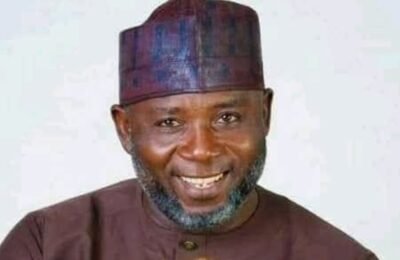
Chief Momoh Yusuf Obaro, an All Progressives Congress (APC) chieftain and senatorial aspirant for Kogi Central, has called on the party’s national leadership to address internal grievances among aggrieved aspirants to prevent voter apathy.
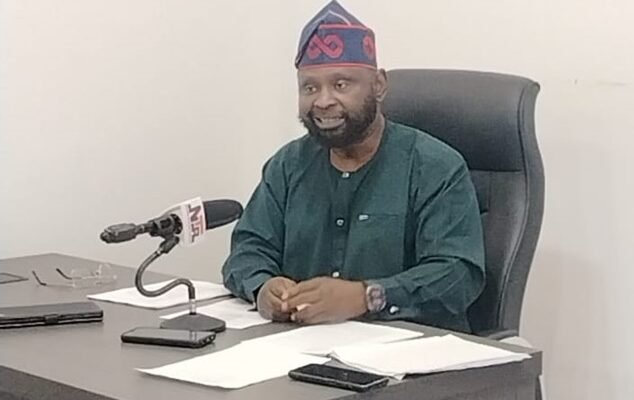
In an interview with reporters, Obaro confirmed he is appealing the court judgment regarding the Kogi Central senatorial ticket. He also defended President Bola Ahmed Tinubu’s removal of the fuel subsidy, arguing that state governors and local government chairmen bear primary responsibility for driving local economic prosperity and cushioning citizens against inflation.
Below are excerpts from the interview:

Despite the setback of the court judgment on the Kogi Central senatorial seat, you said you remain a dedicated party member. How do you think the road will be smoothened for you to work with other APC members loyal to the governor or the influence of a former governor in Kogi, and will this affect the party’s chances?
Presidential campaign councils and various support groups have been inaugurated, and everyone is working. I am very active locally and have supporters across the 57 wards whose current instruction is to work for the party to win. I am in court right now; if my party does not win, all my efforts in court will be useless.
However, this issue is not just about me. Governor Ahmed Ododo set up a reconciliation committee that has been moving around. I met with them, we discussed these issues, and they saw my point, though I had expected the matter to be resolved by now. Many people are unhappy. I expect these grievances to be harnessed and treated not just locally, but at the national level.
The national leadership should assemble everyone who purchased nomination forms and contributed to building the party—at the regional or state level—to acknowledge their contributions, even though only one person can take the ticket. Instead, those people are completely ignored while defectors from other parties are celebrated on television.
Does this mean your battle for the APC Kogi Central senatorial ticket is not over, and you will appeal the judgment?
Yes, definitely. The battle for the ticket is not over.
What happens if you are unable to secure the ticket at the end of the day?
As I mentioned, if I do not get it, I belong to the party and will work for the party’s candidate. Still, there are many unresolved issues. When grievances pile up, it leads to voter apathy because people feel they are not taken seriously. Unhappy party members must be mobilized so we can win the election.
As a long-time progressive, how do you rate the APC’s general chances under President Bola Ahmed Tinubu?
President Bola Ahmed Tinubu took a major decision on the fuel subsidy, which solved a problem at the macro level. The federal government now has the funds to pay sub-national allocations, run ministries, and service foreign debts.
However, at the micro level, people cannot afford food, fuel, or transport, and all of this blame has been placed at the doorstep of the president. What is the president’s constitutional role? He collects national revenue into a bucket, shares it with the states and local governments, and retains the federal share.
The micro level is essentially the responsibility of the states. States own the land, traditional institutions, and local governments—the primary drivers of local economic prosperity. Developed nations in Europe and America built their economies largely through agriculture. Yet, what have state governments done with these resources? Virtually nothing. They rely solely on federal allocations and celebrate merely paying salaries.
What do people expect the federal government to do—come into your state to organize agriculture, mining, or local traders? If the fuel subsidy had not been removed, Nigeria would have gone broke long ago. Unlike the 1979–1983 Shagari administration, when there was neither cash nor goods, today there are goods in the market, though prices are high. The solution is to create an environment at the local level where people can earn income.
In Kogi State, for example, there are about 25,000 square kilometers of arable land suitable for maize, cashew, fish farming, and animal husbandry. Mapping out that land could easily absorb 10,000 to 20,000 people earning two to three million naira annually, which would cushion the high cost of living. Sub-nationals have not lived up to their responsibilities.
What is your message to Nigerians regarding the ongoing debate over these economic reforms, especially as the opposition threatens to reverse them?
Nigerians need to wake up and make decisions based on facts. Politicians have taken citizens for a ride for too long with empty promises. People should examine the data at a micro level—look up Nigeria’s oil revenue and what each state receives.
If an opposition candidate promises to reverse the fuel subsidy on day one, ask how dropping government revenue by half will put food on your table. I know this is an emotional issue, and restoring the subsidy sounds appealing, but voters must look at the facts. I also challenge the media to host robust debates and demand specifics from politicians on how they intend to fund a subsidy reversal. Let us separate propaganda from reality, because everyone will bear the consequences of our choices.
What specific achievements should Nigerians look at to vote for APC candidates at the national and sub-national levels to sustain current policies?
President Tinubu has shown the boldness to confront long-standing structural lies through subsidy removal and exchange rate unification. He has laid a template to reset the economy, much like surgery to remove a bad tumor.
However, governance is a relay race, and the missing link is the sub-nationals and the legislature. Since 2004, local governments have effectively been hijacked by state governments, even though insecurity and economic challenges originate at the grassroots. Furthermore, where is the National Assembly’s input? If I were a senator today, I would sit with my constituents and draft an economic “Marshall Plan” as legislation to create jobs for youths and support the elderly.
Historically, after Nigeria struck commercial oil in the 1970s, we dumped the revenue straight into our budget and abandoned groundnut pyramids in the North, palm oil in the East, and cocoa in the West. Meanwhile, Norway discovered oil around the same time, invested the proceeds into a sovereign wealth fund now worth trillions of dollars, and protected its local industries. Nigeria developed a habit of sharing oil money without working, fueling political desperation and violence. No serious president can reverse the subsidy removal because the country cannot keep borrowing endlessly. The states must now take the baton from the federal government and develop local economies.
You were among the early agitators for Kogi Central to produce the governor of Kogi State. Now that power has been in the zone for over 10 years, do you feel fulfilled?
The short answer is no; our expectations have not been realized. According to National Bureau of Statistics data on multidimensional poverty, about 50 percent of our people lack access to healthcare, fuel, electricity, and housing. In reality, the figure feels higher. When I visit Okene, I see elderly women sitting opposite the local government secretariat begging, and entire families surviving by picking and selling wild cashews off the road.
Governance is about human welfare—ensuring citizens can feed, clothe, educate their children, and access healthcare. Our experience in Kogi Central shows that simply having a “brother” who speaks your language in the governor’s seat does not automatically solve economic problems.
When Yahaya Bello came, we supported him; when Ododo came, we supported him. Yet, if you ask the people whether their lives are better today, the obvious answer is no. Voters must stop trading their ballots for 5,000 naira handouts and start demanding clear plans from leaders on how they will empower citizens to earn a living.