In Kogi West, the Okun people—a demographic powerhouse known for their academic prowess and sophisticated administrative history—find themselves grappling with a paradox. Despite being a land of professors and diplomats, the political destiny of the Okun nation appears to be increasingly steered by hands that do not belong to them.
What many local observers are now calling “Okun Political Servitude” is a burgeoning crisis of identity, where the democratic process has been replaced by a culture of narcissistic imposition and external validation.
The most glaring wound in the Okun psyche is the persistent trend of leaders being handpicked by external forces. Rather than rising from the grassroots or emerging through competitive internal primaries, political figures often owe their loyalty to power centers in Lokoja or outside the district entirely.

The democratic will of the local electorate is frequently bypassed in favor of “anointed” candidates.
Standards of meritocracy are discarded, leaving the district with representatives who prioritize their benefactors over their constituents.
This external reliance has created a leadership vacuum where the representative is accountable not to the person holding the ballot, but to the godfather holding the scepter.
Perhaps the most disheartening spectacle in the current political cycle is the ceremony of presentation. In a healthy democracy, an aspirant presents their expression of interest and nomination forms to their constituency to signal their readiness to serve.
In Okunland, the script has been flipped.
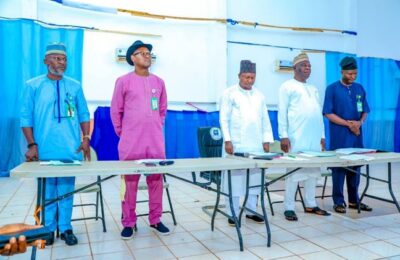
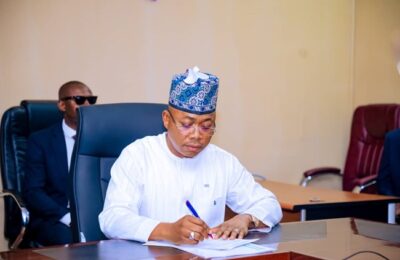
Aspirants are now seen trekking to the private residences of “gatekeepers”—individuals who hold no official democratic mandate—to “present” their forms. This ritual is not one of respect, but of submission. It is a desperate bid for recognition and endorsement, a public admission that the path to office lies through the whims of a few rather than the votes of many.
“When a man must beg for the right to represent his own people, he is no longer a leader; he is an emissary of the elite.”
The tragedy is compounded by the role of homegrown political actors. A segment of Okun’s own political class has, for various reasons—be it financial gain or personal survival—morphed into tools of suppression.
These “leaders” serve as the local enforcers of external agendas. Instead of advocating for the district’s development, they specialize in:
Using intimidation to quell grassroots movements.
Forcing a narrative of “unanimity” where there is actually deep-seated resentment.
Leveraging state or party machinery to ensure that only the “approved” candidates can breathe politically.
The dilemma of the Okun person is rooted in a leadership style that is inherently narcissistic—it values the ego and the power of the individual over the collective prosperity of the district.
As long as the “Expression of Interest” is presented to a godfather rather than a town hall, the cycle of servitude remains unbroken. For the Okun people to reclaim their political sovereignty, the shift must move from seeking endorsement to earning the mandate.
The question remains: when will the land of the wise decide that enough is enough?
– Ponle Adeniyi
ponleadeniyi457@gmail.com