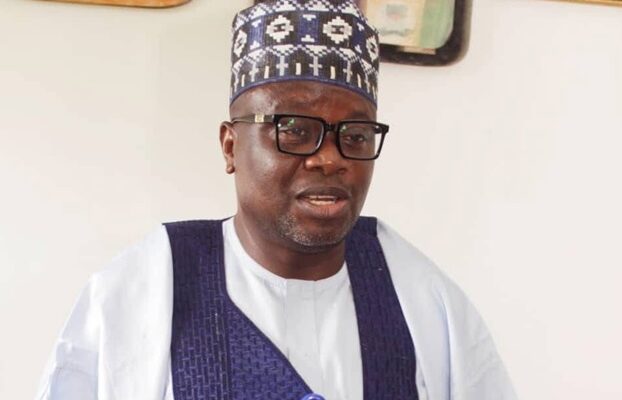

The Provost of Kogi State College of Education, Ankpa, Dr. Paul Femi Fashagba, has called on the Kogi State Government to revive the state’s Youth Commission and provide sustained funding for youth empowerment initiatives.
Dr. Fashagba made the call while delivering a lecture as Guest Speaker at the 7th Oladele John Nihi Annual Symposium and Book Launch, held in Lokoja under the theme “Youth as Stakeholders in Governance and Democratic Development.”
Speaking to an audience that included government officials, traditional rulers, youth leaders and members of the press, the Provost stressed that the importance of youth in nation-building cannot be overstated, insisting that no investment in young people, who he described as the leaders of tomorrow, is ever wasted.

To buttress his argument, Dr. Fashagba drew on examples from around the world where youth participation in governance has been formalised through legal and institutional structures. He cited Finland’s statutory youth councils, Scotland’s 200-member elected Youth Parliament, Rwanda’s tiered National Youth Council, and South Africa’s National Youth Development Agency as models worth emulating.
He argued that Nigeria, and Kogi State in particular, must move beyond token or symbolic youth appointments and instead build legally-backed, adequately funded institutions that give young people genuine influence over policy.
Among his recommendations to the Kogi State Government, Dr. Fashagba called for:
- The enactment of a Kogi State Youth Governance Act to give statutory backing to the Youth Commission
- The introduction of a 30 percent youth quota in appointments to state boards and commissions
- The creation of a Kogi Youth Digital Governance Portal, modelled on Estonia’s e-democracy platform
- The introduction of mandatory civic education in the state’s secondary school curriculum
The Provost also directed recommendations at the Federal Government, urging it to fully fund the Not Too Young To Run Act, cap political nomination fees to widen access for young aspirants, and establish a National Youth Parliament comprising 360 directly elected members.
He further called on traditional rulers across the country to formally back youth inclusion in governance and to establish Traditional Youth Advisory Councils at the chiefdom level, describing this as a way of embedding youth voices within existing traditional governance structures.
A significant portion of Dr. Fashagba’s address was devoted to commending the administration of Governor Ahmed Usman Ododo, which he described as demonstrating a youth-friendly approach to governance. He cited the procurement of security vans and motorcycles, the recruitment of community hunters, the renovation of 84 Primary Healthcare Centres, the reduction of the state’s debt profile, and the appointment of young people into government positions as evidence of this commitment.
Dr. Fashagba also paid tribute to Oladele John Nihi, after whom the symposium is named, tracing his public service journey from student union leadership and the National Youth Council of Nigeria to his role as a State Peace Ambassador following the resolution of the 2016–2017 Kogi House of Assembly crisis. He described Nihi as a model of youth-led public service worth emulating by young people across the state.
Organisers of the symposium described the event as part of ongoing efforts to spotlight youth engagement in Kogi State’s democratic development, bringing together government officials, traditional rulers, youth leaders and the press for a continuing conversation on the role of young people in governance.